
Kabini does not reveal itself in a hurry. It begins with long stretches of watchfulness, with damp light filtering through the trees, with birds holding still over the backwaters, and with that familiar safari feeling that something important may already be near even if you cannot see it yet. That is what makes Kabini special. It is not only a place of sightings, but a place of build-up, mood, and sudden reward.
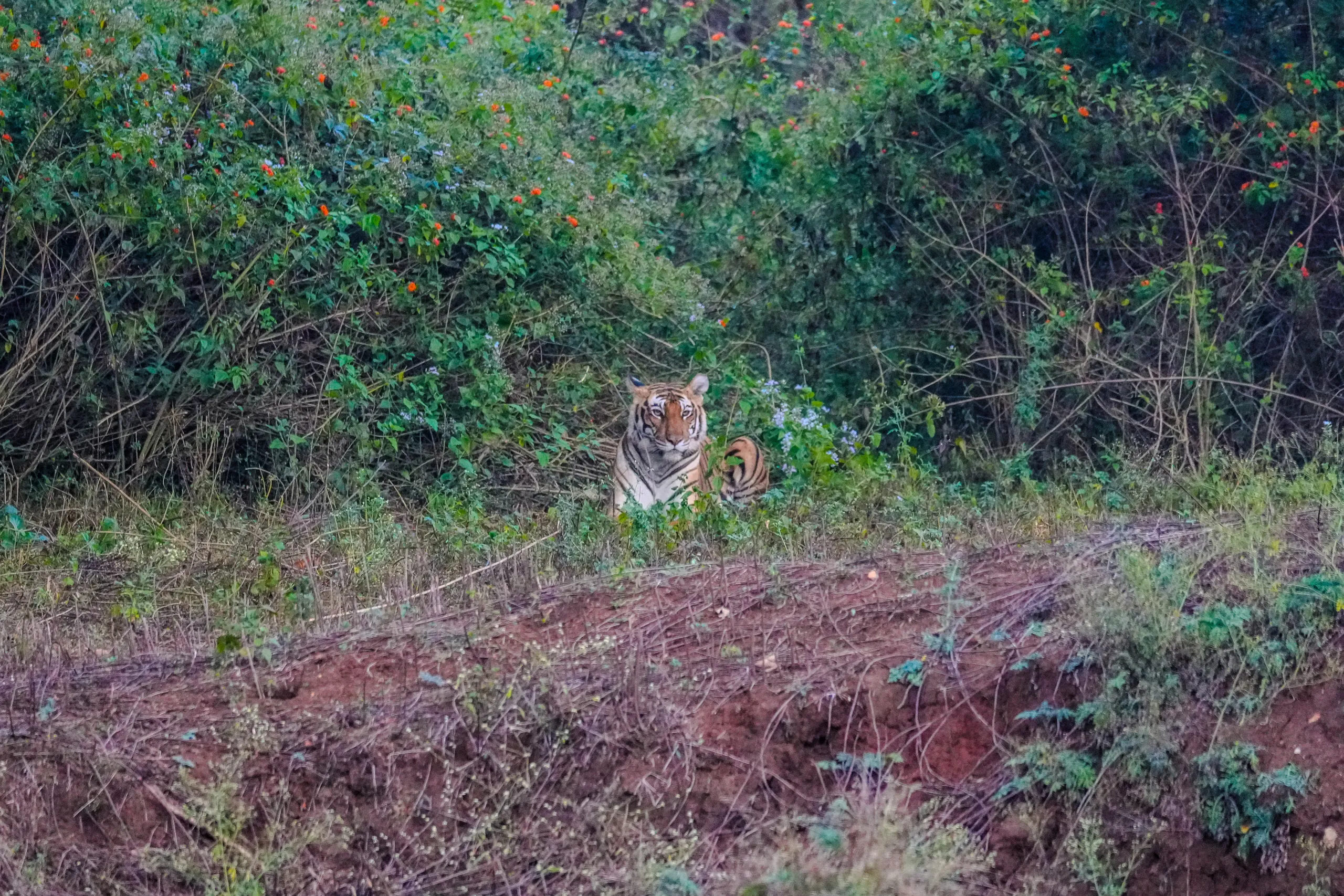
A tiger waits quietly near the forest edge in Kabini Tiger Reserve.
A good safari here is not measured only by how many animals appear. It is measured by how the forest keeps changing its language. One minute it speaks through still water and a cormorant balanced on an old log, and the next it sharpens into silence when a tiger is seen sitting at the edge of the cover, half hidden and fully in control of the moment. That shift from calm to tension is the heartbeat of Kabini.
The weight of a tiger sighting
Tiger sightings in Kabini feel powerful not only because of the animal, but because of the way the forest seems to pause around it. A tiger resting near scrub or sitting low by the track does not need to move much to dominate the scene. The body language, the stillness, the knowledge that it can disappear into cover in a second, all of that gives the sighting its force.
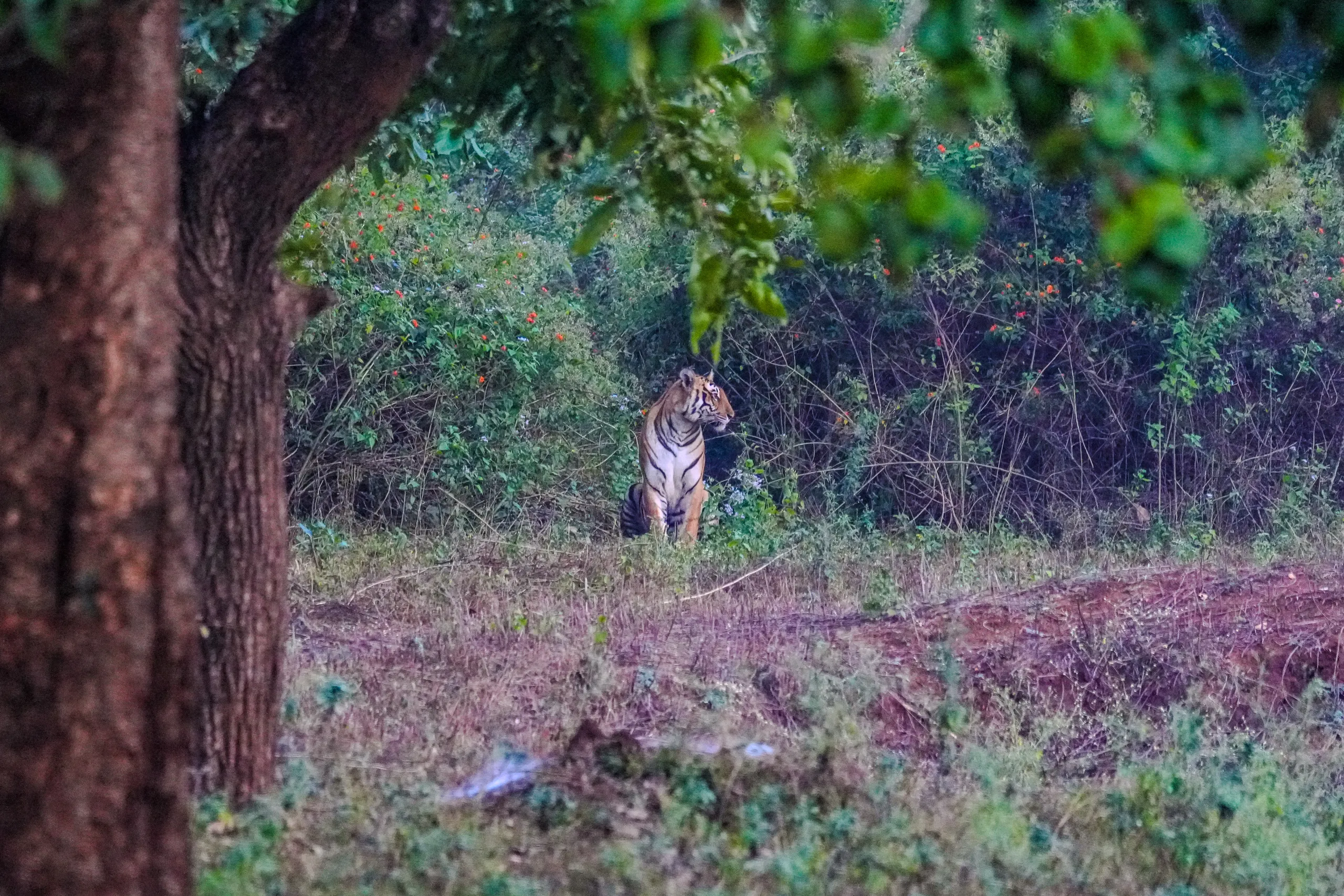
A tiger rests low in the cover, creating one of Kabini’s most memorable safari moments.
What stays in the memory is often not the movement, but the restraint. The tiger is there, the forest knows it, the vehicles know it, and for a few seconds even the noise inside your own head seems to fall away. In that moment Kabini feels less like a destination and more like a true wild space, where you are allowed to witness something, not control it.
The quieter animals matter too
But Kabini would not feel complete if it only gave you the big cat story. Part of its charm lies in the quieter frames that make the forest feel lived in every hour of the day. A lone spotted deer crossing the open ground may not stop a safari in the same way a tiger does, yet it adds something equally important: calm, rhythm, and a sense of continuity.
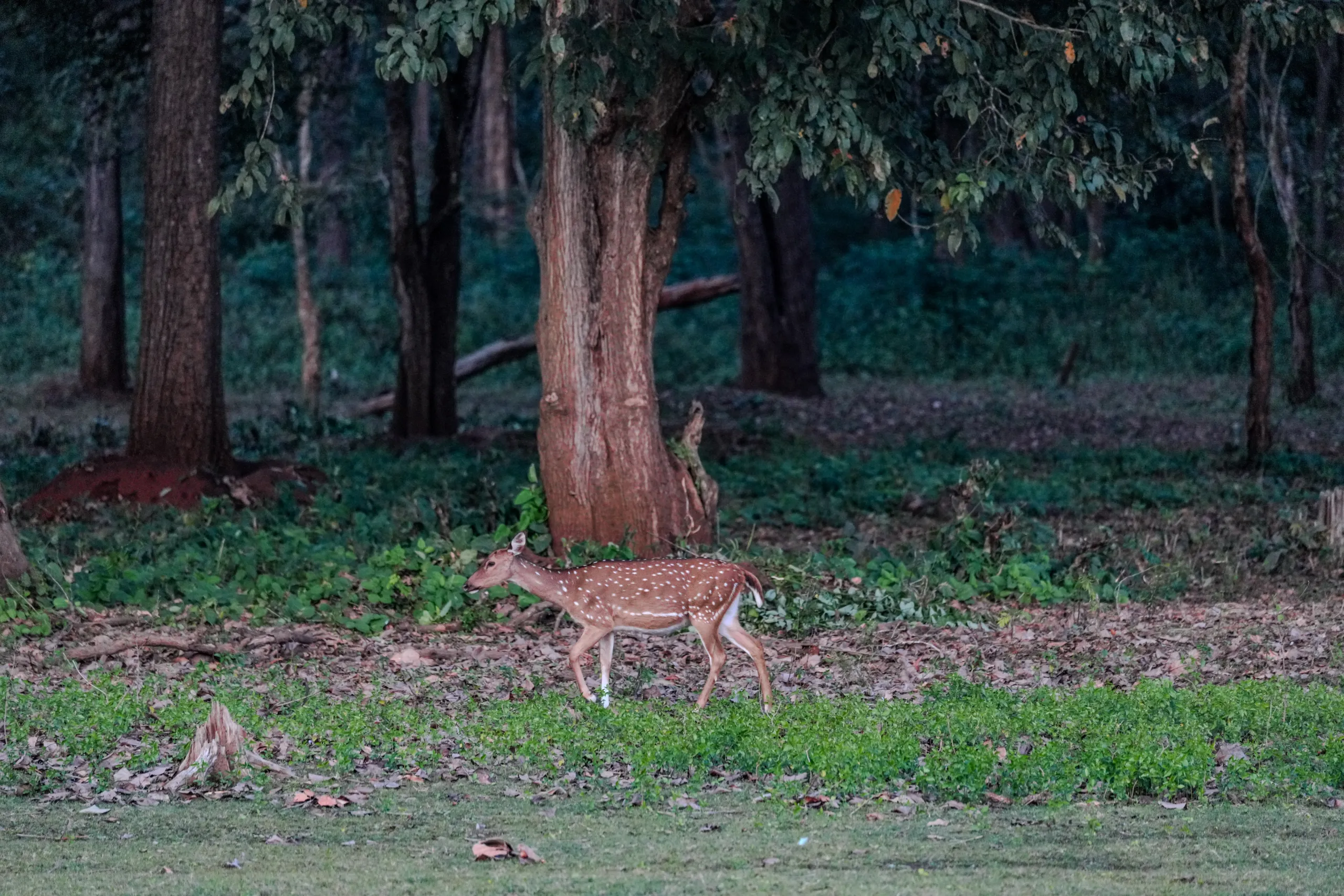
A lone spotted deer moves through the calm forest floor in Kabini.
The same goes for wild boars moving through the undergrowth with their usual busy confidence. They are not rare, and that is exactly the point. Good forests are built as much on ordinary wildlife movement as on dramatic sightings, and Kabini shows that clearly. These smaller moments give the landscape honesty.
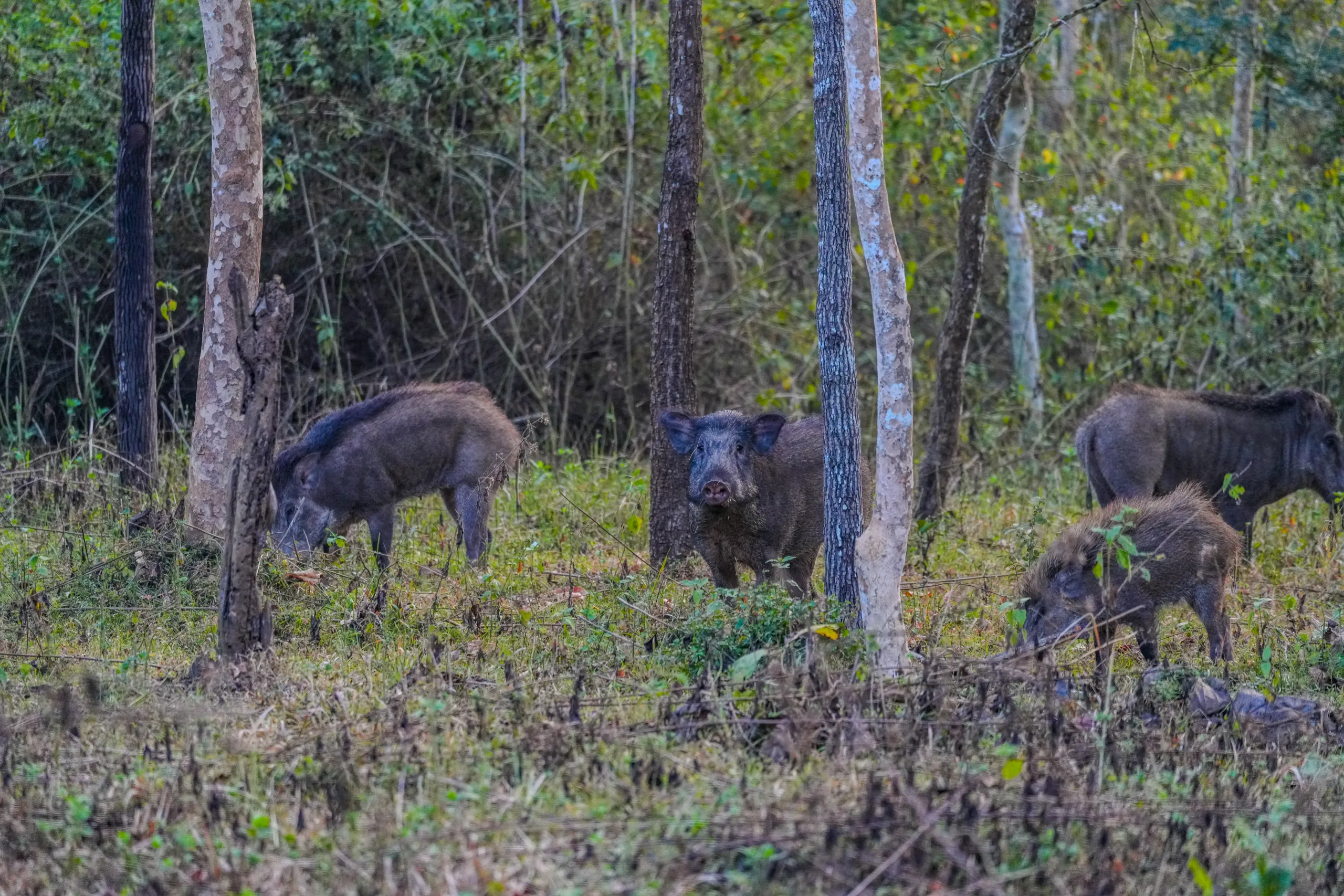
Wild boars move through the undergrowth during a typical wildlife encounter in Kabini.
The backwaters change the mood
Then there is the other face of Kabini, the one shaped by water, deadwood, open light, and patient birds. The backwaters soften the intensity of the forest road and replace it with space. A lone cormorant on a weathered stump can hold the eye for far longer than expected when the water is still and the far bank fades into quiet distance.
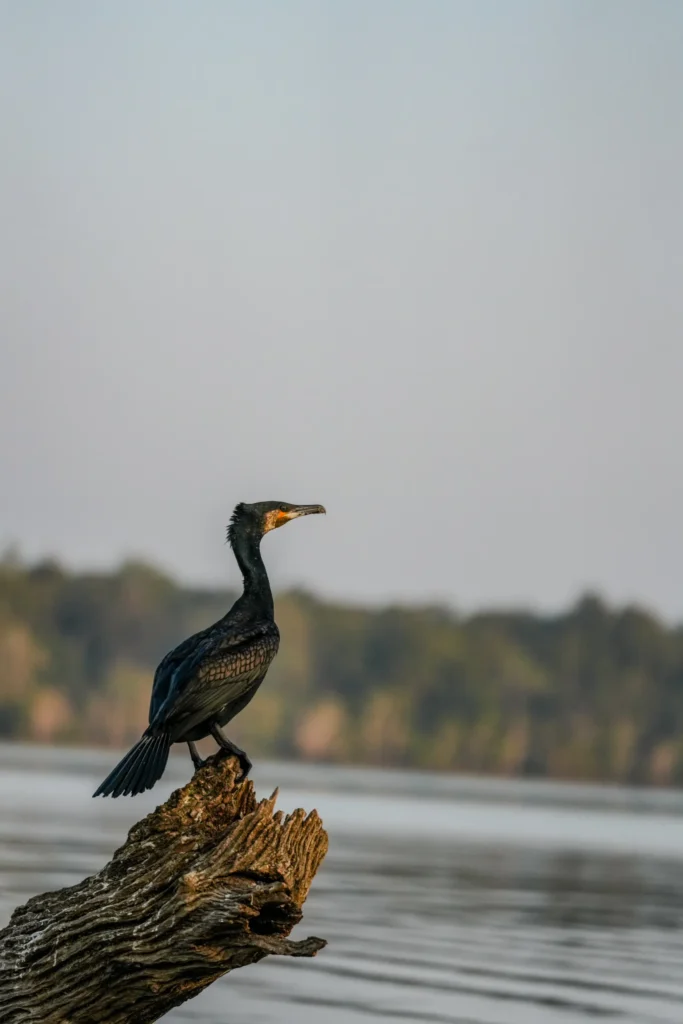
Great cormorant perched on a weathered log along Kabini backwaters.
This is where Kabini becomes more than a tiger reserve in the usual sense. It becomes layered. You begin to notice structure, the angle of broken logs, the open water behind a bird, the patience of a heron on a perch, the clean balance that boat safari scenes can bring after the density of the woodland. The reserve breathes differently here, and that slower mood stays with you.
Birdlife gives the forest another edge
Kabini’s birdlife does not feel decorative. It adds another level of alertness to the safari. A crested hawk-eagle in morning light brings its own kind of tension, less dramatic than a tiger perhaps, but no less wild. Raptors have a way of sharpening a landscape. They make you look up, slow down, and read the forest differently.
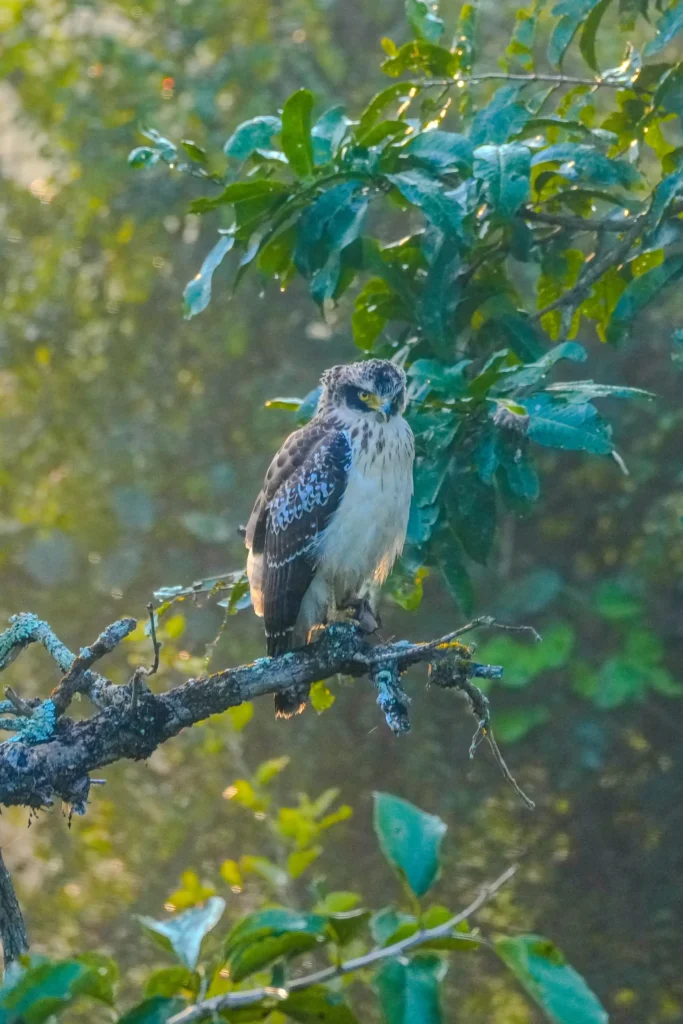
Crested hawk-eagle perched on a branch in morning light at Kabini Tiger.
That is one of the reasons Kabini works so well as a wildlife destination. Even when the headline species stay hidden, the reserve keeps offering scenes that feel complete in themselves. A bird on a log, a deer in fading light, a group of boars moving through cover, these are not filler moments. They are the fabric of the place.
The joy of unexpected sightings
Some sightings do not arrive with tension at all. They arrive with surprise. Seeing two Malabar giant squirrels in the same tree is the kind of moment that reminds you why attention matters so much in the wild. It would be easy to miss them if your mind stayed fixed only on larger animals. Yet once noticed, they bring a completely different energy, lively, playful, and full of character.
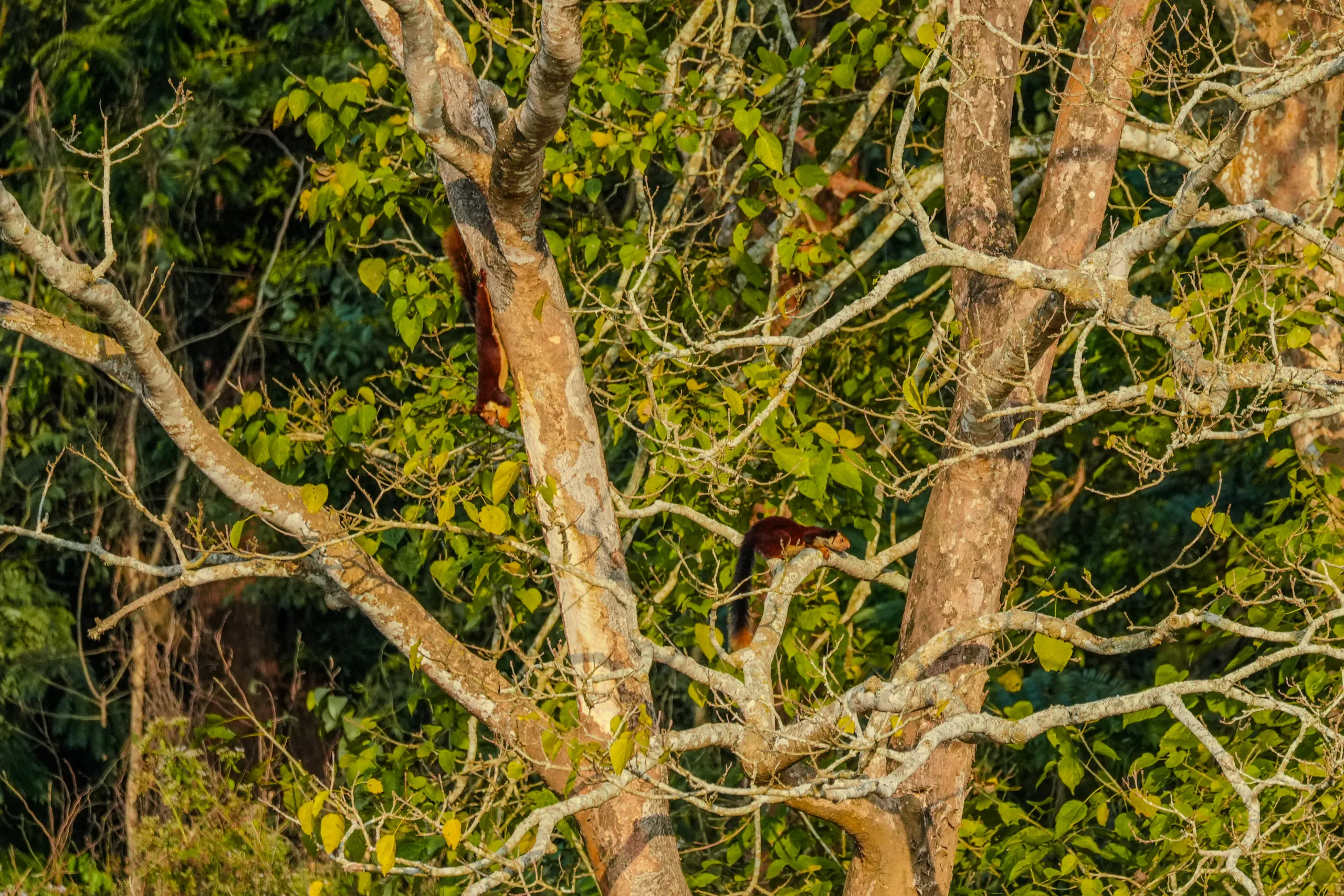
Two Malabar giant squirrels share the same tree in a lively forest sighting
That is the real reward of a place like Kabini. It does not ask you to choose between drama and detail. It gives you both, often on the same drive, and often when you least expect it.
Why Kabini lingers in the mind
Some forests impress by scale. Kabini impresses by atmosphere. It knows how to hold a moment just long enough, whether that moment belongs to a tiger in cover, a cormorant over water, a deer crossing quietly, or squirrels flickering through branches.
That is why a safari here stays with people. Not because the forest performs on command, but because it keeps unfolding in a way that feels real, patient, and richly alive. Kabini does not simply show wildlife. It lets you sit inside the mood of the wild long enough to understand why people keep returning.
Frequently Asked Questions (FAQs)
Notice Title
All images used in this blog are copyrighted. Unauthorized use, reproduction, or redistribution of these images is strictly prohibited. Please contact the site owner for permission or licensing inquiries.