
Bhangarh Fort is one of those places that arrives in the mind before it arrives in front of the eyes. Long before most people reach the site, they already know its reputation, its ghost stories, and its name as one of India’s most talked-about ruined forts. But once you walk through it in daylight, the first thing that stands out is not fear. It is space, silence, stone, and the dry sweep of the Aravalli hills around the ruins.
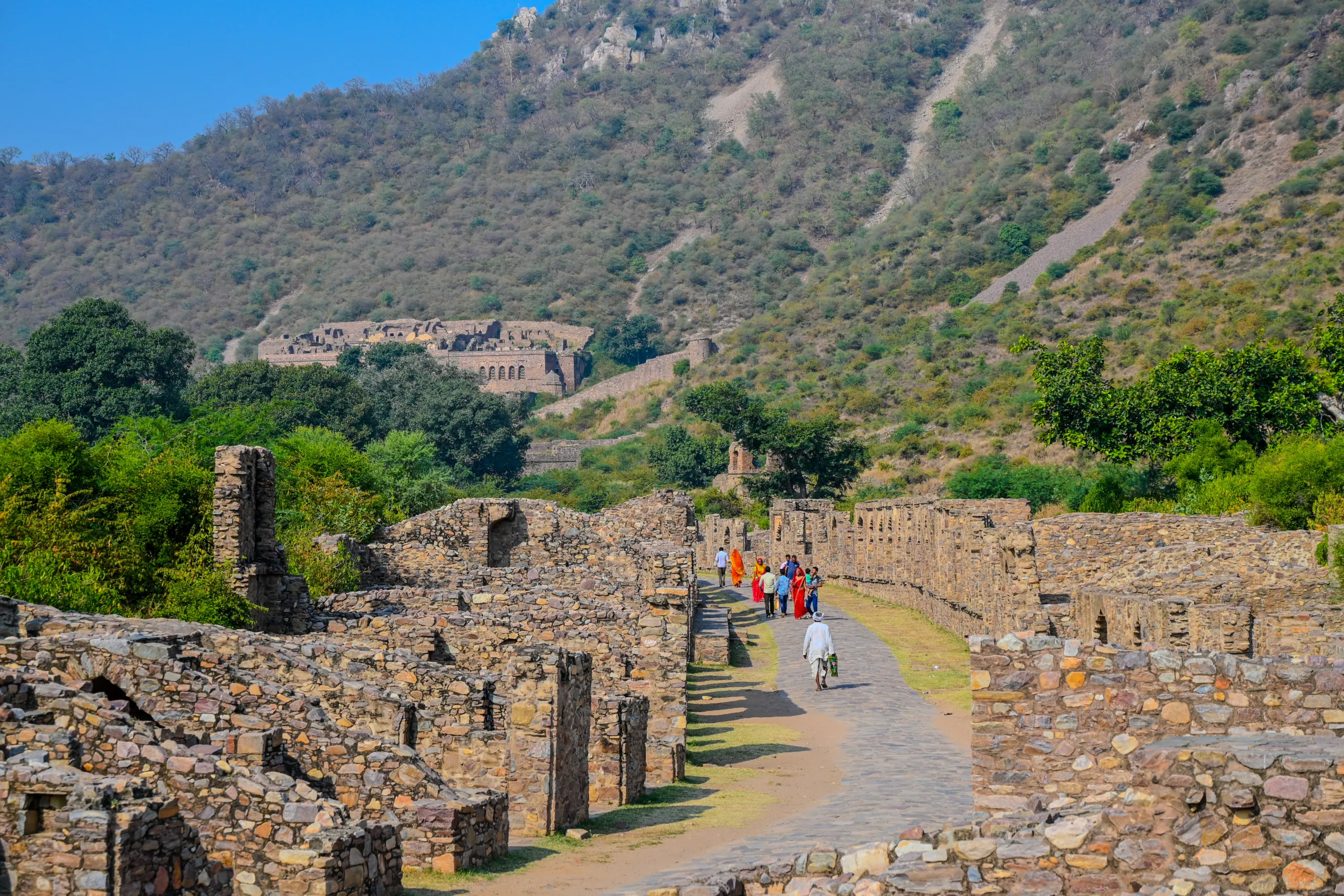
The ruined lanes of Bhangarh open slowly against the dry hills, giving the fort its first strong sense of atmosphere
That is what makes Bhangarh so interesting through a camera lens. The fort does not depend on darkness to create mood. Even under a clear blue sky, the broken walls, empty pathways, collapsed rooms, and weathered structures carry a stillness that feels heavier than an ordinary historic site.
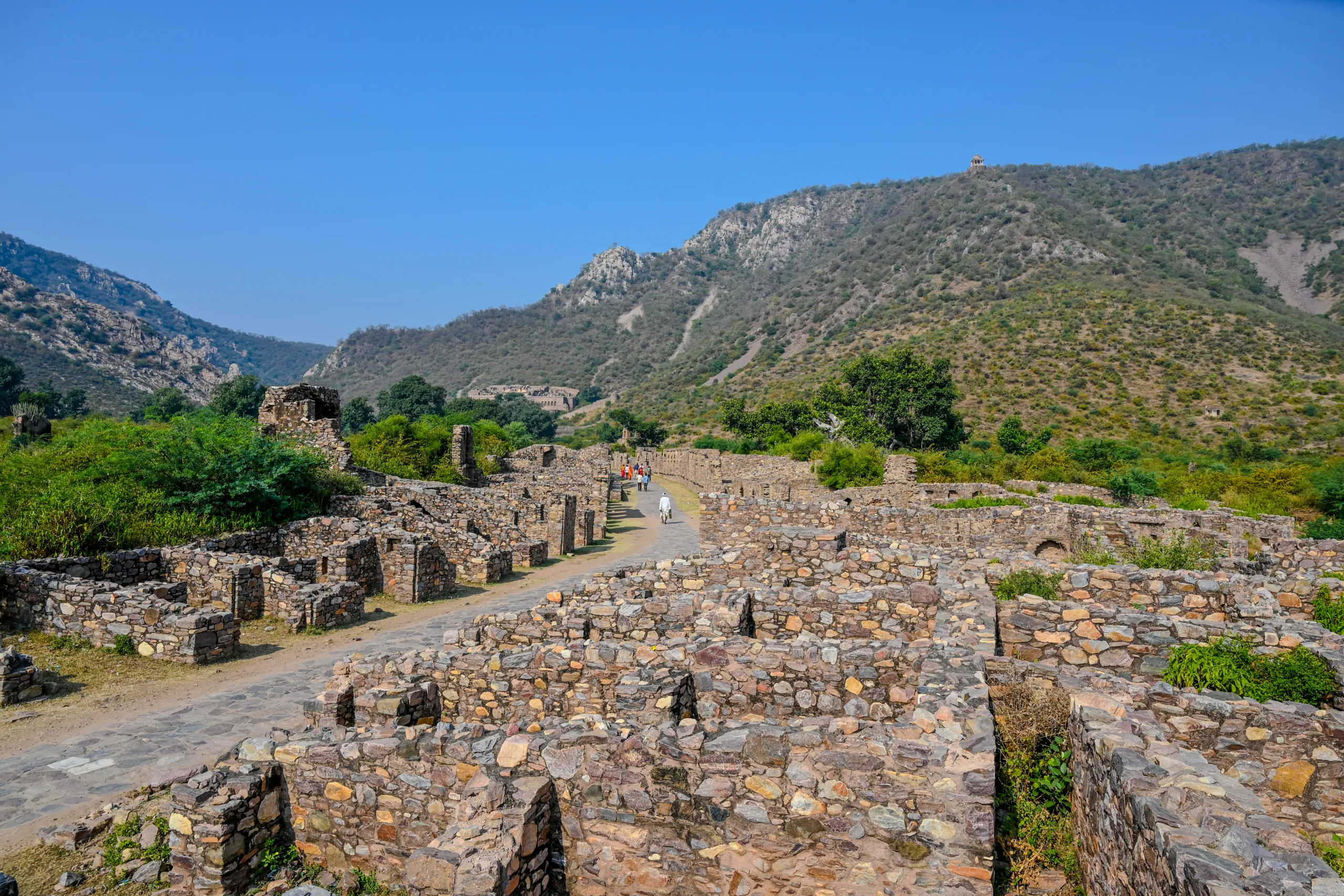
The central path through Bhangarh shows how scale, silence, and movement come together inside the ruins
The legends, of course, are part of why people come. Rajasthan Tourism highlights the two stories most visitors already know: the warning linked to Baba Balau Nath and the tale of Princess Ratnavati and the magician whose curse became part of the fort’s identity. Whether a visitor believes those stories literally or not, they shape the way Bhangarh is seen, remembered, and photographed.
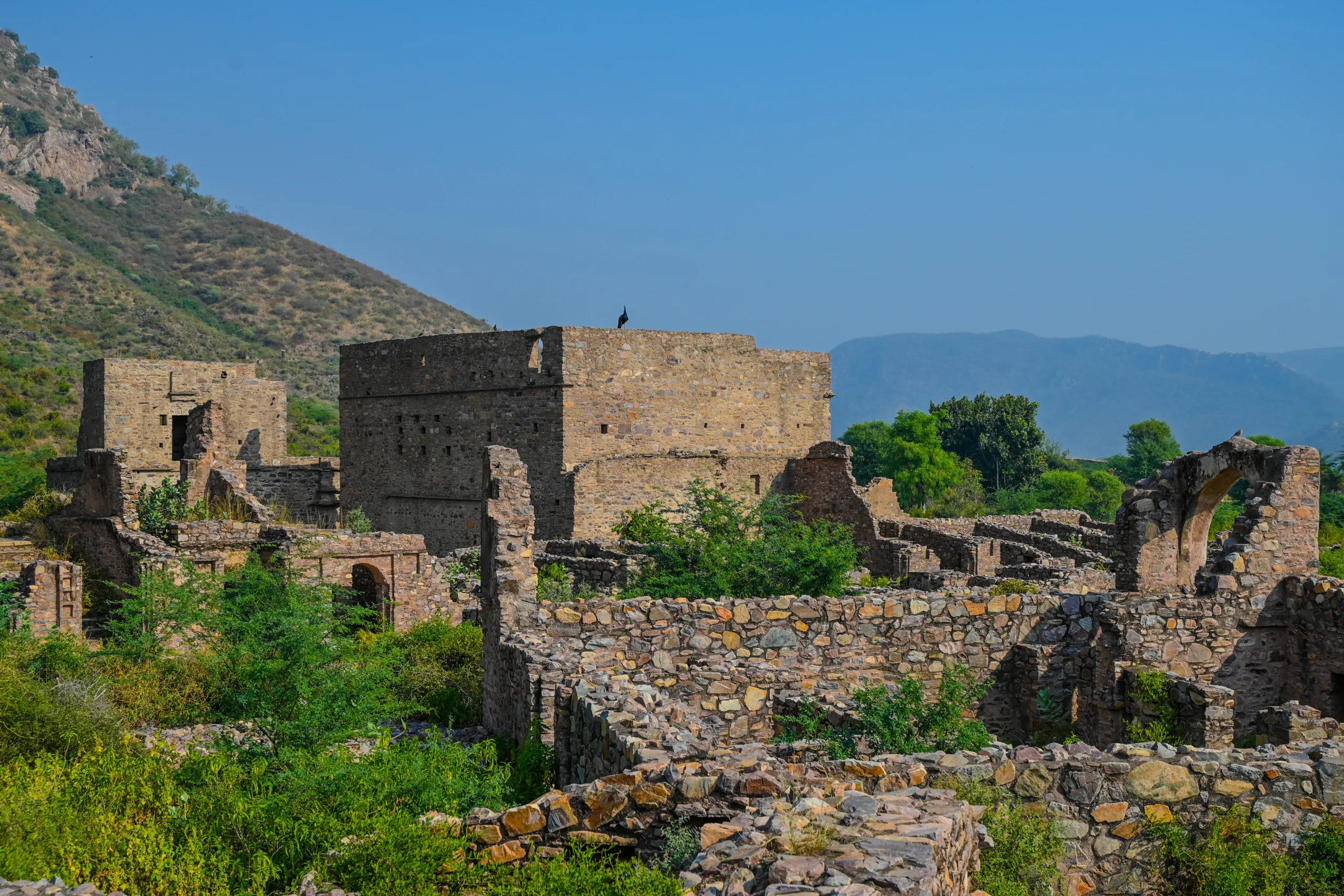
The heart of Bhangarh feels open, silent, and unfinished, which is exactly what gives it such a lasting mood
And yet the real atmosphere of Bhangarh is more layered than the word “haunted” suggests. In these views, the fort feels exposed rather than shadowy, with sunlight falling across low stone walls, ruined chambers, and open corridors that seem to dissolve into the hills behind them. The emptiness is not theatrical. It feels natural, as if the landscape slowly reclaimed the settlement and left behind only structure, memory, and silence.
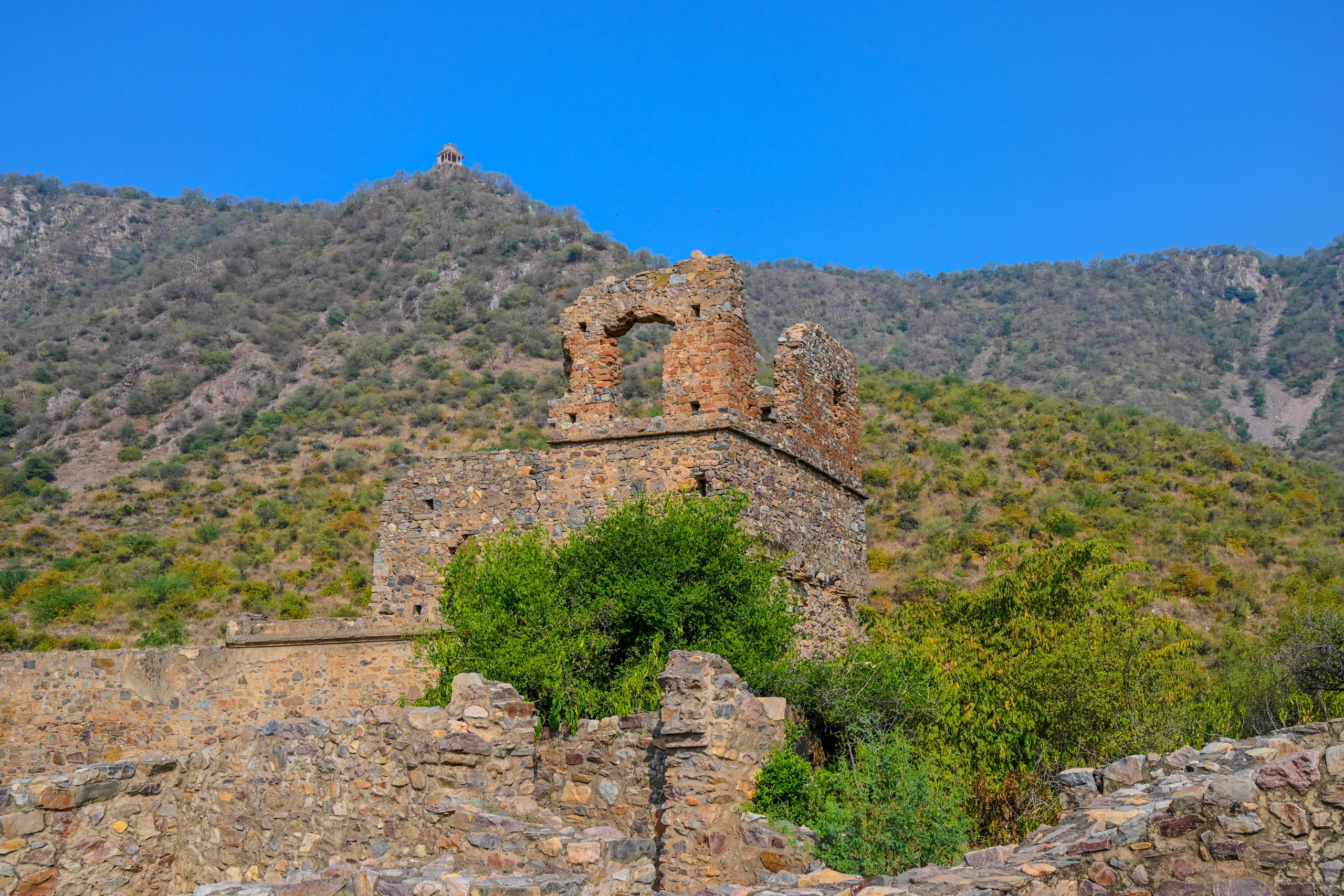
That is also why Bhangarh works so well in photographs. Wide frames show how the ruins spread across the valley floor, while tighter compositions reveal arches, pathways, and broken facades that still hold shape against the hillside. The human figures on the path add scale, and the distant structures climbing toward the slope make the site feel larger and older than a quick visit might suggest.
Layered walls and broken arches make Bhangarh feel less like a monument and more like a vanished settlement
There is also an honesty to Bhangarh in daylight. Nothing is hidden. The stones are rough, the walls are fractured, the vegetation grows through abandoned spaces, and the fort’s famous aura sits in full sun instead of deep gloom. That contrast is exactly what gives the place its power. The stories belong to folklore, but the atmosphere comes from the real physical presence of the ruins themselves.
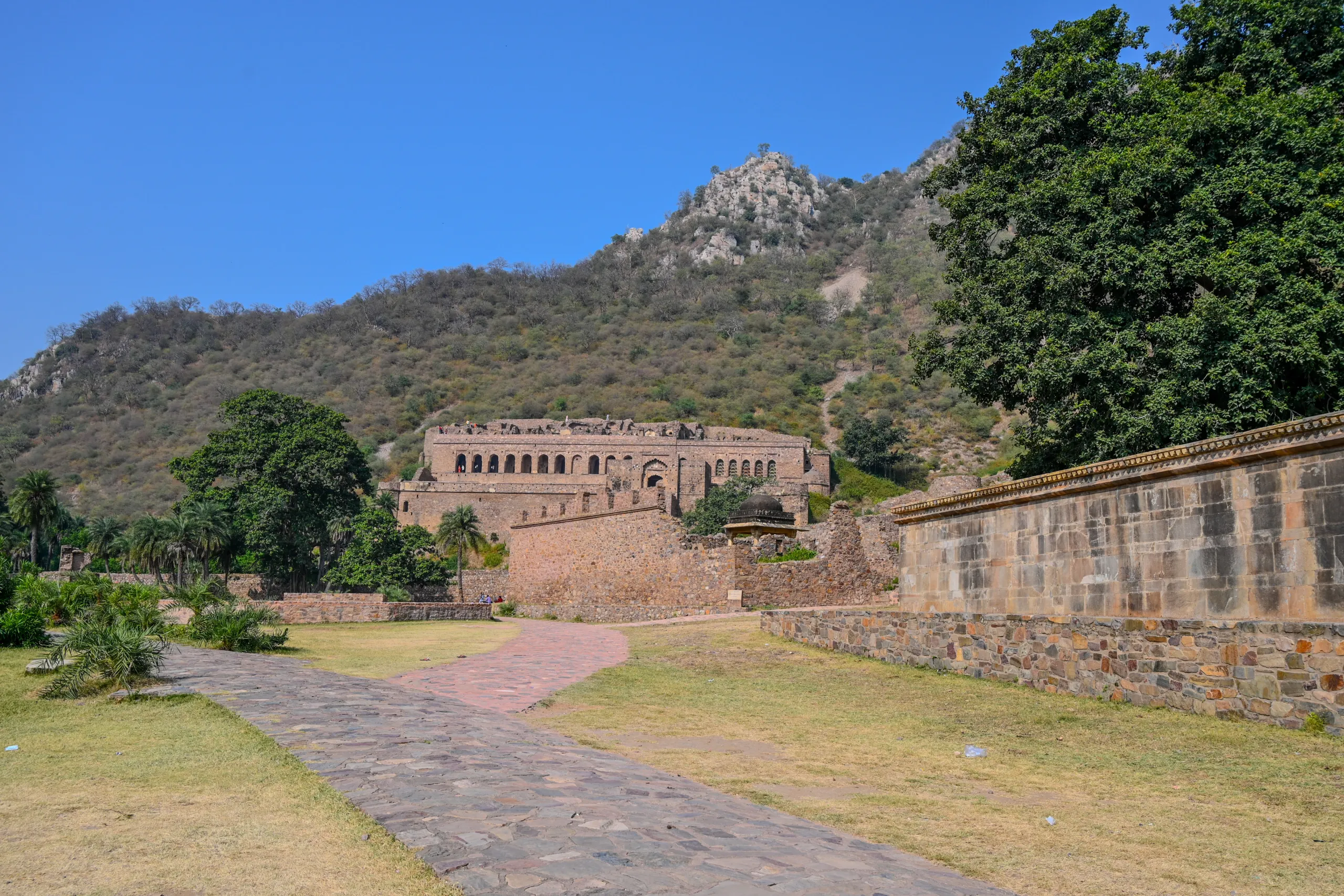
In full daylight, Bhangarh still holds a strange quietness that the landscape around it only deepens
Visitors are allowed only during daylight hours, and multiple travel references note that entry is restricted before sunrise and after sunset under ASI rules, which has added even more mystery to the site’s reputation over time. But even without that rule, Bhangarh would still leave an impression. Its real strength lies in the meeting point of legend, architecture, and landscape.
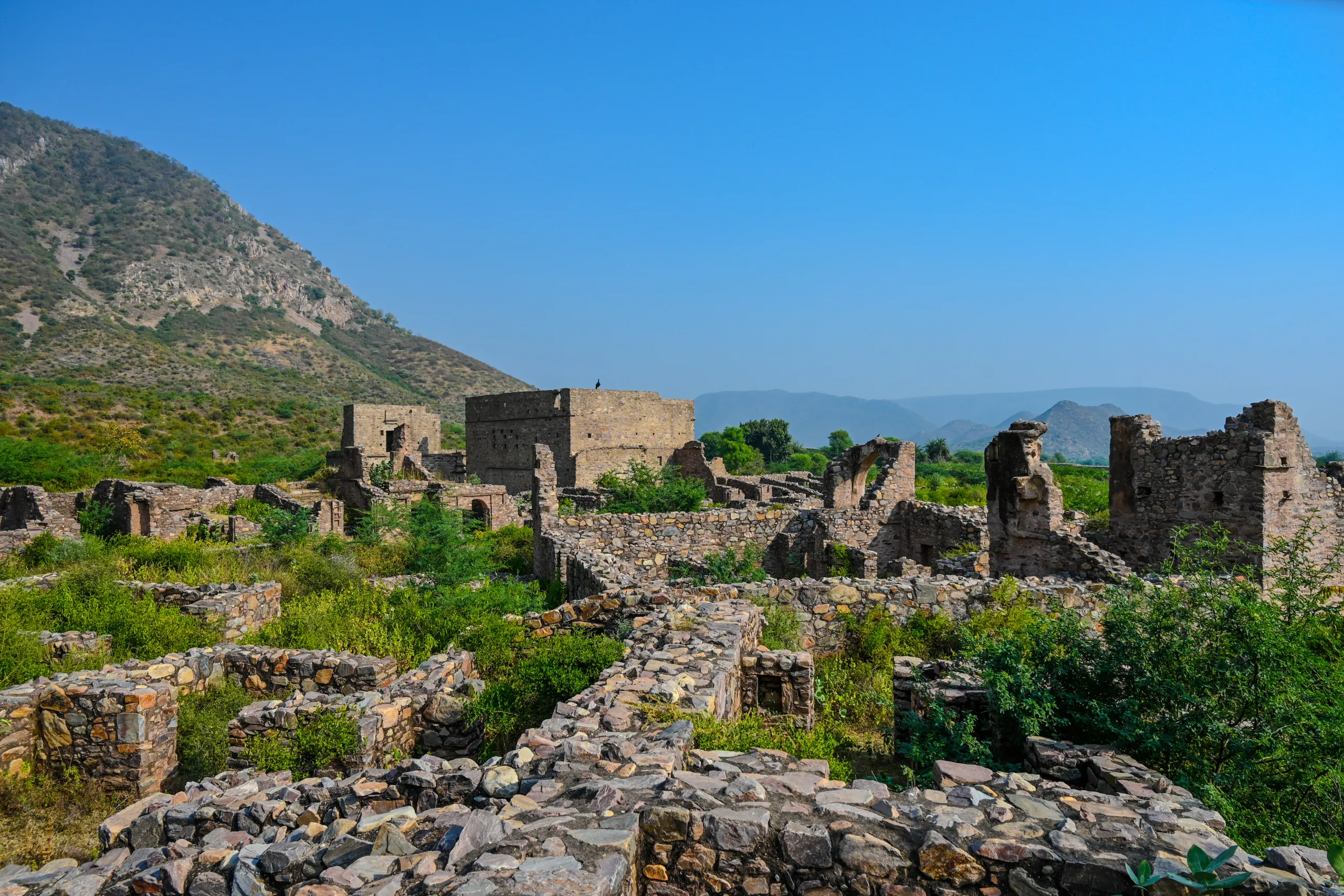
The old stone blocks, empty structures, and distant slopes give Bhangarh its most honest and lasting atmosphere
Seen through the lens, Bhangarh Fort is not only a haunted destination or a ruined monument. It is a place where old stone, open sky, and inherited stories all stand together, creating an atmosphere that feels quiet, strange, and unforgettable in a way that is more visual than dramatic.
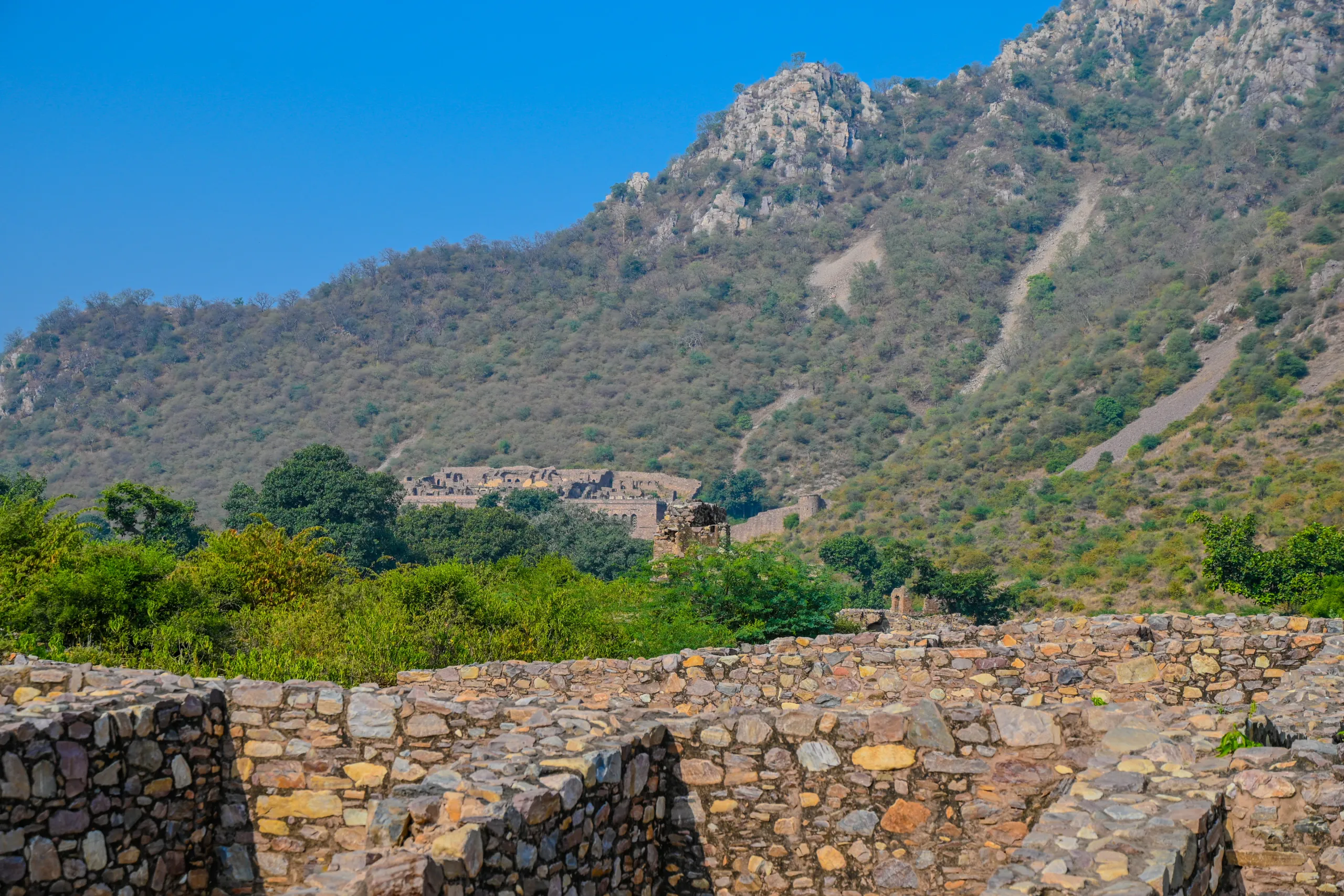
A broken tower and distant hilltop pavilion capture the lonely beauty that makes Bhangarh visually unforgettable
Frequently Asked Questions (FAQs)
Notice Title
All images used in this blog are copyrighted. Unauthorized use, reproduction, or redistribution of these images is strictly prohibited. Please contact the site owner for permission or licensing inquiries.