
Most people hear “Jhalana” and think only of leopards, but the first thing that hits you in the monsoon is the forest itself. The dry slopes of Jaipur turn surprisingly lush, the mud tracks soften under the tyres, and the whole reserve feels like it has taken a deep breath after the summer heat. You still hope for a spotted cat, of course, but the green around you becomes a big part of the safari story.
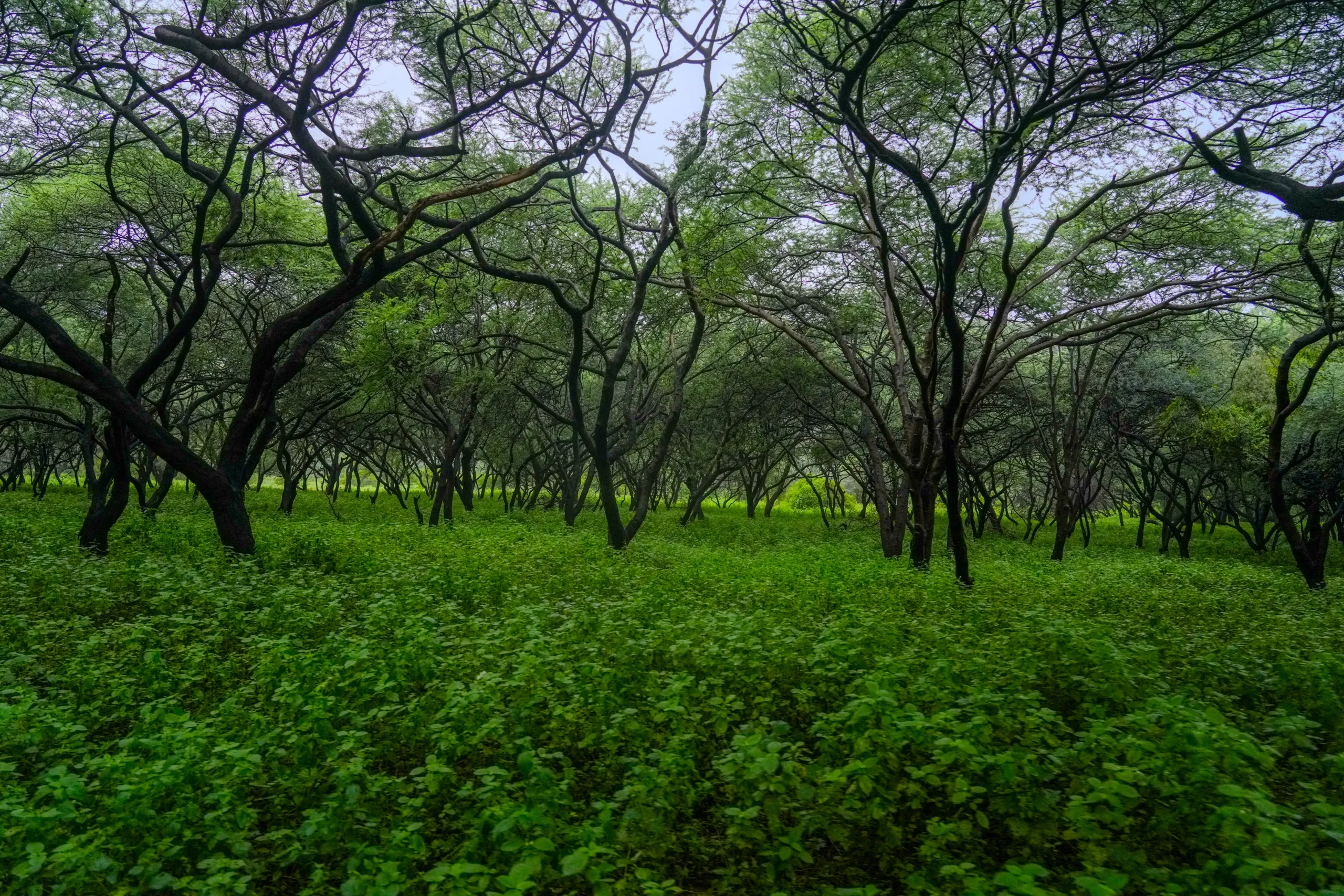
The usually dry slopes of Jhalana turn into a thick green carpet in the rainy season.
First look at Jhalana in monsoon
As you enter the gate and the track bends into the reserve, the usual beige of Rajasthan almost disappears. Fresh leaves cover the ground, vines climb over branches, and the scrub turns into a proper green wall on both sides of the trail. It feels less like a city‑side forest and more like a small pocket of the Western Ghats hiding in Jaipur.
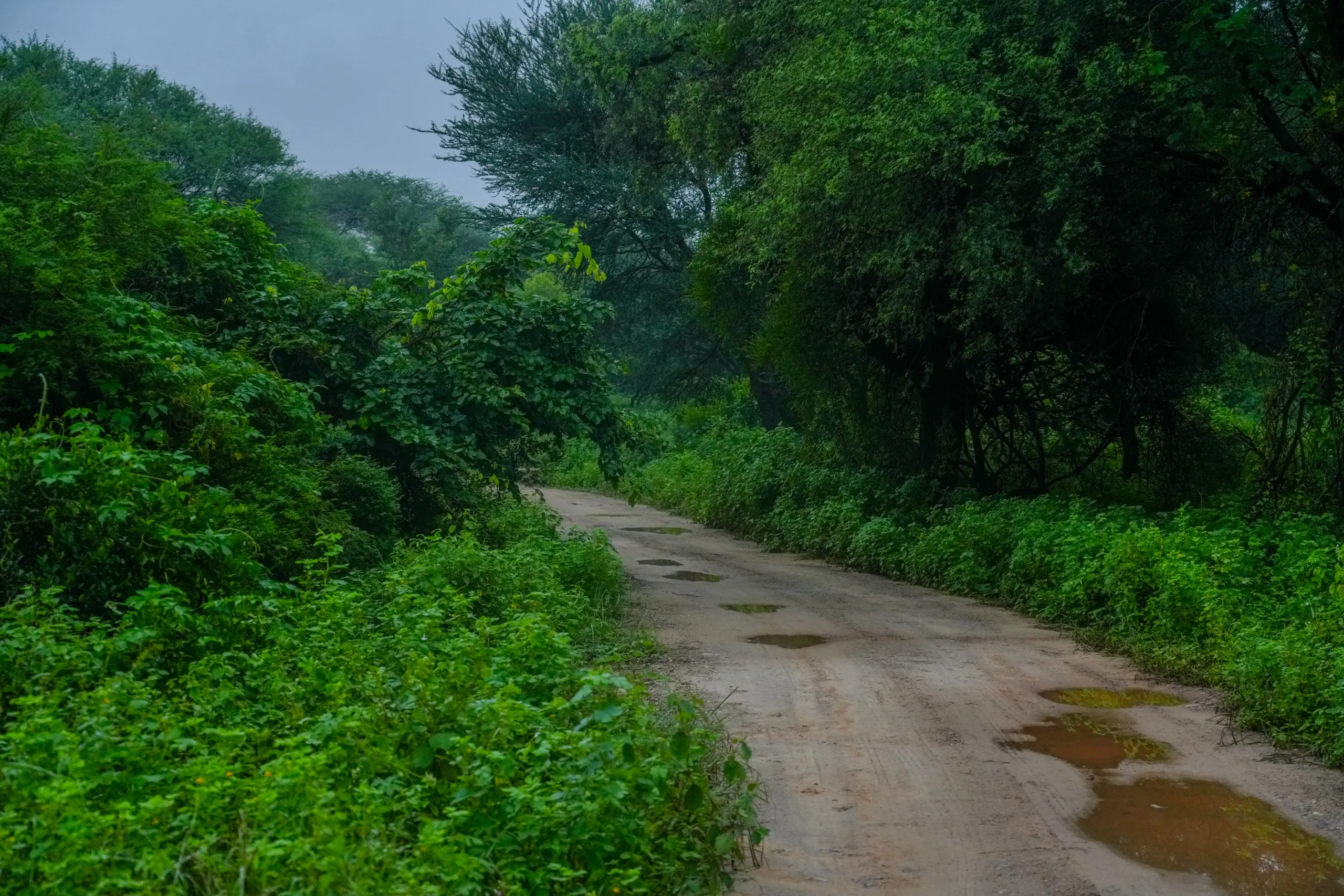
A narrow, rain‑soaked track leads deeper into the green heart of Jhalana.
In this season, even a simple stretch of trees looks different. Moist air sits low between the trunks, the light is softer, and every gap in the canopy glows a slightly brighter shade of green. You can hear peafowl calling, partridges somewhere close, and the soft ticking of insects that wake up with the rain.
Driving through the green tunnel
The tracks of Jhalana change character in the rain. Some sections are still wide and easy, but others narrow into what feels like a green tunnel. The tyres press into wet mud, small puddles fill up in wheel marks, and the jeep has to take its time over stones and ruts.
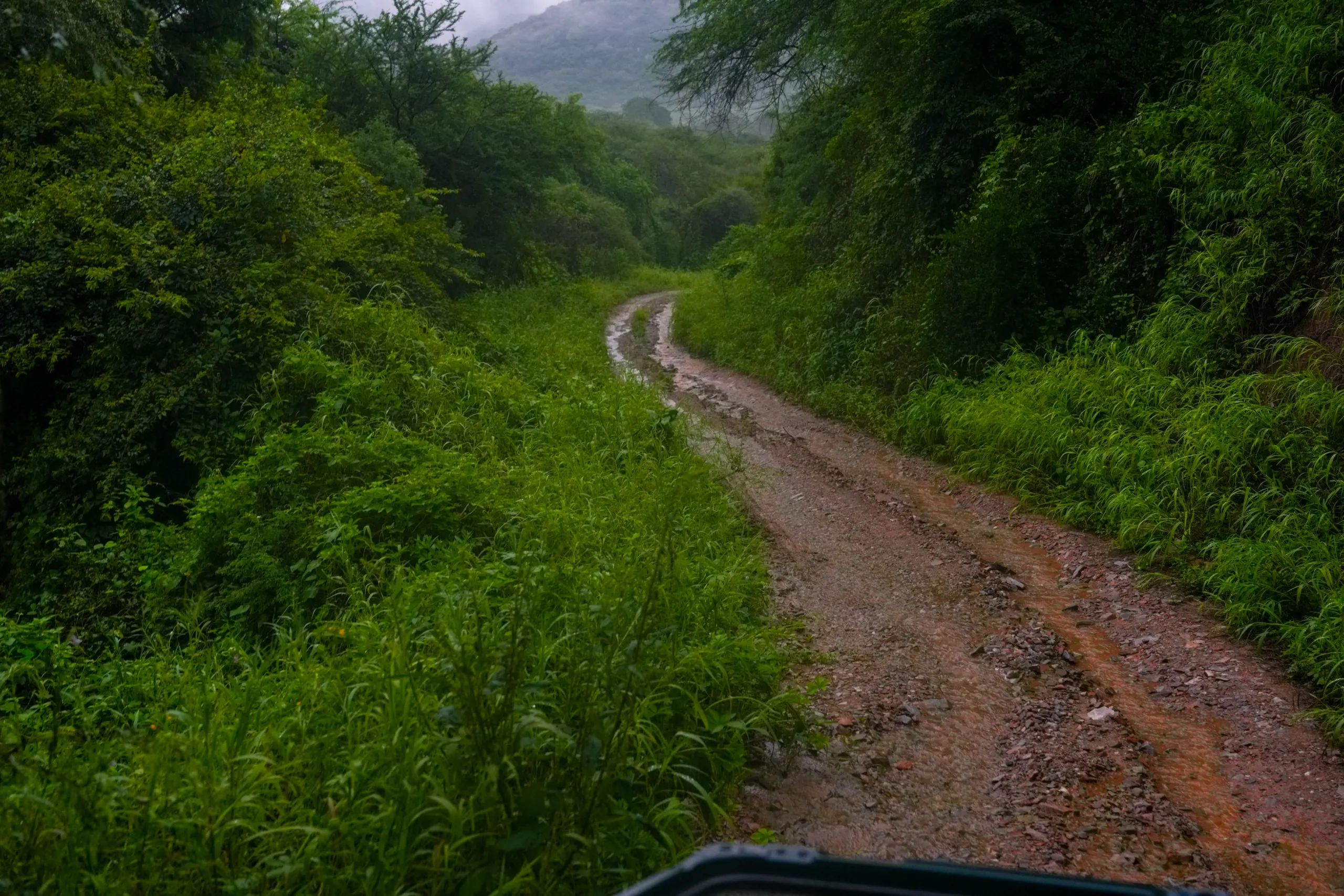
A rain‑washed safari track winds through fresh green forest in Jhalana, Jaipur.
This slower pace actually suits the place. When you drive gently, the forest has enough time to reveal things you would otherwise miss: a bird flashing across the path, a sudden movement inside a bush, or a herd of deer already standing at the edge of the track and watching you approach. The monsoon does not rush anywhere, and neither should you.
Misty hills and open grassland
One of the best views on a Jhalana safari comes when the trees briefly give way to a more open patch. The track runs along a valley, and the hills at the back rise in layers, part green, part hidden behind strips of cloud. On a good day, low mist sits in the folds and the scene looks more like a hill station than a reserve just outside Jaipur city.
This is where you really feel how unusual Jhalana is. You are still close to the city, but standing in front of misty hills, monsoon grassland and scattered trees that could easily belong to a much wilder landscape. Even if nothing crosses the track at that moment, the view itself is worth a pause.
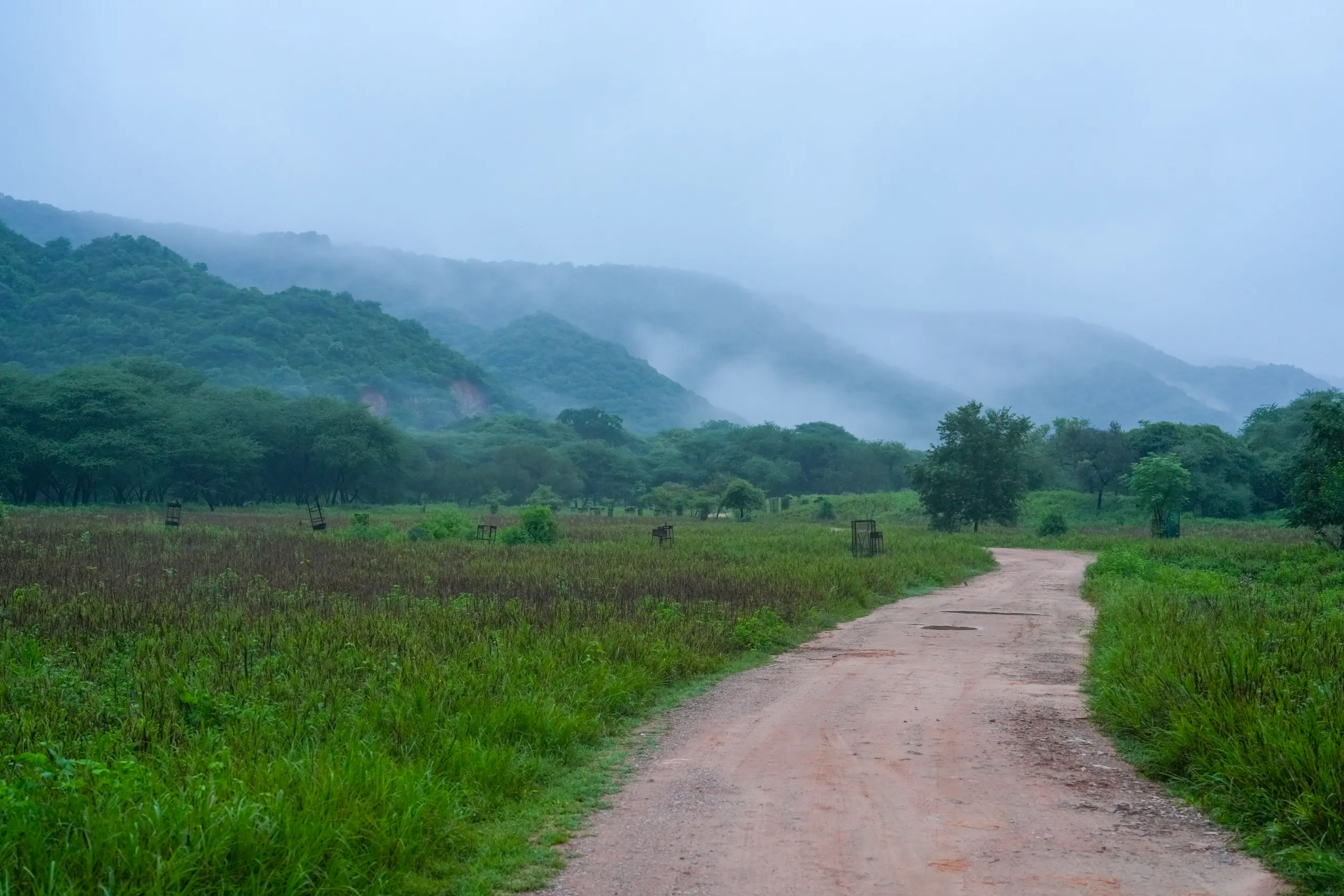
Low clouds hang over the hills while the track opens into grassland inside Jhalana reserve.
Sharing the forest with deer
Jhalana’s leopards get most of the attention, but the herbivores are the ones who shape how the place feels. A large sambar standing quietly in deep green cover can stop a jeep as effectively as any big cat. The animal’s size, dark coat and calm stare carry real weight, especially when the forest behind it is wet and full of texture.
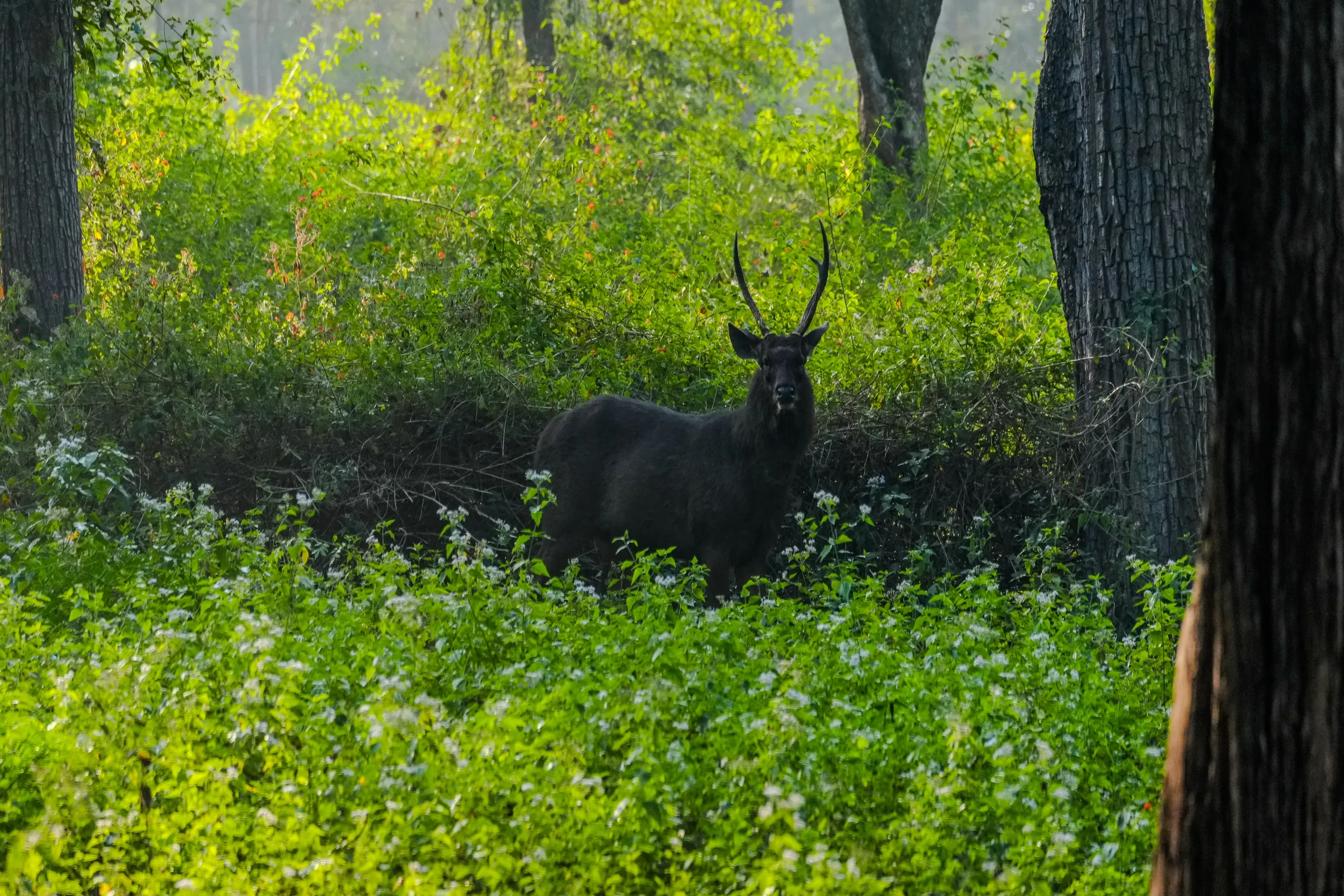
A large sambar stands quietly in thick green cover inside Jhalana leopard reserve.
On the open tracks, spotted deer add a different kind of charm. A doe and fawn stepping out onto the mud road turn a simple drive into a proper safari moment. The way the fawn bends to sniff the ground while the adult keeps watch says a lot about how life moves here: carefully, but without drama, unless the forest gives a warning.
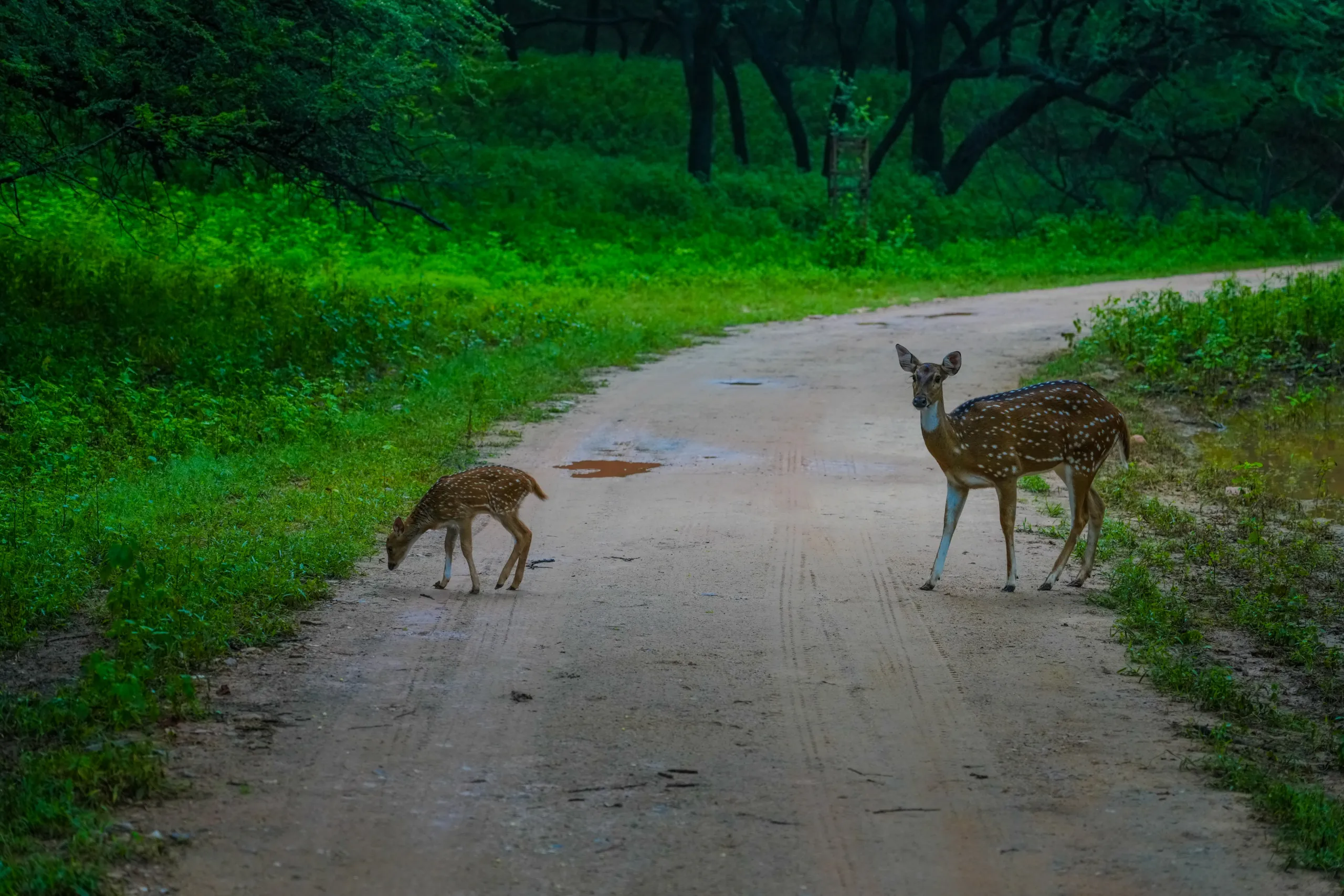
A doe and fawn step onto the mud road, turning a simple drive into a classic safari moment.
The mood of a rainy‑day safari
Monsoon safaris in Jhalana have their own rhythm. Tyre marks fill with water, the air smells of wet soil and leaves, and the sound of the jeep mixes with steady drips from the canopy. You might not see as much dust or distant visibility as in winter, but in return you get rich colour, softer light, and a sense that the forest is fully awake.
Sometimes the best part of the ride is a simple empty stretch of track with nobody on it. The puddles reflect the sky, thorn trees form dark arches over your head, and the silence is broken only by an occasional peacock call or a sudden alarm call somewhere far inside the green. These are the moments when you remember that Jhalana is not just a “leopard point” on a map but a full, breathing ecosystem.
The usually dry slopes of Jhalana turn into a thick green carpet in the rainy season.
Small, gentle sightings that stay with you
Not every memory from Jhalana has claws. A peahen sitting with her chicks on a fallen branch or guiding them through the grass can be just as special as any big predator. The way she keeps them close, listening and scanning the surroundings, brings out the quieter side of the reserve.
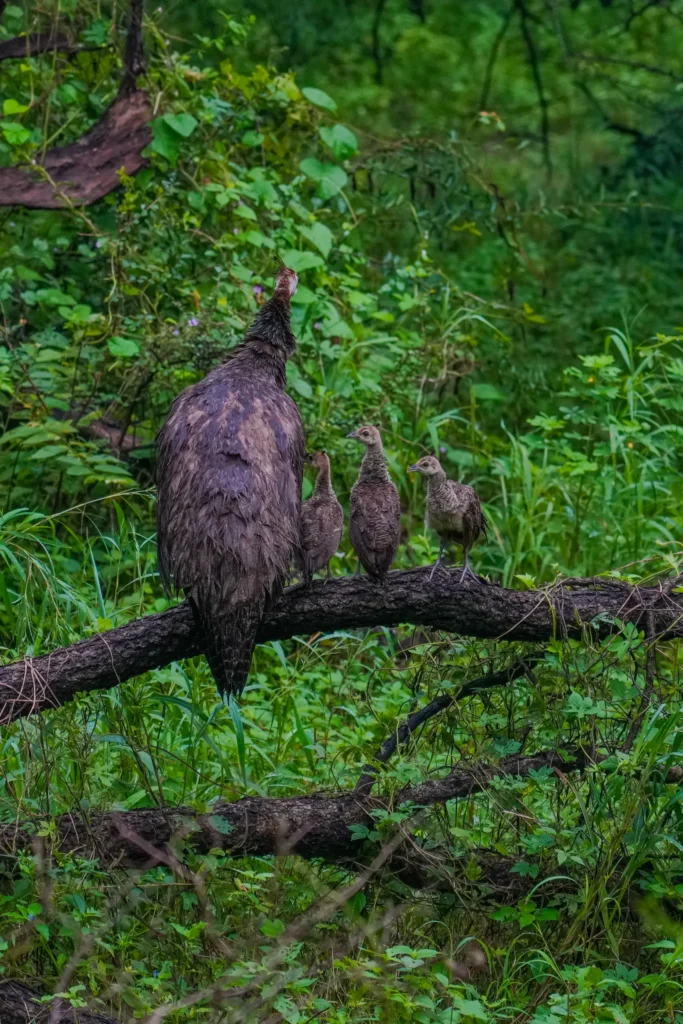
A peahen keeps her chicks close on a fallen branch inside the monsoon‑green forest.
These gentle encounters matter because they show Jhalana as a living forest, not only a photo spot. When you leave the gate after a monsoon safari, you may or may not have a leopard frame, but you are almost sure to carry images of green tunnels, misty hills, watchful deer and small family moments that give the place its soul.
Frequently Asked Questions (FAQs)
Notice Title
All images used in this blog are copyrighted. Unauthorized use, reproduction, or redistribution of these images is strictly prohibited. Please contact the site owner for permission or licensing inquiries.