

Leh, set high in the Indian Himalayas, is a land where the landscape surprises at every turn and every day brings a new palette of colors. Here, rushing rivers cut through rocky valleys, blue lakes gleam under vast skies, and ancient monasteries stand as a testament to the culture that has thrived for centuries. Walking, driving, or simply pausing in Leh, you’re always met with the sense of change—sometimes subtle, sometimes sharp, but always awe-inspiring.
The first impression for many arriving in Leh is its silence and scale. Towering, snow-capped mountains often rise above the settlements, making people and even houses seem miniature against nature’s enormous backdrop. At certain times, these peaks are cloaked in brilliant white, their slopes merging with the clouds. The cold air feels pure, and each breath brings a sense of being somewhere extraordinary.
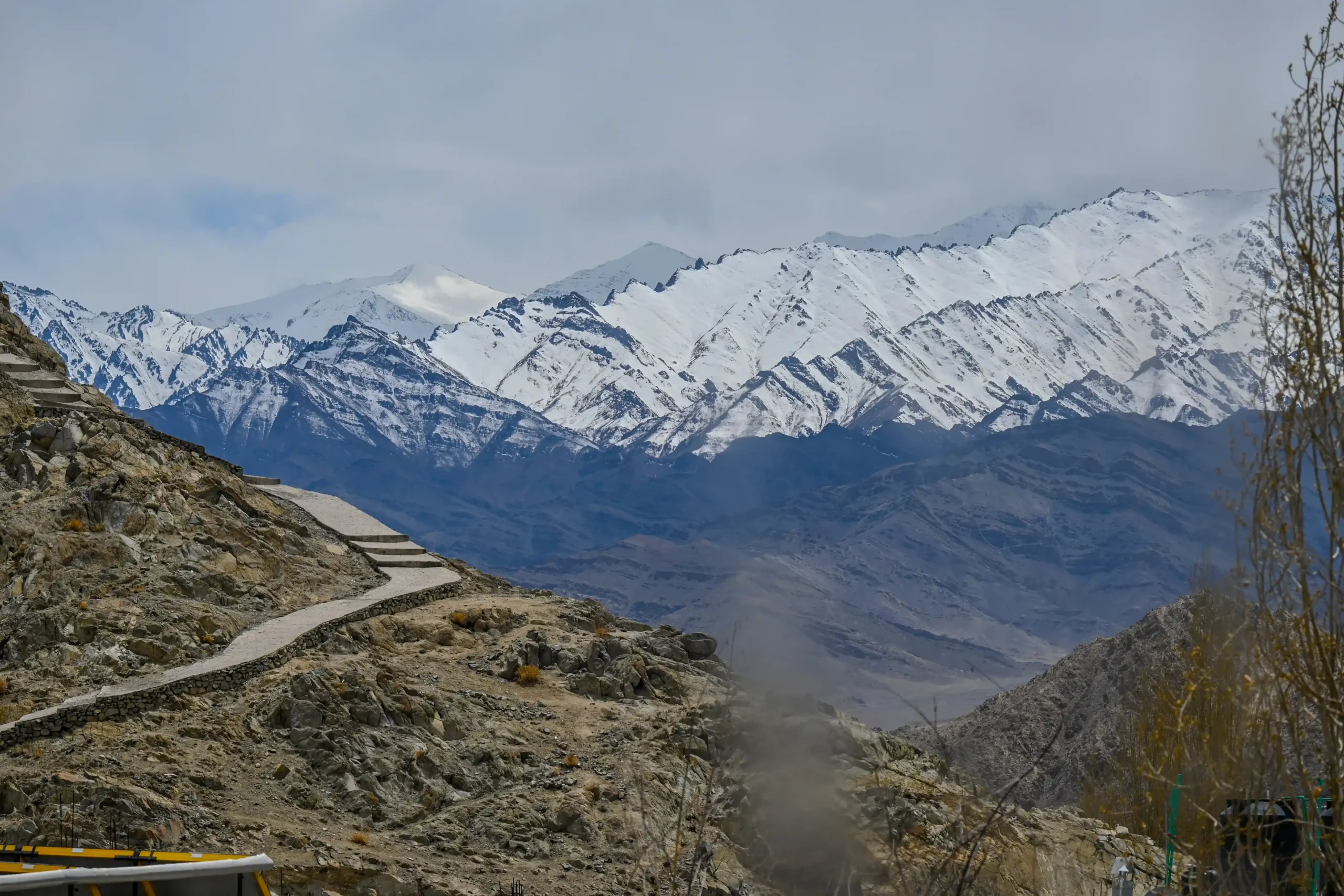
Leh’s mountains draped in snow.
The Majesty of Leh’s High Mountain Passes
Leh’s dramatic high passes, like the famous Chang La, underline the adventurous spirit of travel in this region. Here, the journey itself is the destination. The winding road is often tossed with snow and framed by walls of white, but color bursts forth as prayer flags dance in the wind, bright against the stark landscape. These moments remind every traveler of the deep traditions and resilience of the people who call Ladakh home.
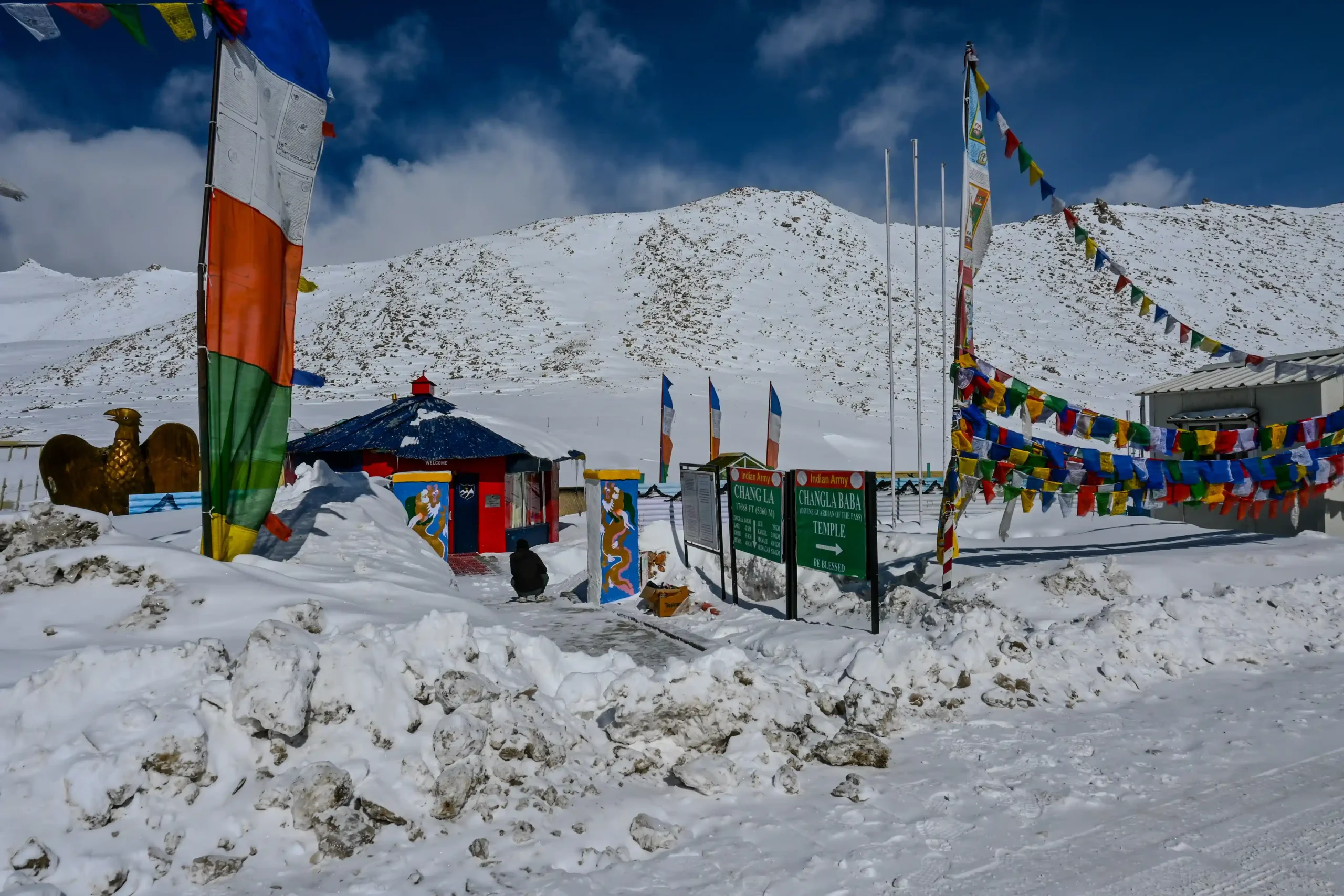
Chang La Pass covered in snow.
Rivers and Villages: The Lifeblood of Ladakh
As you journey down into valleys, life appears along the banks of powerful rivers. The Indus, with its swift flow, has nourished communities for generations. By its banks, villages wake up in the glow of the sun, their whitewashed houses and vibrant gardens forming a green patchwork against mountain stone. It’s a testament to the determination of Ladakhi villagers, who coax life out of even the harshest terrain.
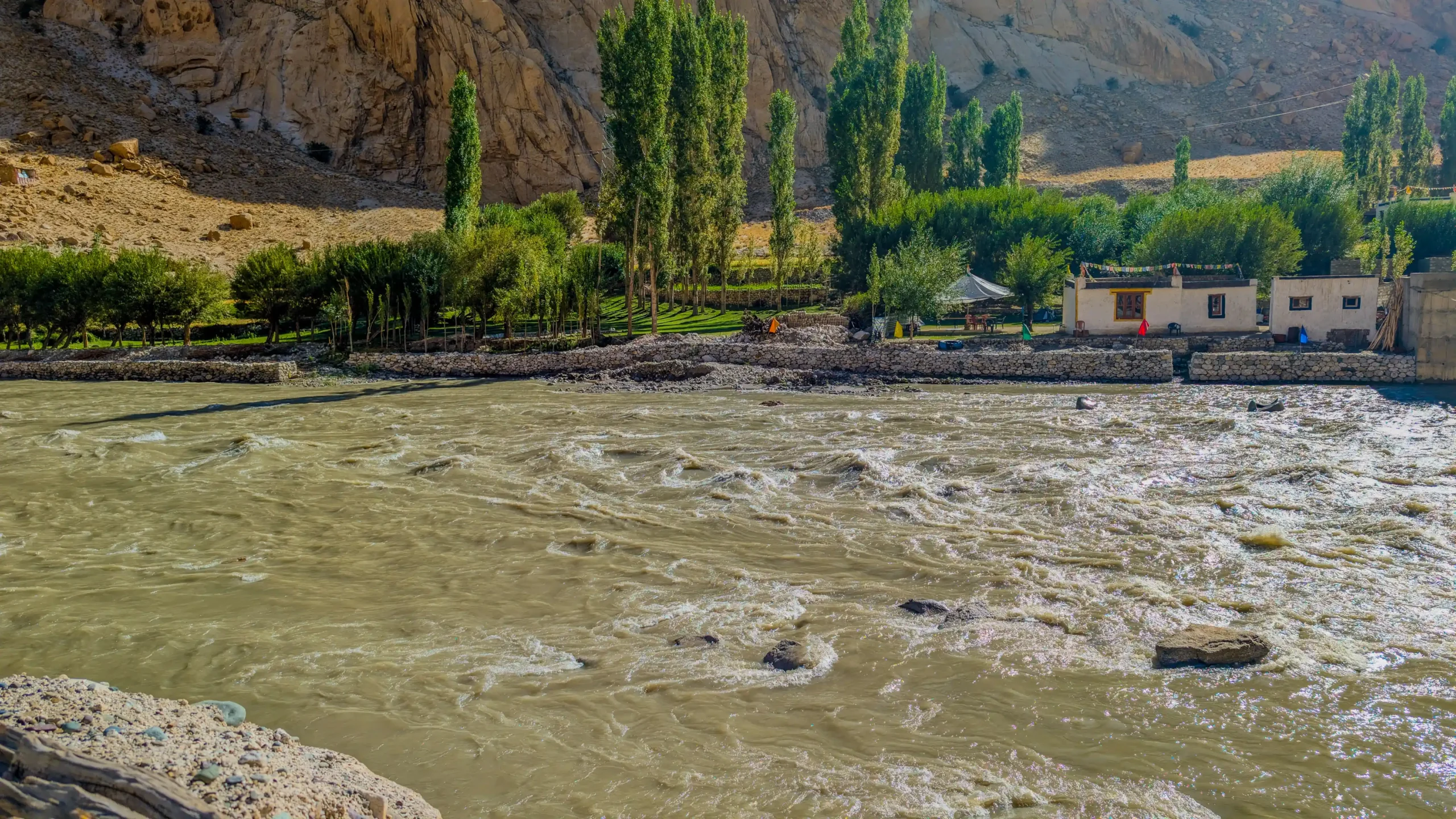
Green village and the Indus River in summer.
Pastures and Wildlife: Nature’s Pulse in Leh
Moving through Leh, you’re never far from the region’s wildlife and agricultural life. In open grasslands and by clear streams, herds of sturdy black yaks graze on fresh pasture, their thick coats protecting them from the chill. They wander past stone walls, crossing tiny brooks that shine in the sunlight, a scene that feels timeless, yet always new.
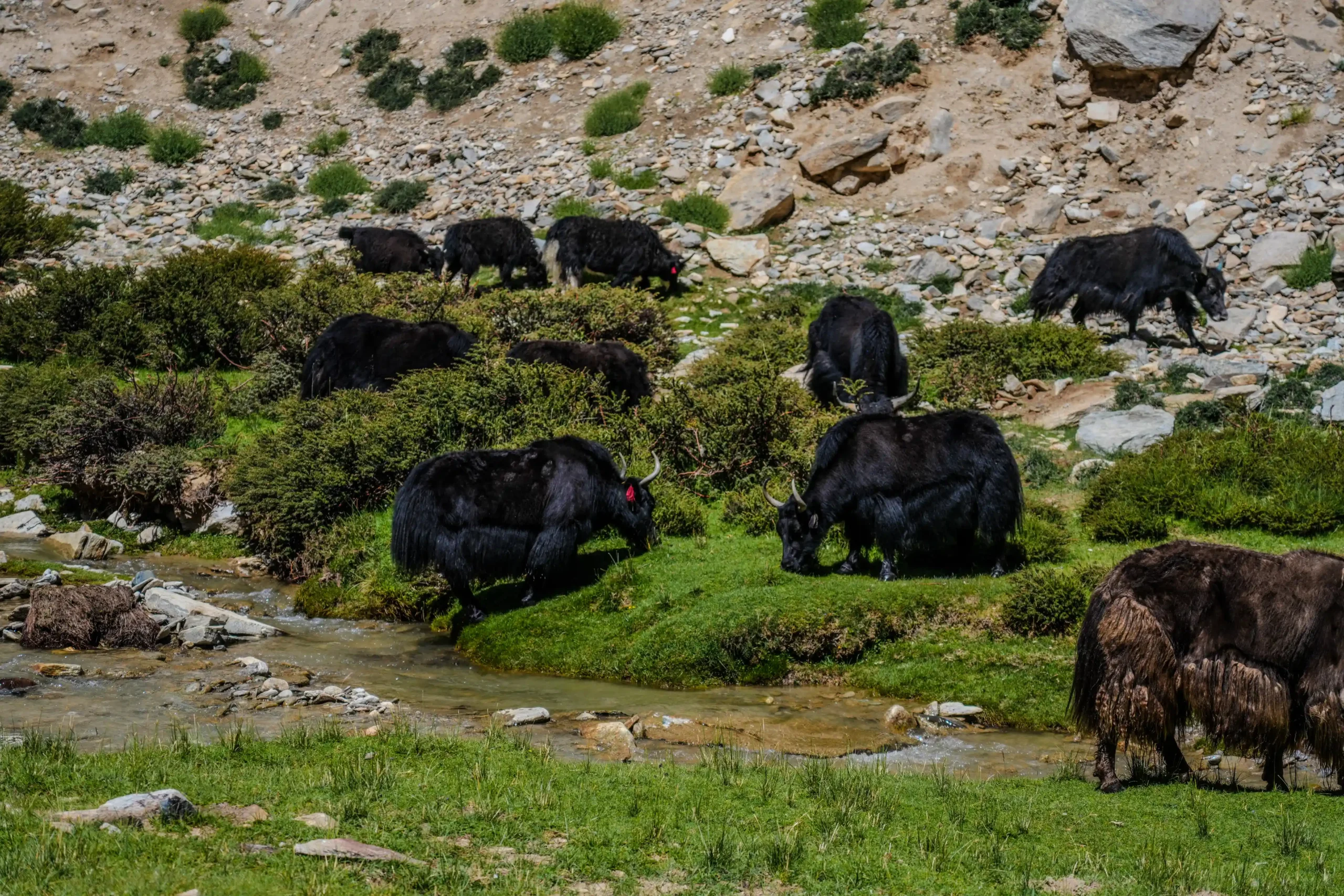
Herd of yaks on green meadows.
The Enchantment of Pangong Lake
Perhaps the most breathtaking scenes are found near the famed high-altitude lakes. Pangong Lake, with its vast surface, reflects every nuance of the shifting sky. Shades of blue change by the hour, sometimes turquoise, sometimes cobalt, always mesmerizing as they contrast with the barren, brown hills all around.
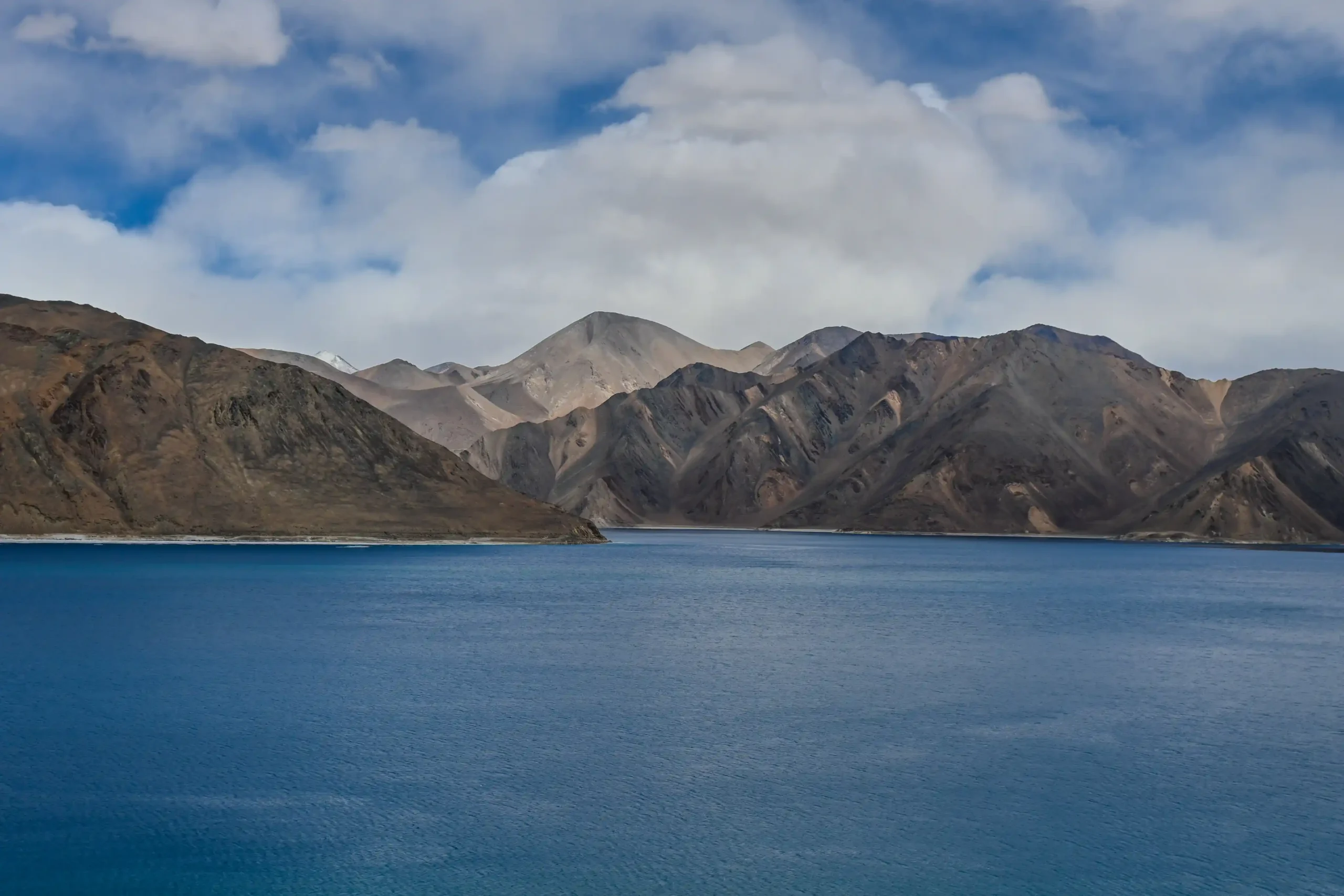
Pangong Lake’s stunning blue.
Tranquil Beauty of Tso Moriri Lake
Beyond Pangong, another watery marvel awaits—Tso Moriri. If Pangong is dramatic, Tso Moriri is calming, its pale blue waters understated but stunning, with snow-flecked ranges rising in the distance. Its stillness draws you in, making you reflect on how peaceful and grand Ladakh can be.
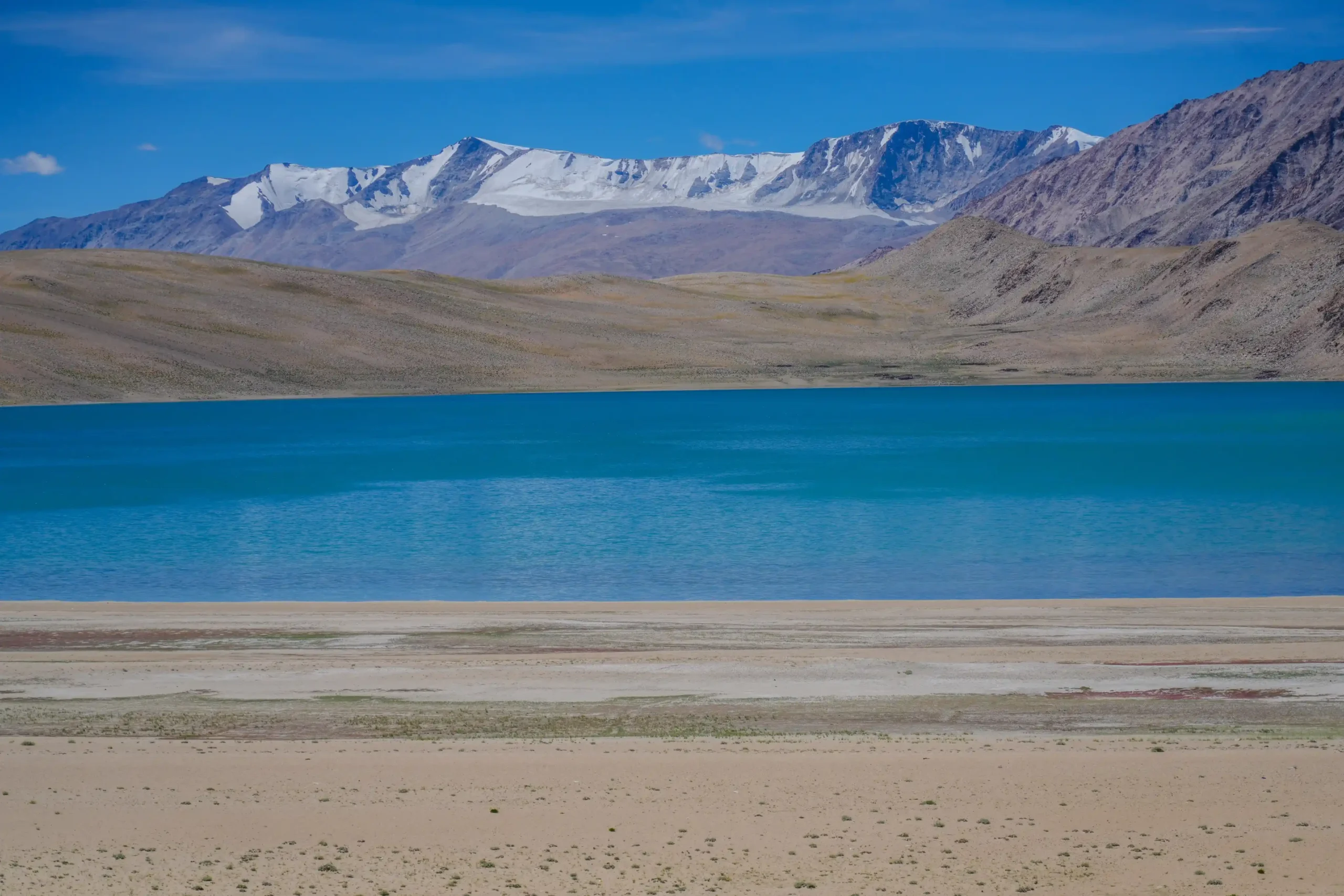
The tranquil blue of Tso Moriri Lake.
Sacred Peaks: Monasteries Above the Valleys
High above the valleys, ancient monasteries are perched dramatically atop rocky outcrops. Lamayuru Monastery, sometimes known as Ladakh’s “Moonland,” is legendary for its unique placement and golden light. The building glows in mid-day sun, while prayer banners add color and a sense of life. Around its base, the village spills down the hills, adobe homes clustered together against the wind and cold.
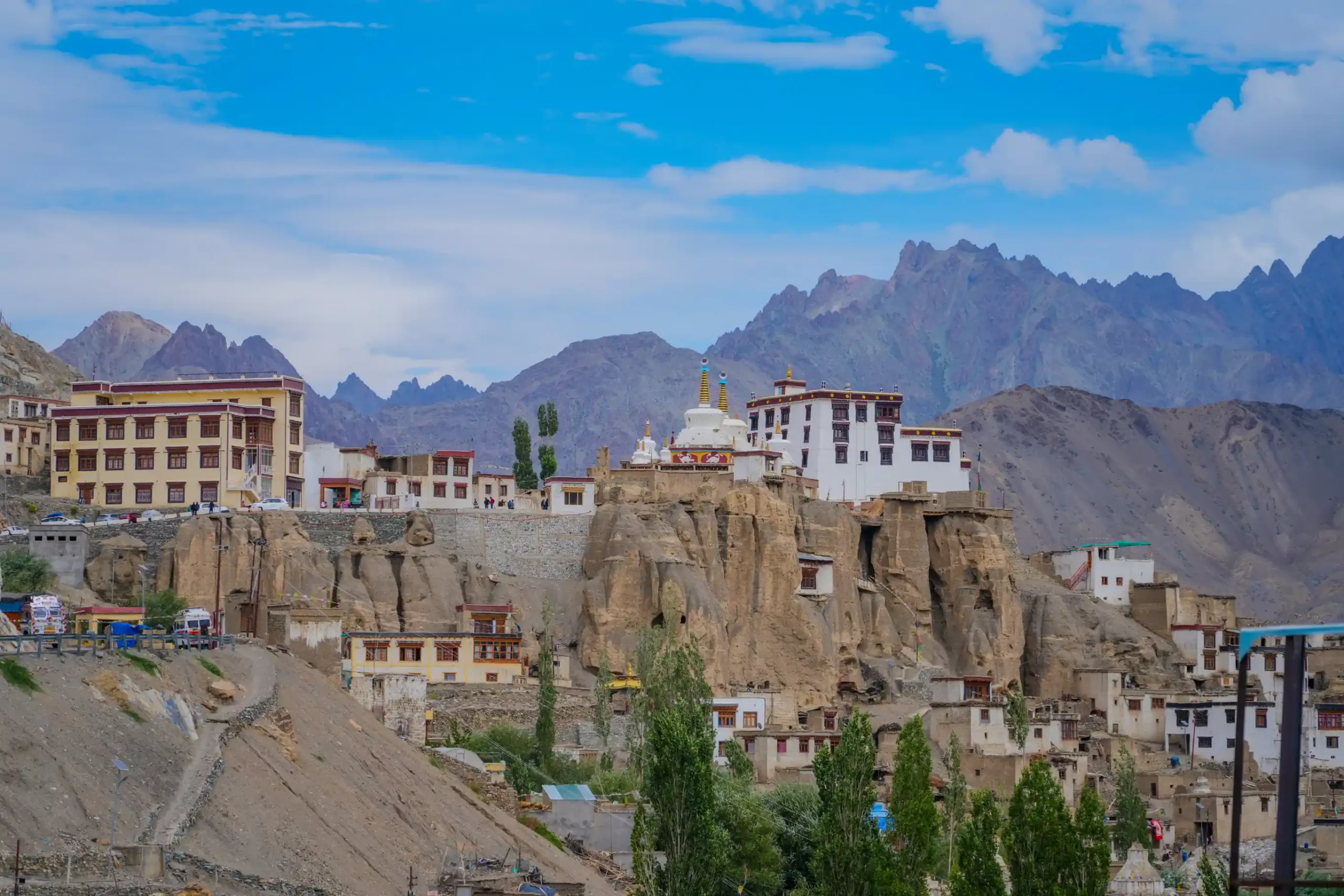
Lamayuru Monastery above the Himalayan valley.
Village Life: Tradition, Warmth, and Resilience
As you descend to the village, life becomes more intimate and detailed. Local families tend their fields and animals, exchange stories, and prepare for whatever the mountains might bring next. The villages are a tapestry of earth-toned, flat-roofed homes and lines of colorful prayer flags, surrounded by rugged Himalayan mountains. These dwellings, built from thick mud-brick or stone, are designed for warmth and resilience, blending seamlessly into the landscape. Here, daily rural life unfolds—family routines, farming, and old customs all define Ladakh’s genuine spirit, offering a window into the slow, harmonious rhythm of mountain living. There is a quiet energy in Ladakh’s villages—a mixture of tradition, hope, and the acceptance that nature is partner as much as challenge.
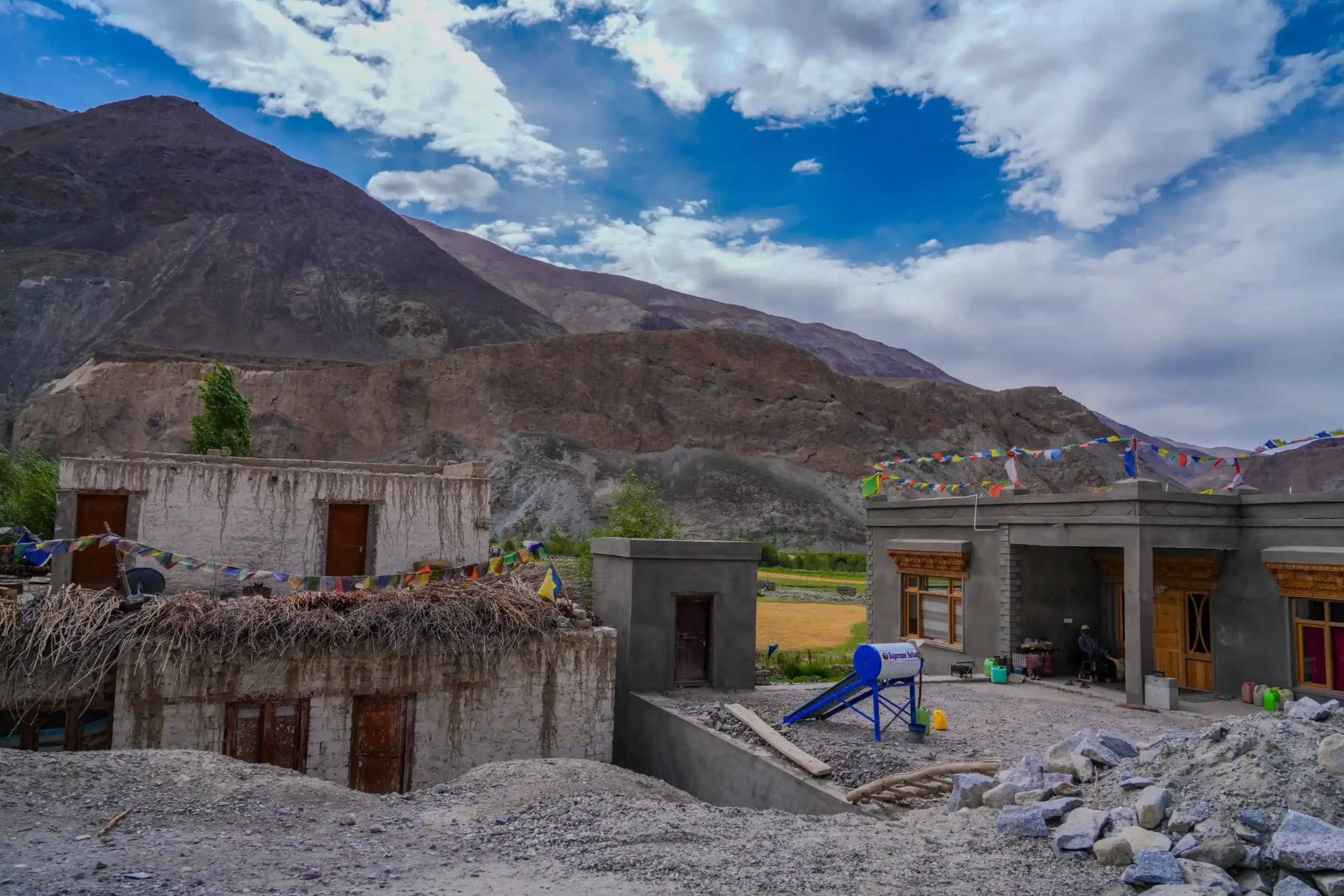
Village homes in Ladakh’s high mountains.
Leh is, at every moment, a place of dramatic transition. Some changes are brought on by weather, others by the cycles of village life, festivals, and farming. But what never changes is the raw beauty and deep spirit of the mountains. A journey through Leh becomes a collection of memories—some vivid, some hushed, all unforgettable. Whether you yearn for adventure, culture, or just to witness nature at its boldest and most poetic, Leh’s high mountains are a promise of wonder, every day of the year.
Wherever you look—across a frozen river, through green fields alive with yaks, or up at a monastery perched on brown stone—Leh tells the story of nature’s endless change and human endurance. This is not just a place to visit; it’s a land to experience, season by season, color by color, memory by memory. Each journey through Leh is a new chapter, a new set of colors and wonders, and an invitation to return in every season.
Notice Title
All images used in this blog are copyrighted. Unauthorized use, reproduction, or redistribution of these images is strictly prohibited. Please contact the site owner for permission or licensing inquiries.