
Rajasthan isn’t just a state—it’s a canvas painted with royal palaces, silent ruins, golden deserts, and landscapes you wouldn’t expect to find in India. Every corner here tells a story, and sometimes a single photograph can capture more than words. In this visual journey, we explore Rajasthan through striking images—from the shimmering lakeside palaces of Udaipur and the mysterious lanes of ghost villages, to the calm embrace of Thar’s sand dunes and the almost otherworldly marble formations of Kishangarh. Each frame reveals a different mood of this regal land, blending history, culture, nature, and surprise into one unforgettable portrait.
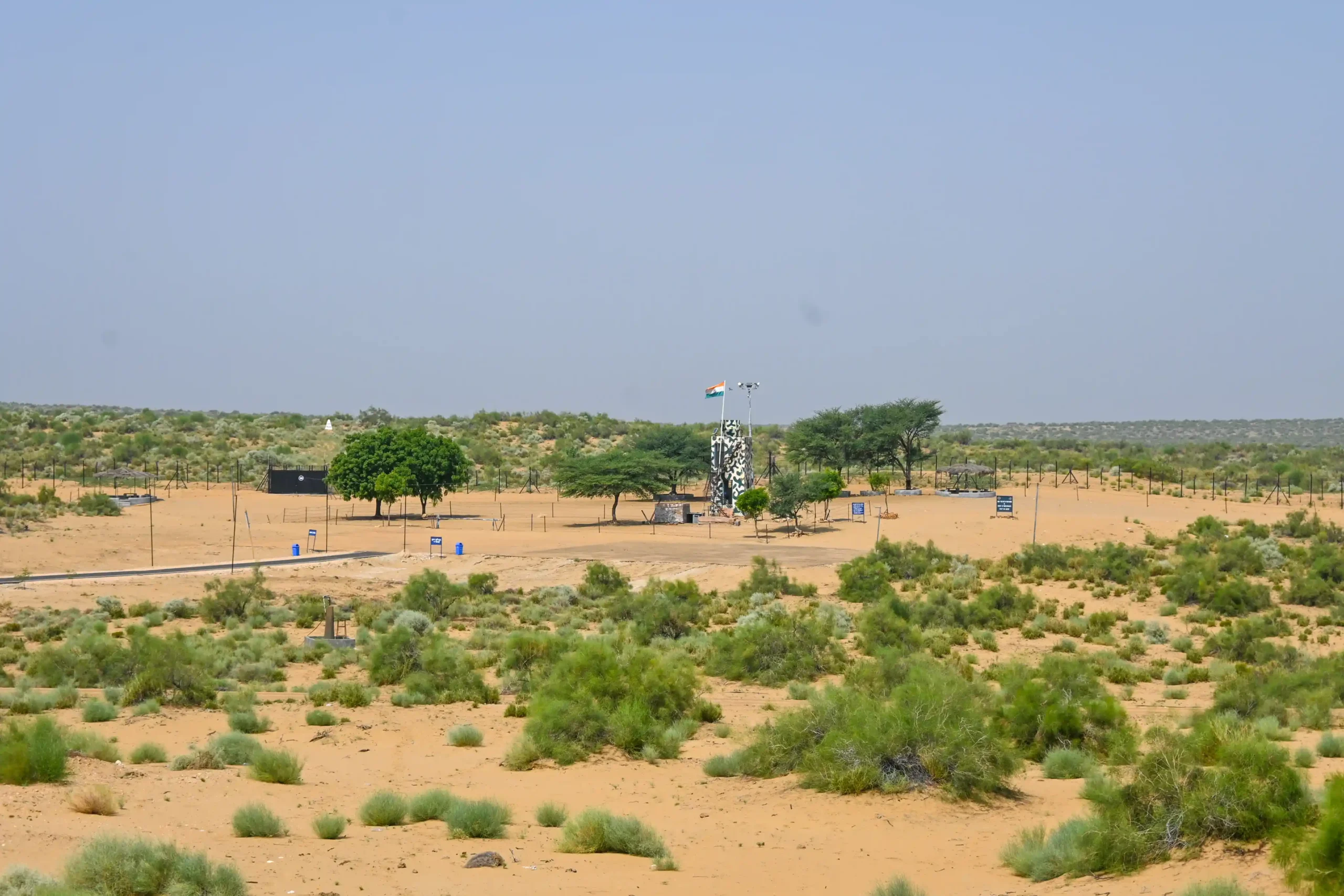
BSF outpost stands amid the Thar sands near Jaisalmer, guarding the Indo‑Pak frontier.
Udaipur – Lakes, Palaces, and Soft Evening Light
Udaipur is called the calm heart of Rajasthan. Lakes surround the city, low green hills lie in the distance, and beautiful palaces rise above the water like pages from a history book. The city was founded in 1559 by Maharana Udai Singh II, who chose this lake-filled valley as his new capital. That decision gave Udaipur its special mix of water, stone, and soft light.
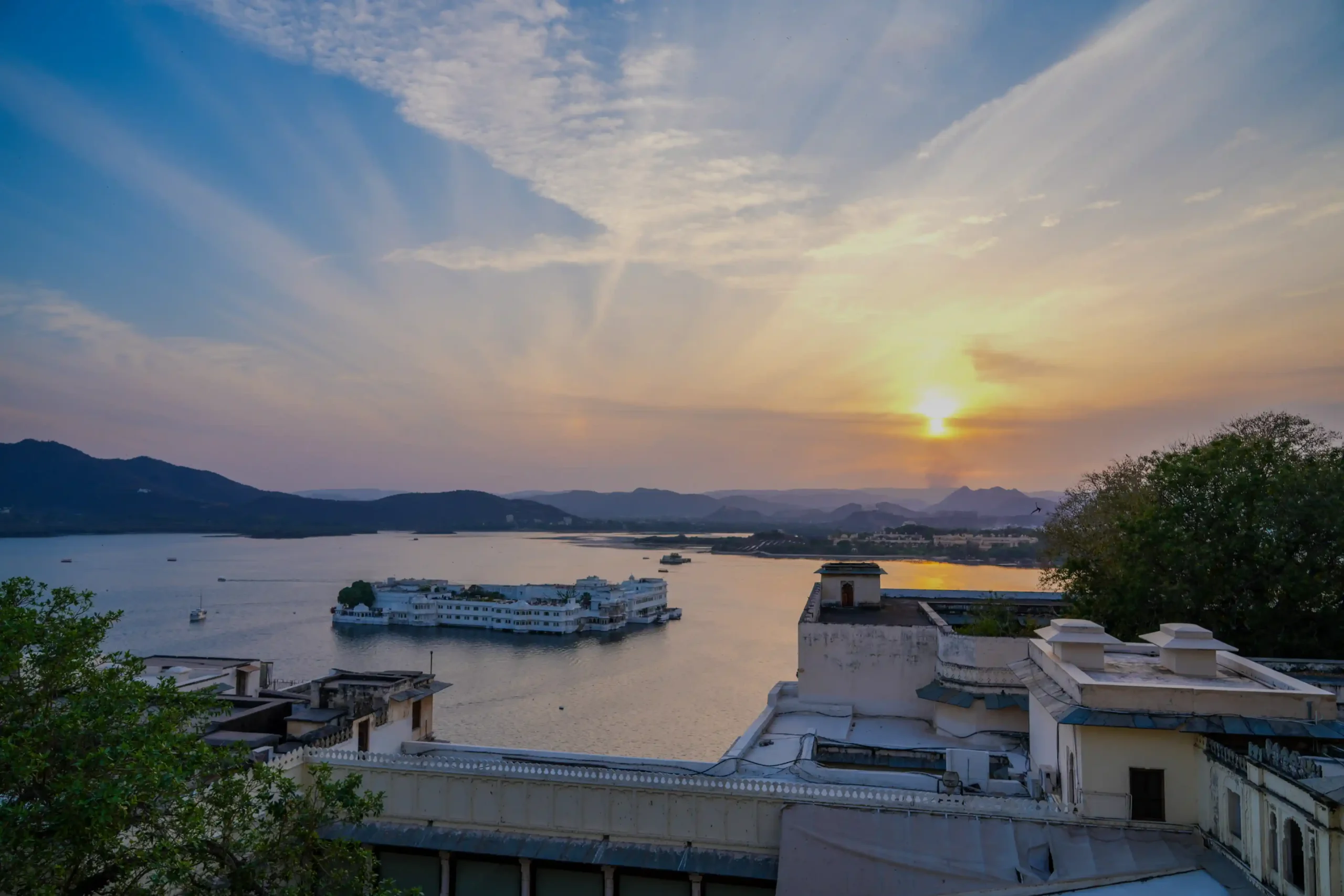
Golden hour washes Lake Pichola as the white Taj Lake Palace glows beneath the Aravalli skyline in Udaipur.
City Palace – The Grand Face of Udaipur
City Palace stands right on the eastern bank of Lake Pichola. It is the largest palace complex in Rajasthan and was built bit by bit over almost 400 years. Different rulers added new sections—courtyards, balconies, towers—so the palace is like a timeline of Udaipur’s history.
By day, it looks peaceful with its cream-coloured walls reflecting on the water. At night, yellow lights glow on its arches and jharokha windows, making it shine like gold. From a boat, you can see it as one long, grand palace. Inside there are museums with royal paintings, mirrors, weapons and clothes.
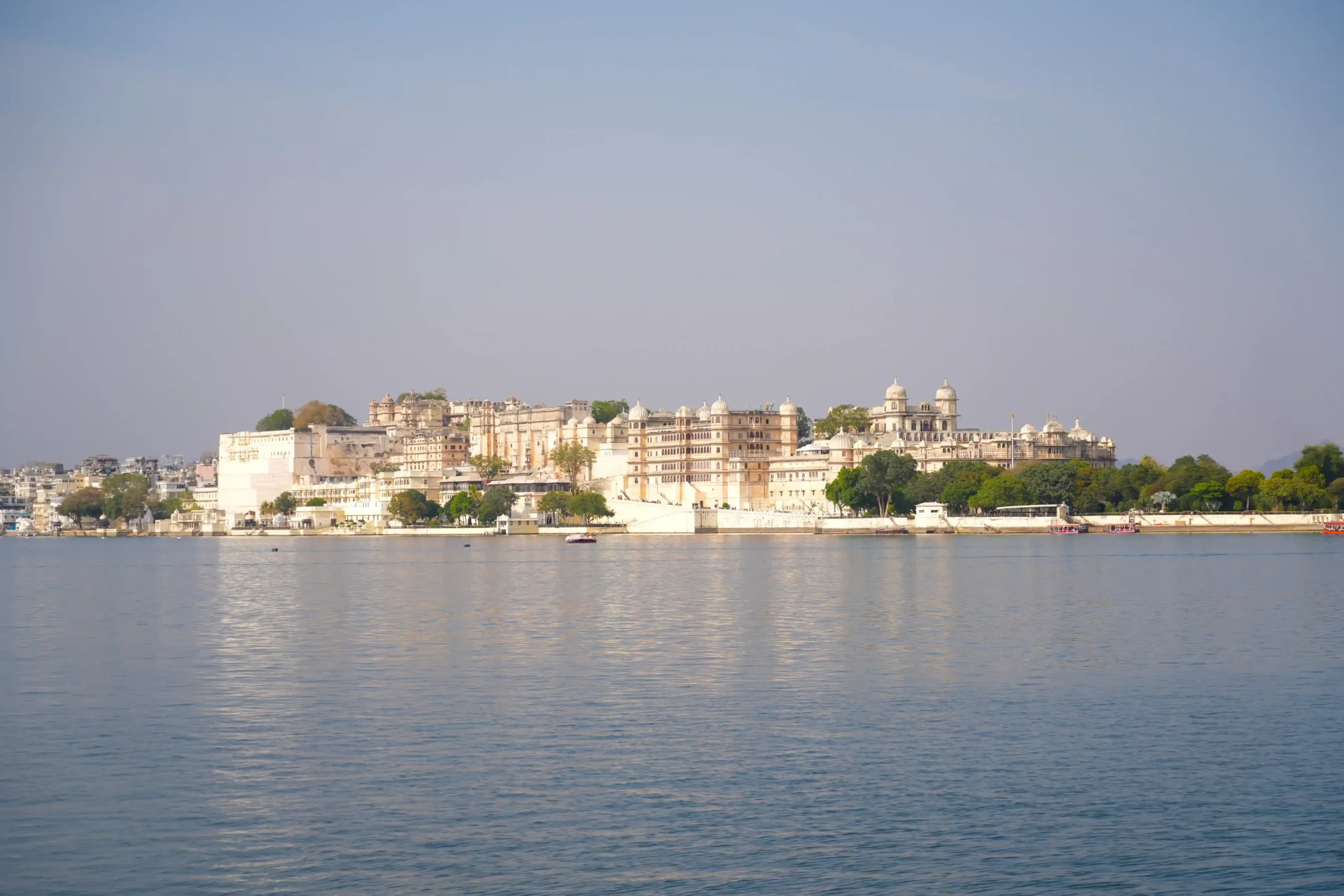
The City Palace stretches along Lake Pichola, its pale façades rising above calm blue water.
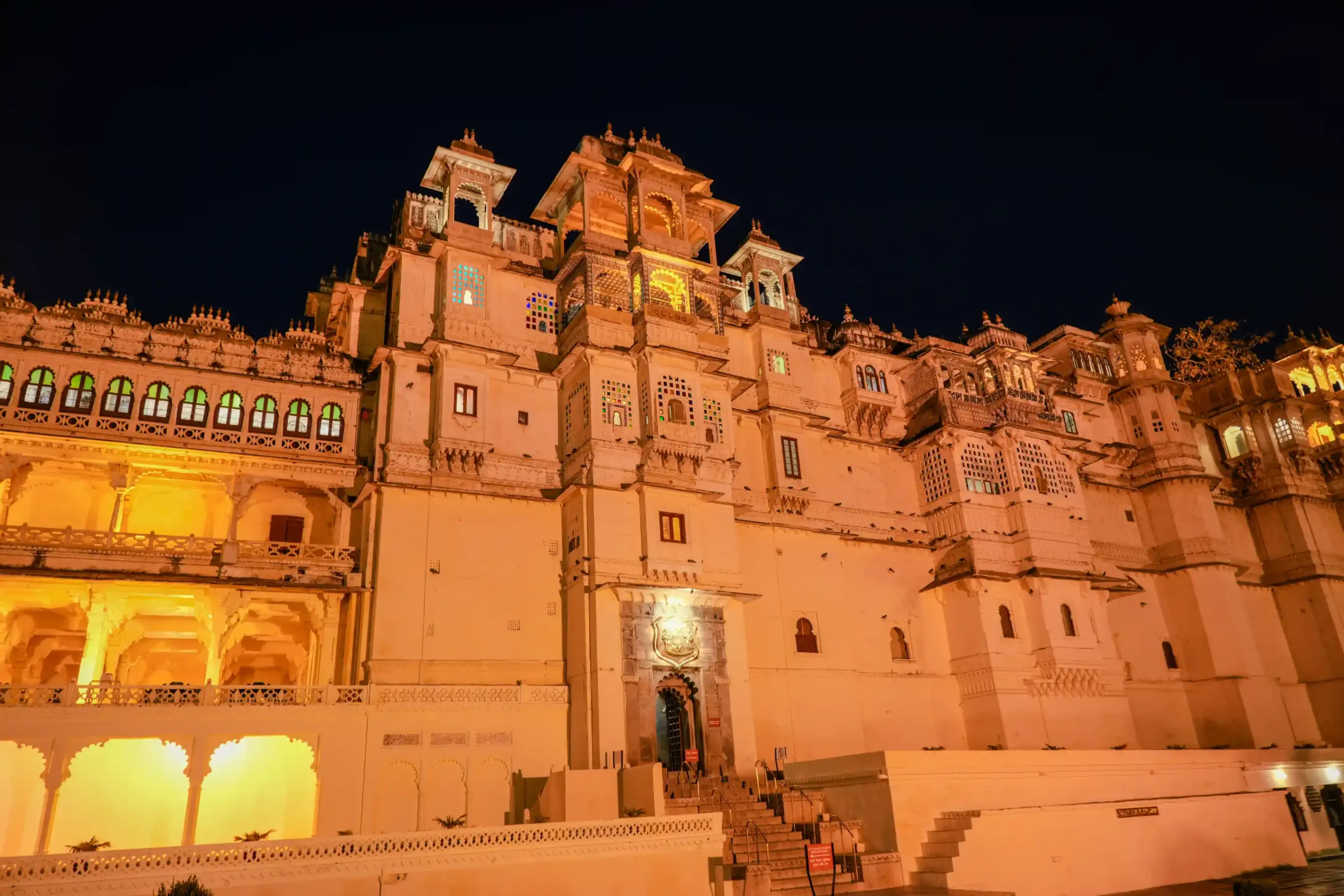
Golden lights wash over Udaipur’s City Palace, revealing its layered Rajput–Mughal architecture after dusk.
Taj Lake Palace – A Floating Dream in Marble
In the middle of Lake Pichola is a white building that looks like it’s floating—that is the Taj Lake Palace, also called Jag Niwas. It was built between 1743 and 1746 by Maharana Jagat Singh II as a summer palace. The entire building is made of white marble, and it seems to rise straight from the water.
At sunset, the palace reflects the colours of the sky while boats quietly pass by. The hills of the Aravalli range make a soft background. Today it is a luxury hotel run by Taj Hotels, and it became famous worldwide after appearing in the James Bond movie Octopussy. Even if you never stay there, seeing it from the shore or a boat is magical.
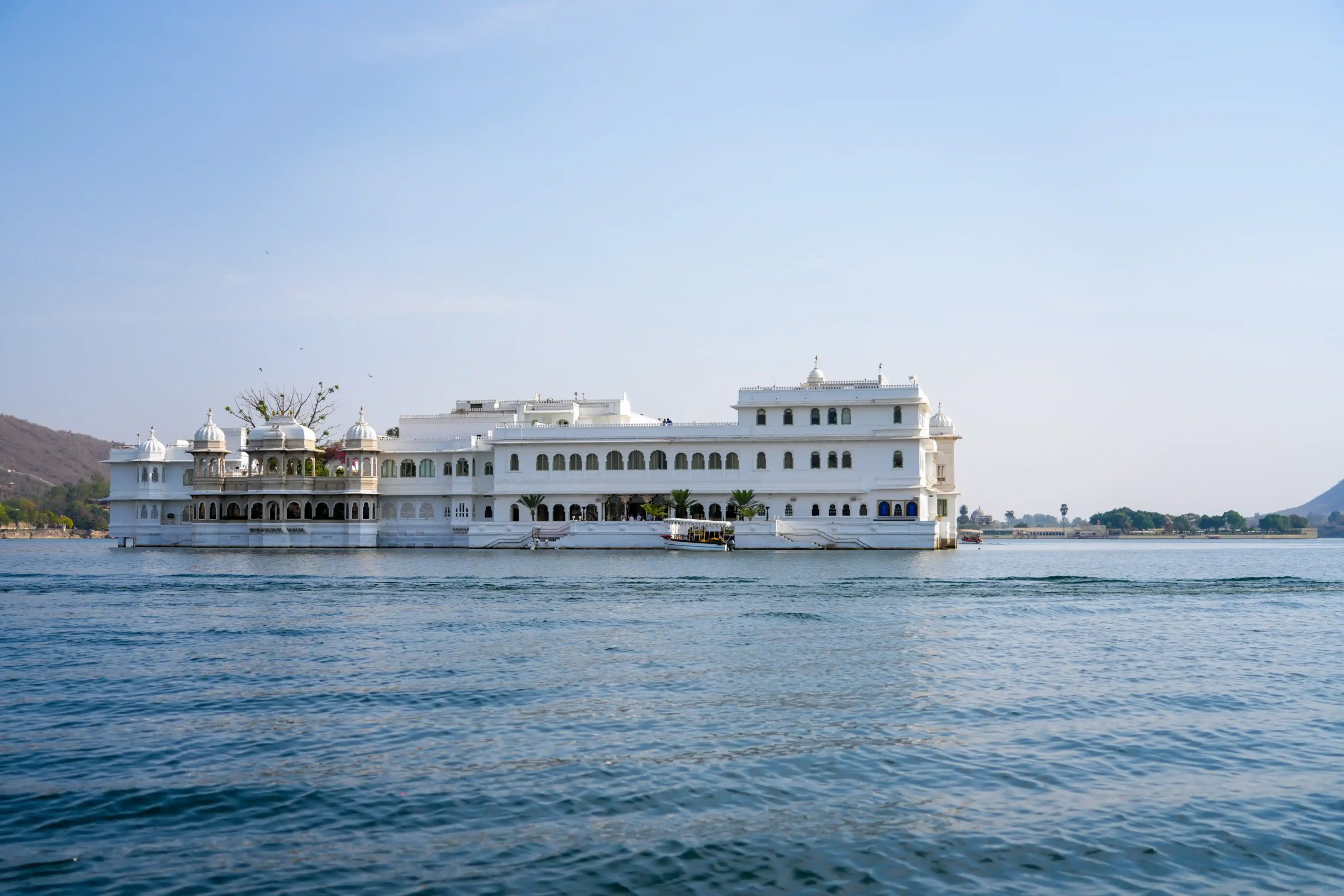
A boat glides past Udaipur’s Taj Lake Palace, the iconic white marble hotel on Lake Pichola.
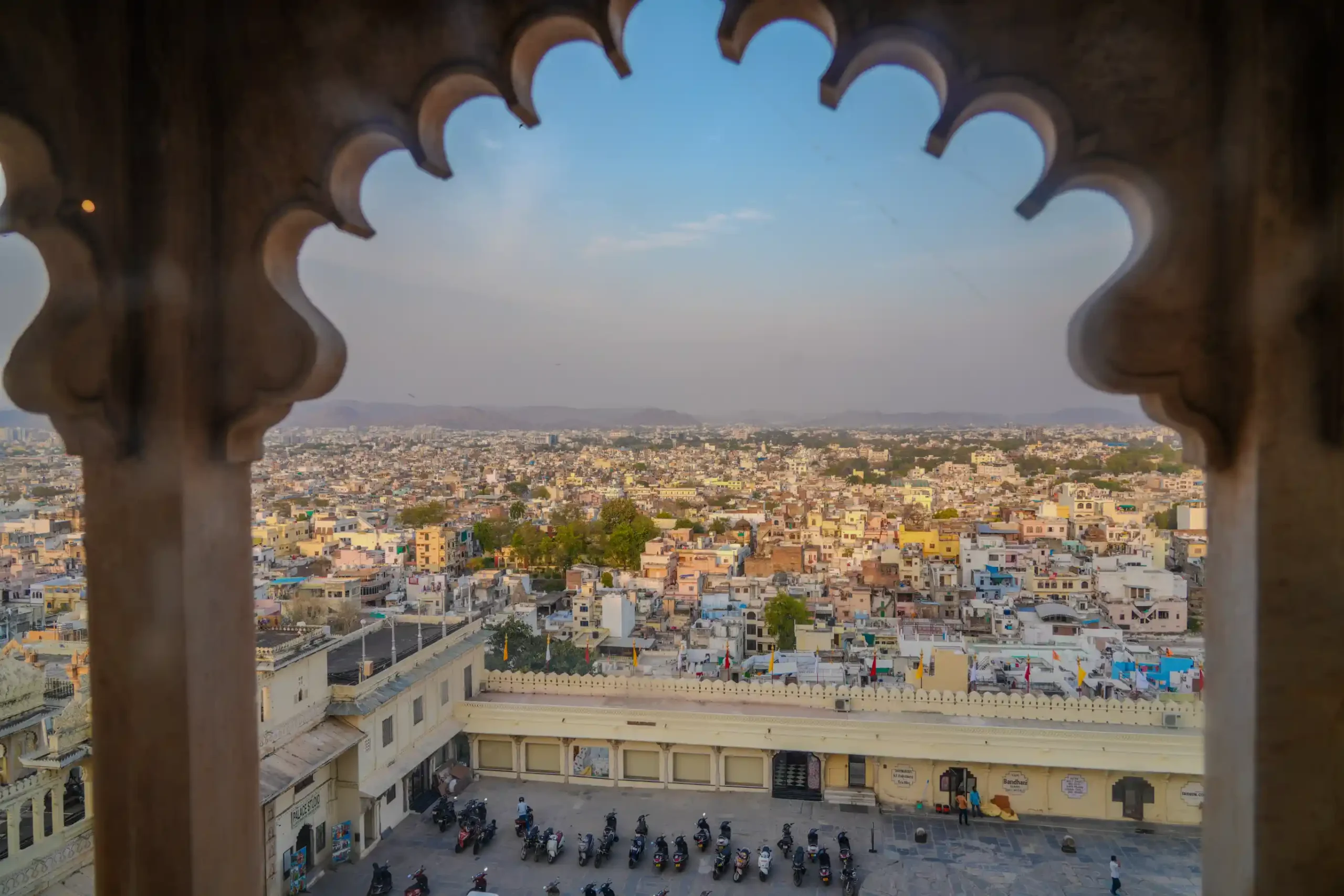
Udaipur’s old city spreads beyond a scalloped palace arch.
Monsoon Palace – The Hilltop View
High on a hill above the city stands the Monsoon Palace, or Sajjangarh. It was built in the late 1800s by Maharana Sajjan Singh, who wanted to watch clouds and the monsoon rains from here. The palace is simple but striking—white walls, domes, and terraces that look out over the whole city.
From here, you can see both Lake Pichola and Fateh Sagar Lake, the City Palace, and the rolling Aravalli hills. The view is best in the late afternoon when the sunlight is golden and the air feels open and fresh.
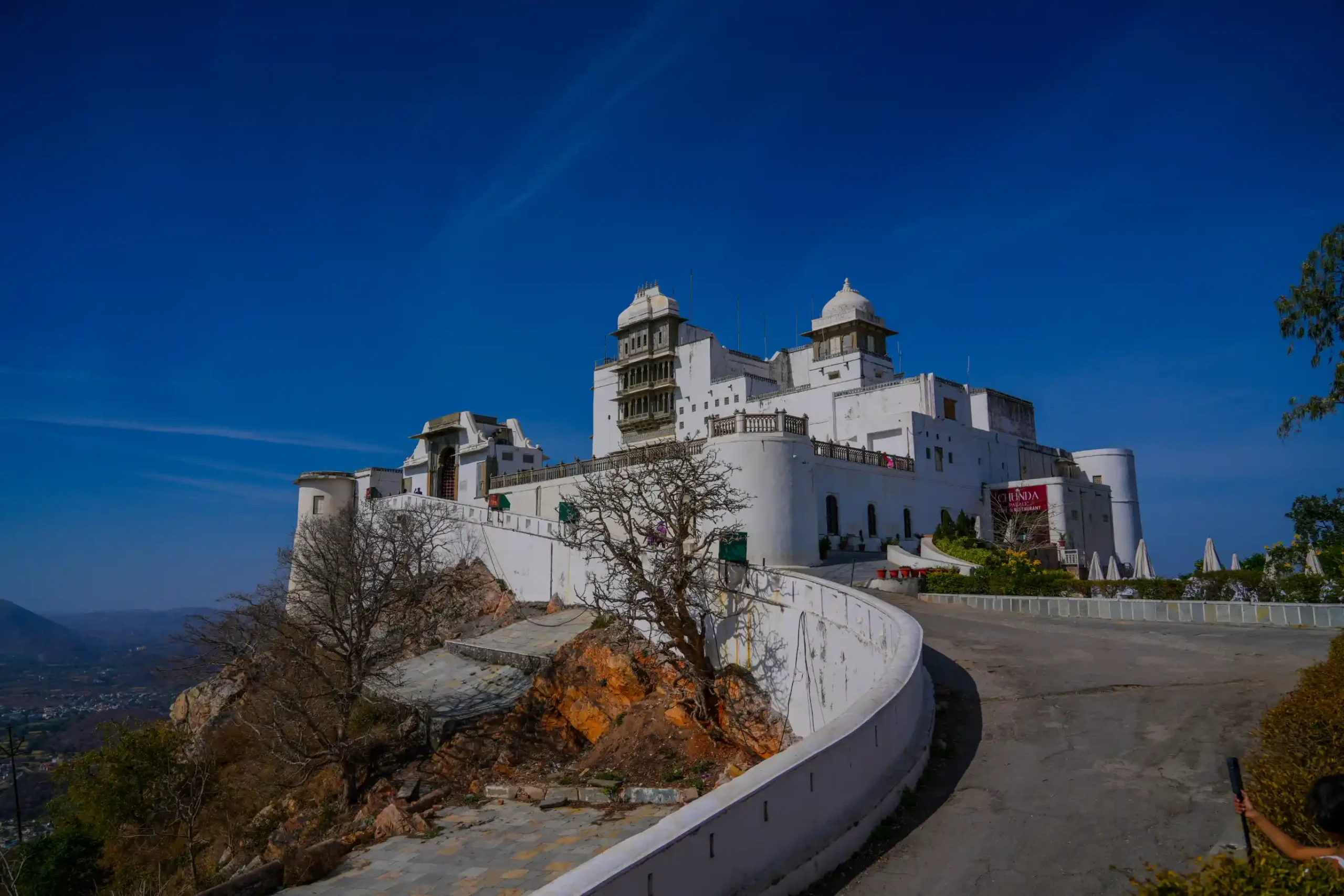
Sajjangarh’s white Monsoon Palace crowns a hill above Udaipur’s Aravalli skyline.
Bhangarh Fort, Alwar – Stone Memories and Strong Legends
The Bhangarh images show roofless homes, broken lanes, and scrub-covered hills wrapping around a fort-palace—a town that once held markets, temples, and havelis, now quiet and open to the sun. The site’s “haunted” fame is tied to local stories, but what stands out in fact is the rule posted by the Archaeological Survey of India: entry is prohibited between sunset and sunrise, which keeps visits to daylight hours and adds to the place’s mystery. In the photos, nature and time have softened sharp walls into textured lines, and wide views make the past feel close but unreachable—a powerful feeling when looking at ruins spread under a clear sky.
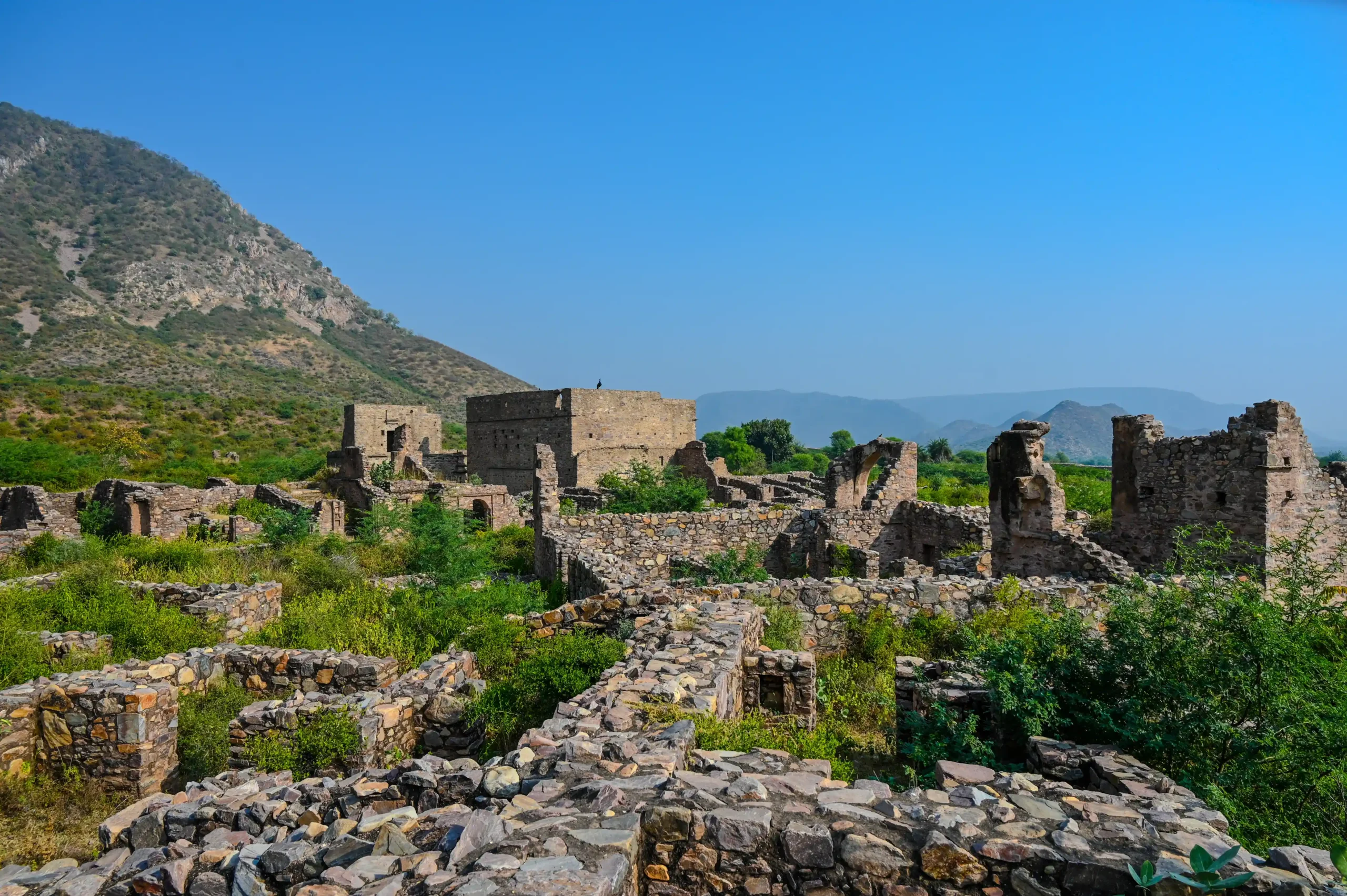
Weathered stone walls of Bhangarh Fort sprawl beneath the Aravalli slopes, a site famed for no entry after sunset.
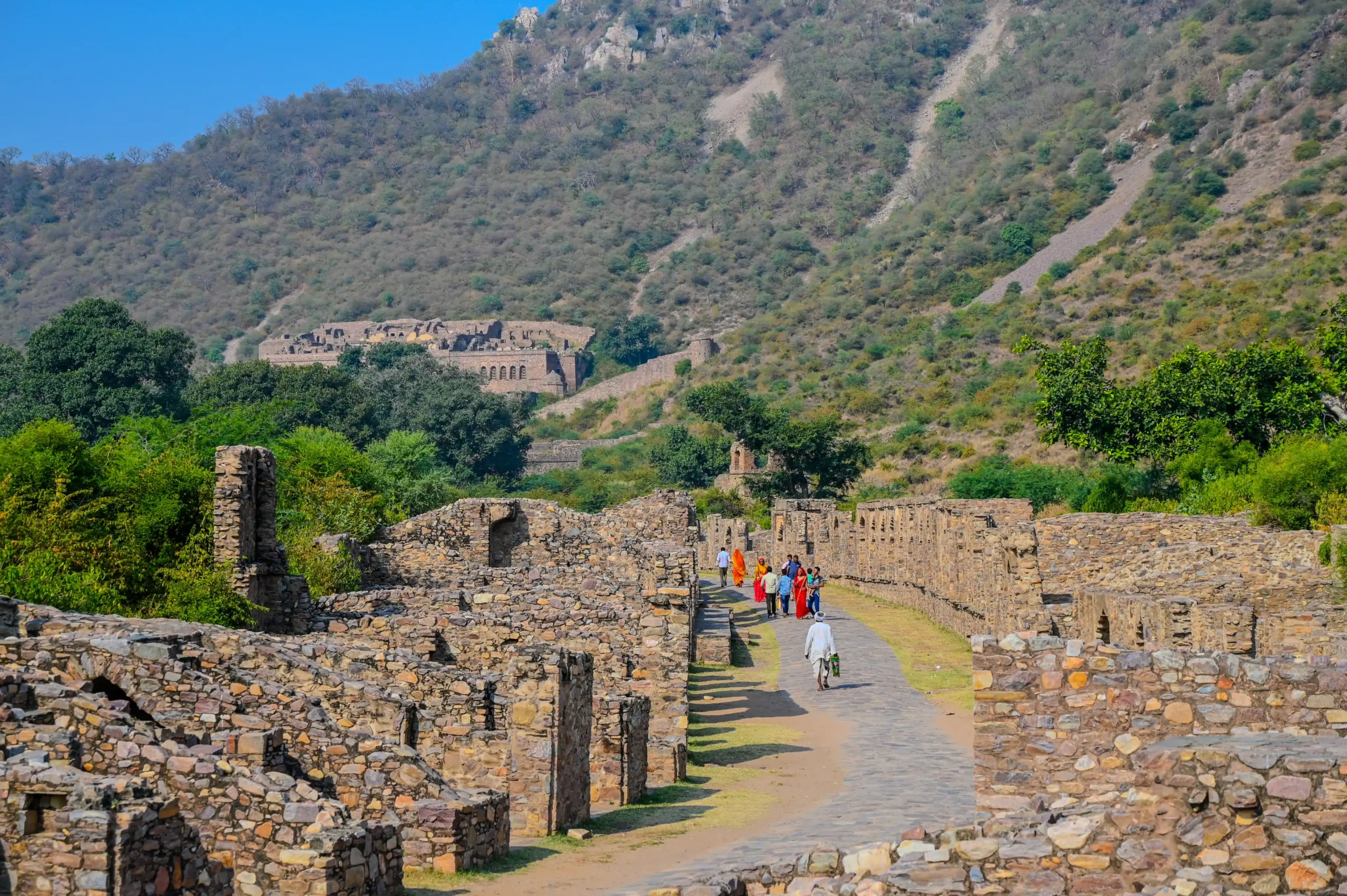
Daytime visitors explore Bhangarh’s crumbling lanes, a fortress famed for no‑entry after sunset.
Kuldhara near Jaisalmer – A Silent Village with Artful Walls
Kuldhara’s photos capture a desert village left quiet: sandstone and mud-plastered homes, small scalloped windows, a carved jharokha above a central doorway, and white folk motifs painted on brown walls. The village is linked to the Paliwal Brahmins and known for the legend of sudden abandonment, a story that adds emotion to what are, in simple terms, well-built homes in a harsh climate. Up close, the painted patterns feel delicate and personal; step back, and the ruins spread across the scrub, showing a settlement that once had order, craft, and care. The mood is not scary—it is contemplative: a place where wind and memory share the streets.
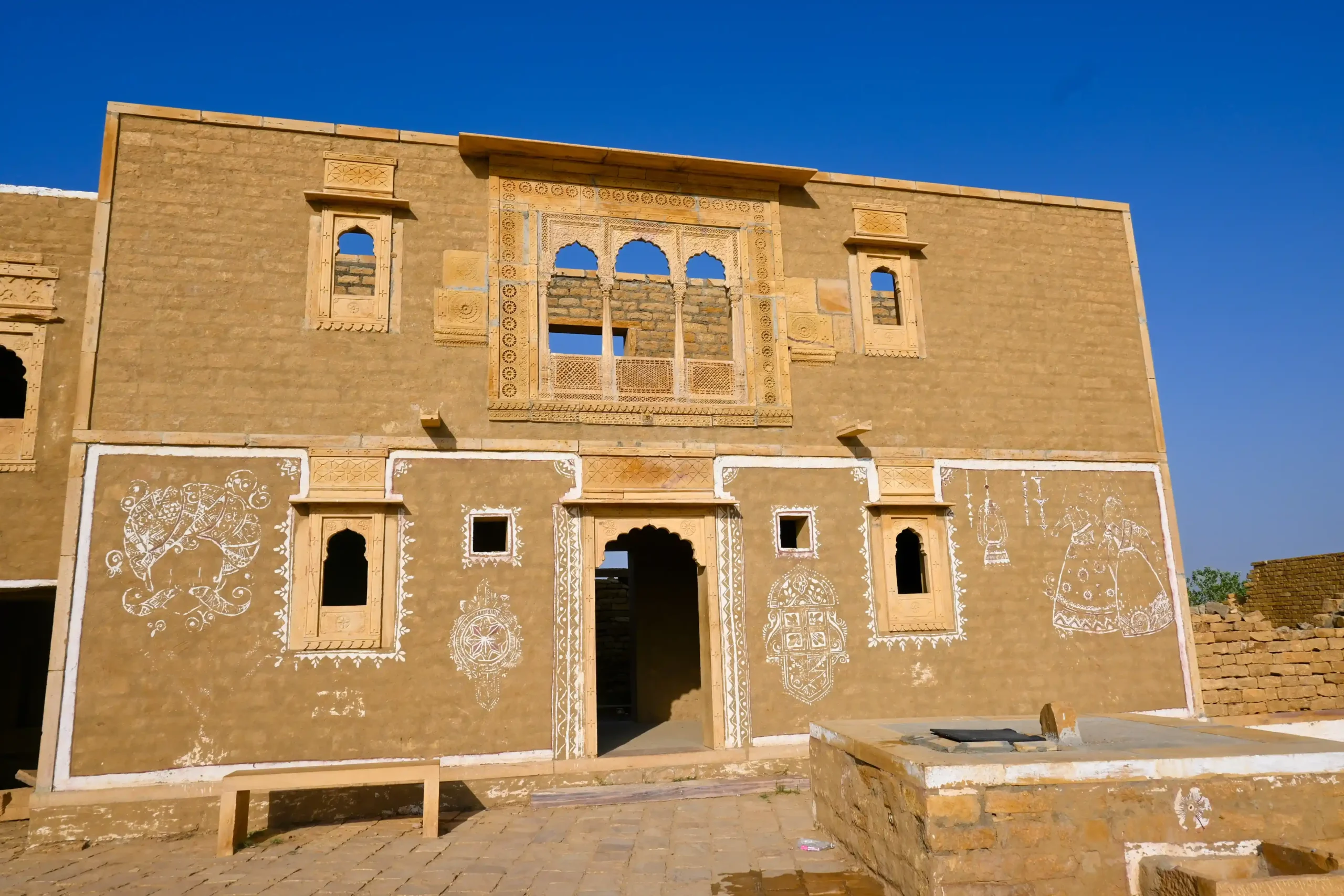
A carved jharokha crowns a mud‑plastered facade painted with white folk motifs in deserted Kuldhara.
Khimsar Sand Dunes – Desert Calm with Human Warmth
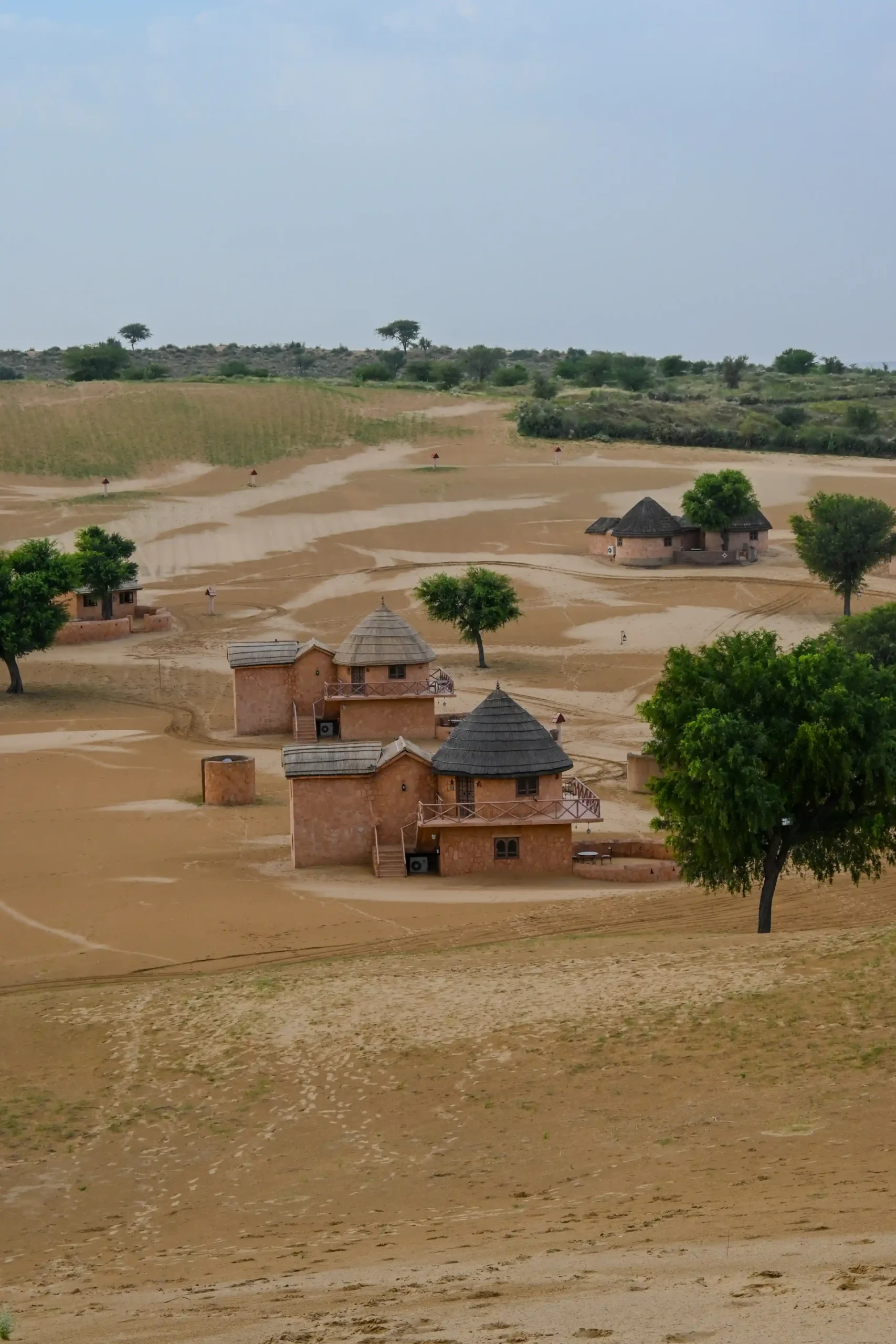
The Khimsar images are warm and welcoming: round thatched huts, pink stone walls, and sandy paths lined with lantern posts. Green khejri trees dot the scene, and the golden dunes curve gently under a soft sky. The architecture fits the climate—thick walls and rounded forms that breathe, low courtyards that collect shade, natural tones that sit easily on the land. It’s desert life without hurry: evenings that glow, skies full of stars, and spaces that feel both simple and carefully made.
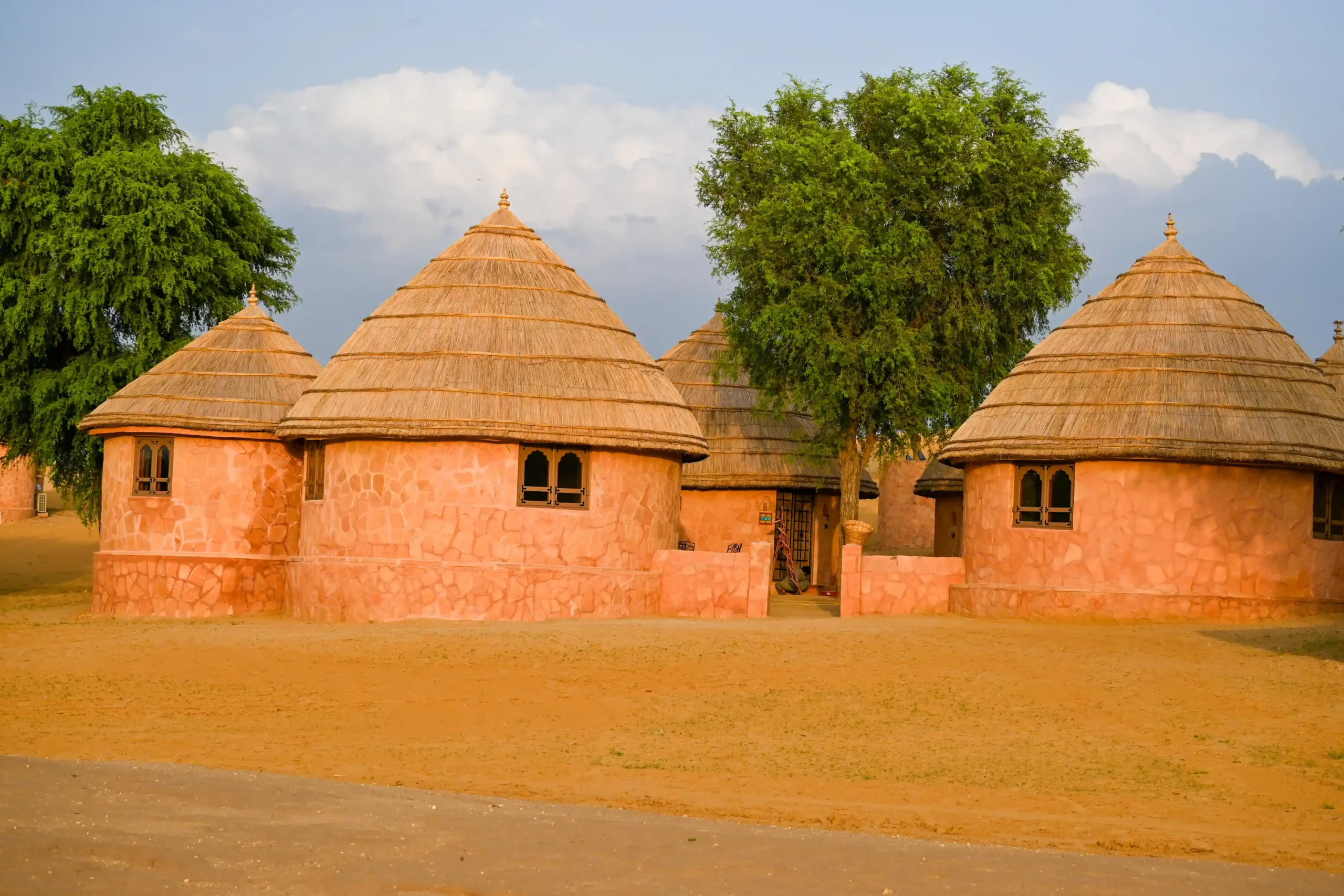
Circular thatched huts and a lone tree anchor the Khimsar dunes’ village‑style resort.
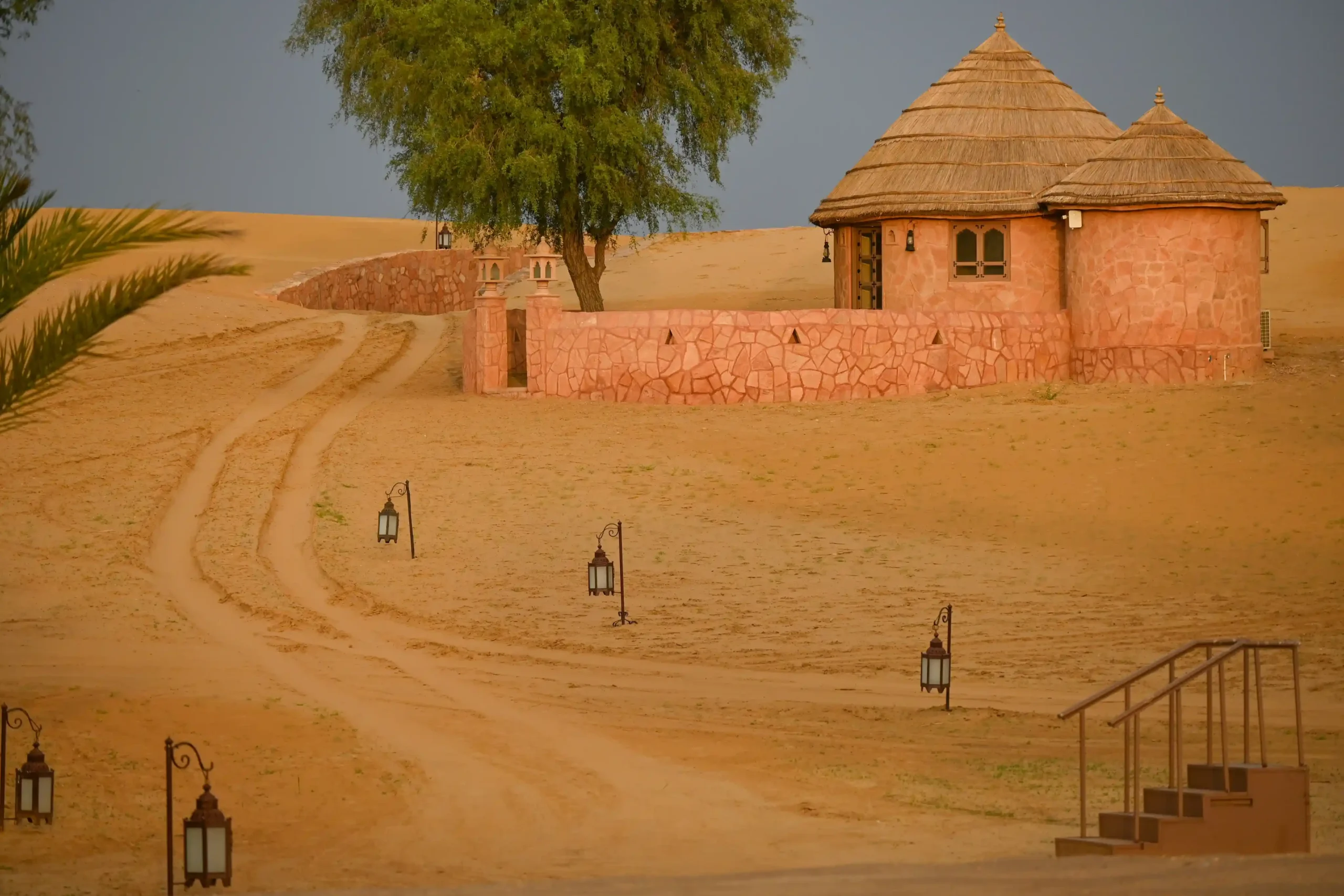
Lanterns line sandy tracks leading to round thatched huts in the Khimsar dunes.
Kishangarh Marble Waste – White “Glaciers” and Turquoise Pools
Kishangarh’s marble industry leaves behind a very different landscape: chalk-white slurry fields shaped into ridges and terraces, and turquoise water pooled in basins that look almost unreal. In photos, the terrain can resemble glaciers or travertine, but it’s industrial byproduct forming a stark, photogenic scene. With the Aravalli hills in the distance, the contrast between natural backdrop and man-made forms is striking. These images are beautiful, yes, but they also invite quiet questions about industry, environment, and how modern work redraws the land.
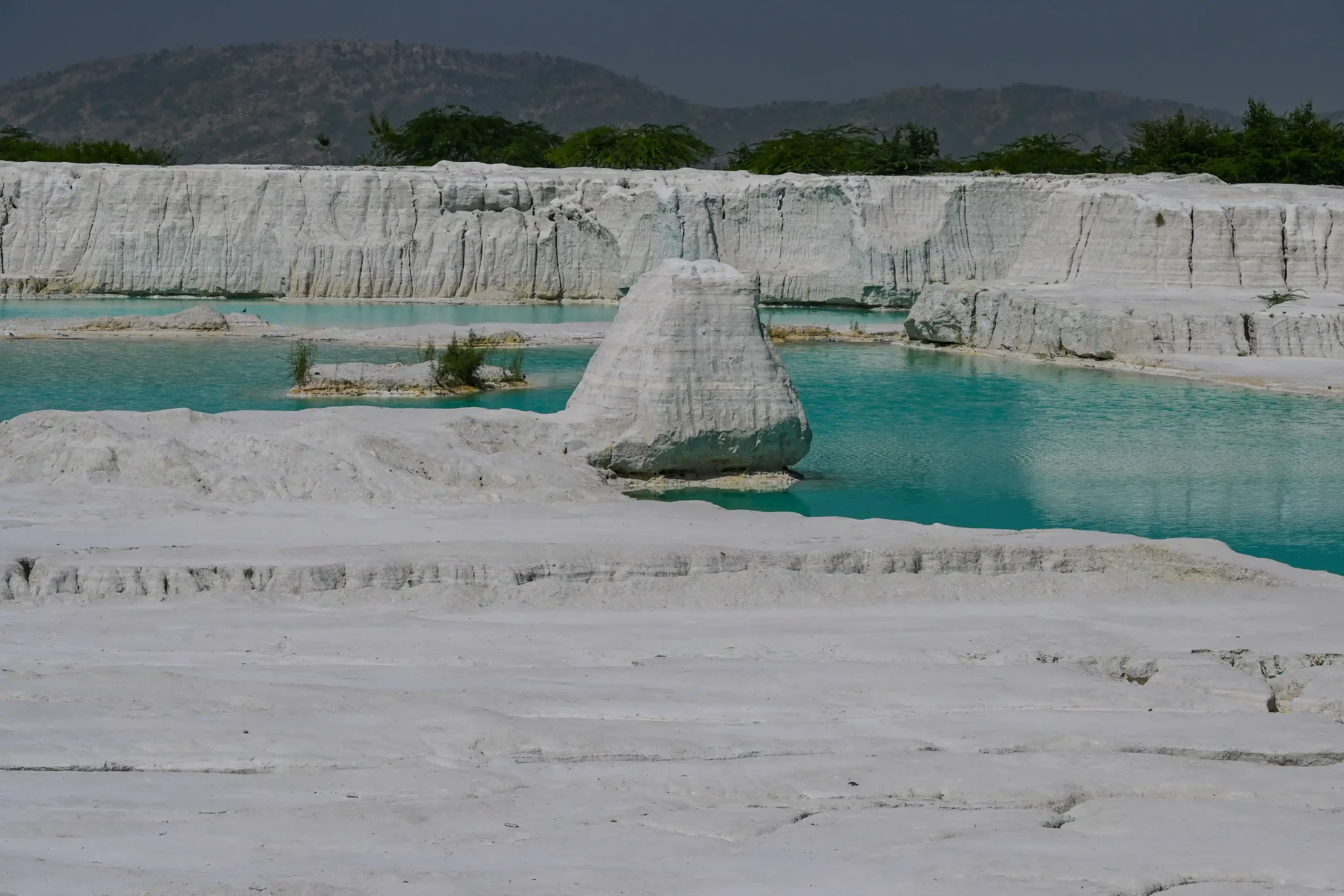
Glacier‑like marble mounds surround vivid blue pools at Kishangarh’s dumping yard.
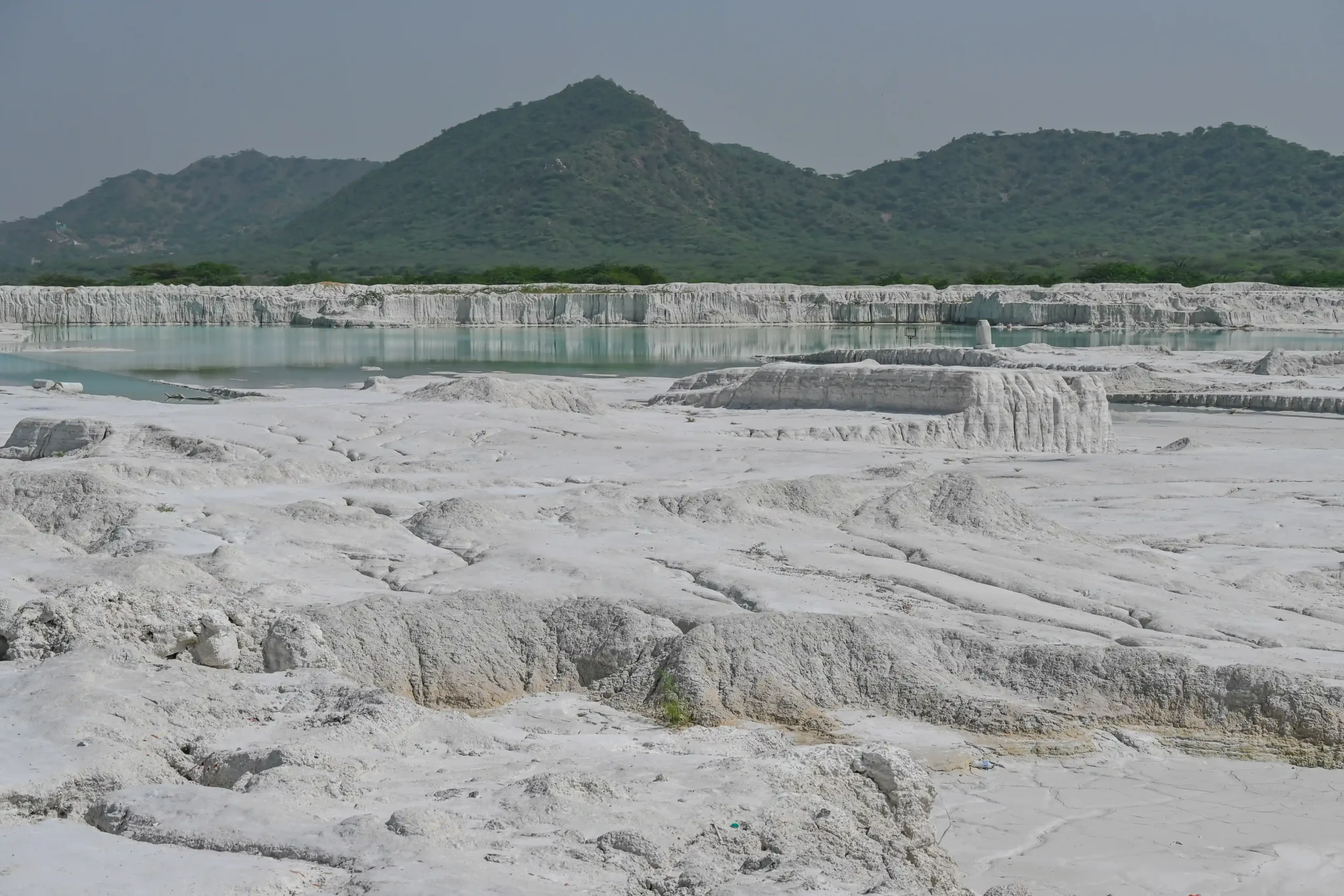
Rippled white slurry plains frame a blue pool beneath the Aravalli hills at Kishangarh.
What These Images Teach About Rajasthan
Rajasthan is royal, but it is also honest—stone that holds sunlight, water that carries palaces, wind that moves through empty streets, and work that shapes new hills. These images don’t just show places; they share feelings: calm evenings by the lake, wide skies over the dunes, the hush of ruins, and the shock of turquoise in a white field. Keep the words clear and the eye kind, and the story will feel human—like standing there in person, with sand underfoot and soft light on the walls.
Notice Title
All images used in this blog are copyrighted. Unauthorized use, reproduction, or redistribution of these images is strictly prohibited. Please contact the site owner for permission or licensing inquiries.