
Leh Ladakh is one of those places that feels larger than any map or itinerary. It reveals itself through long roads, dry valleys, mountain walls, cold river channels, monasteries on slopes, and skies that keep changing the mood of the journey from hour to hour.
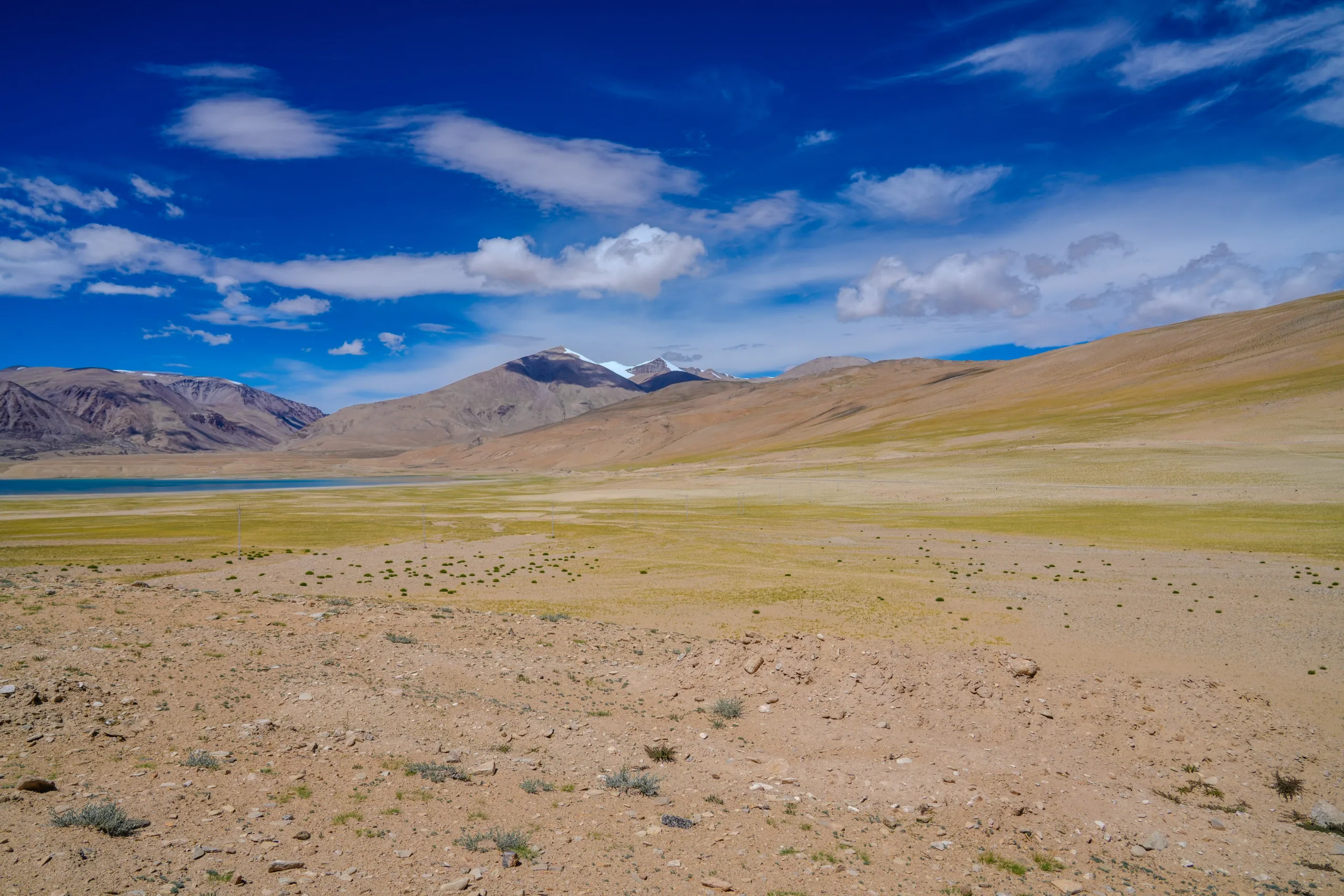
A vast plateau opens toward water and distant snowy peaks in Ladakh
The road is part of the journey
For many travelers, Leh Ladakh begins with the road long before it begins with a hotel, a market, or a landmark. Highways curve through barren valleys, run across open desert-like stretches, and lead into mountain corridors that feel both remote and welcoming at the same time.
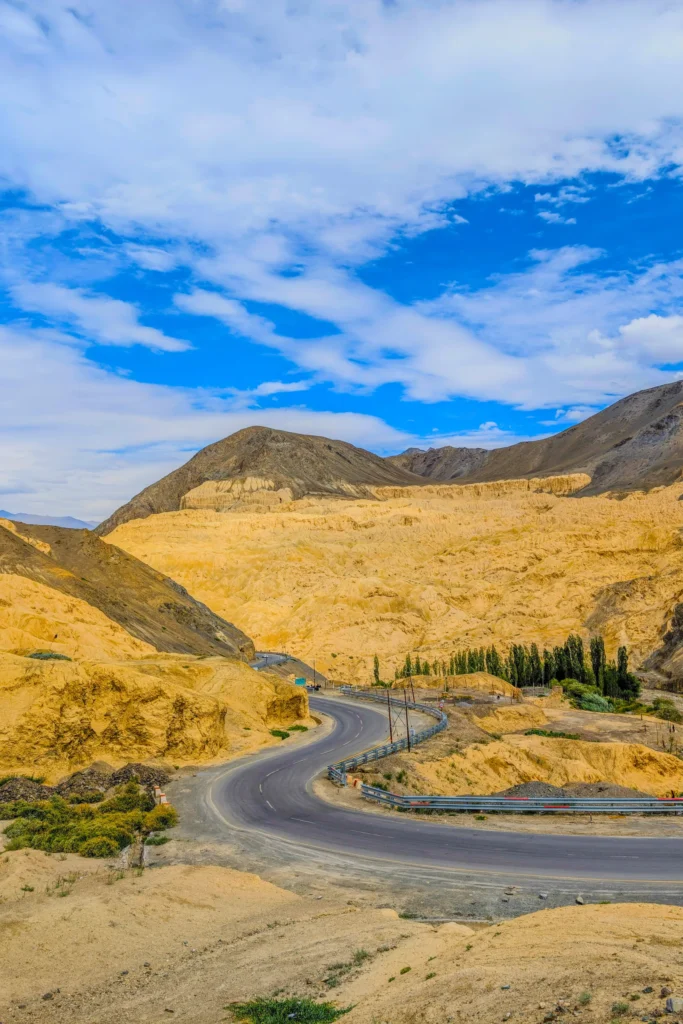
A winding road leads through the dramatic Lamayuru landscape in Leh Ladakh
That is why road travel in Ladakh feels different from ordinary travel. The route is not just a way to get somewhere, because every turn carries its own view, its own light, and its own sense of anticipation.
Even the simplest signboard starts to matter here. A direction marker pointing toward Chumathang, Karu, Thiksey, or Kargil immediately reminds you that Ladakh is a network of journeys, each road leading toward another layer of landscape and culture.
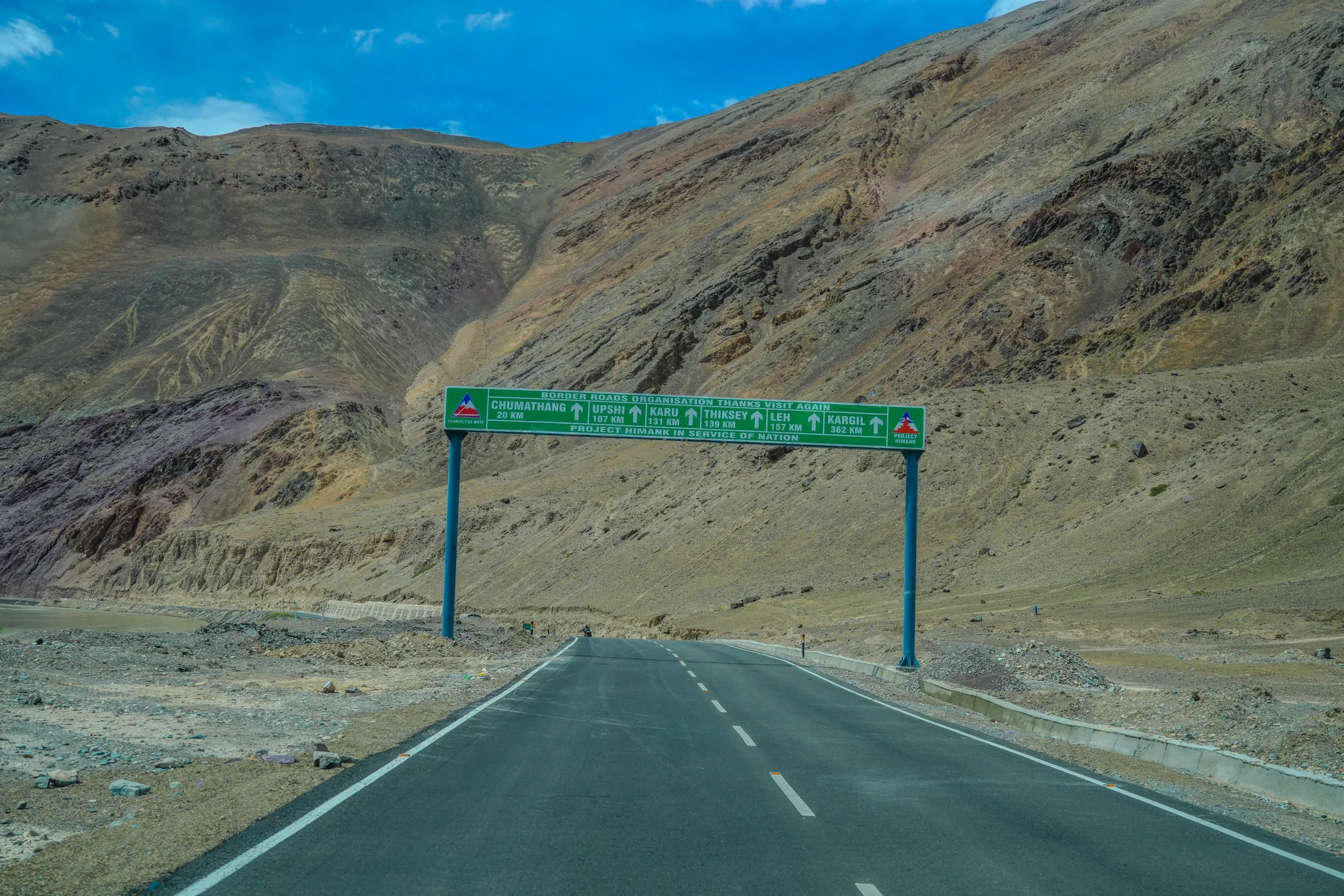
A road sign in Leh points toward major destinations across the region
The roads themselves also shape how the land is remembered. A straight blacktop cutting through an open valley creates a feeling of scale and solitude, while a winding mountain highway creates a stronger sense of movement and discovery.
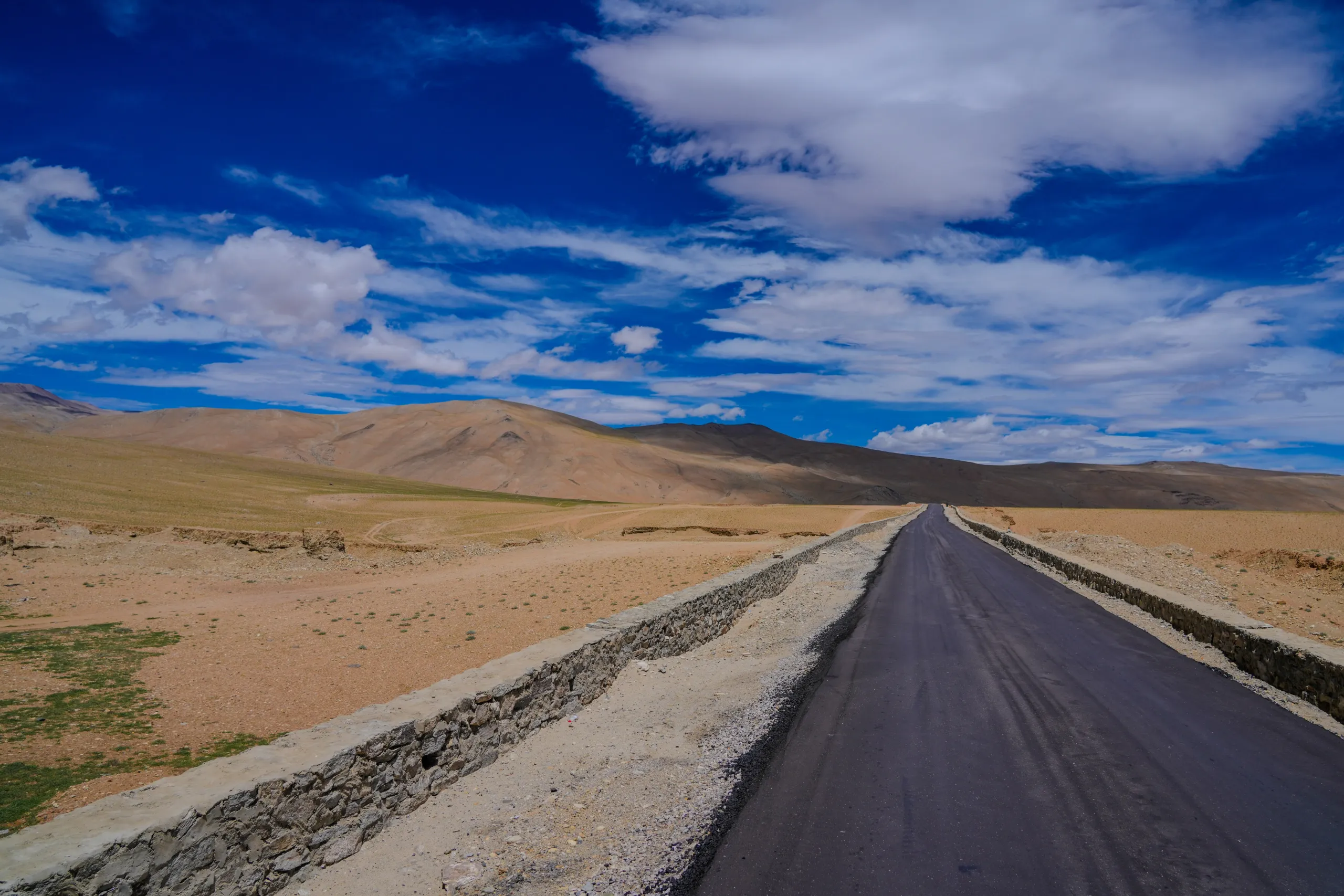
A straight road runs through the stark valley landscape of Leh Ladakh
The valley changes with water
Ladakh is often imagined as a land of bare mountains and high-altitude desert, but the river scenes show another side of the region. The Indus brings movement, texture, greenery, and a sense of continuity to terrain that might otherwise seem severe and still.
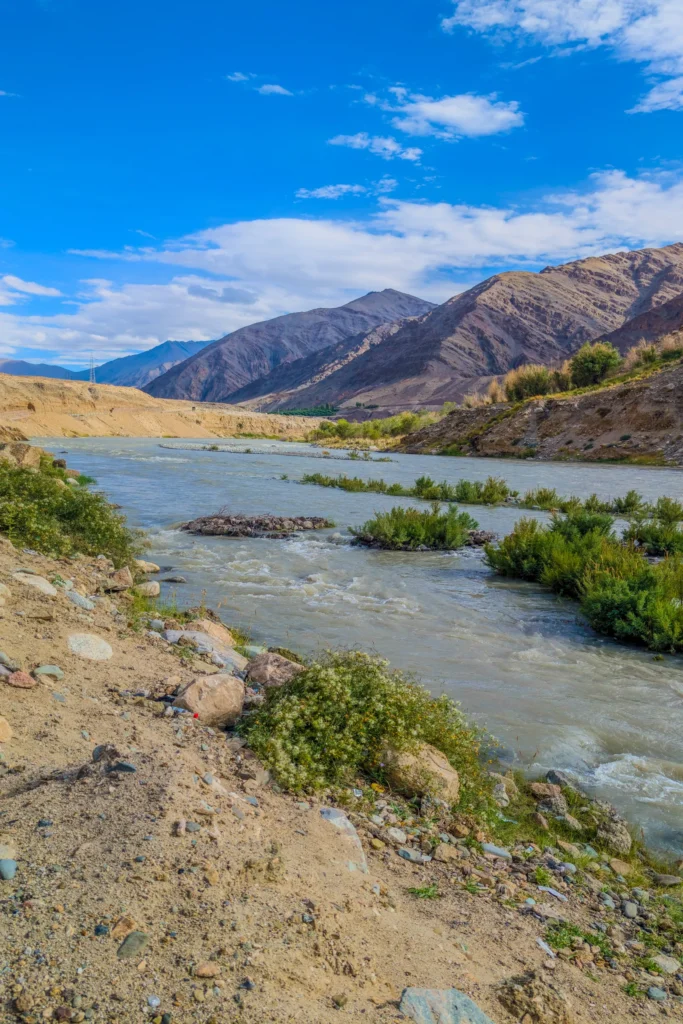
The Indus River adds greenery and movement to the Ladakh valley
That contrast is one of the most beautiful parts of traveling through Leh. Water softens the valley, catches the light differently, and creates a visual balance between rugged stone and living landscape.
When patches of vegetation appear along the riverbanks, the entire frame changes. The land feels less distant and more inhabited, as though the valley is quietly telling its own story of survival and rhythm.
The Indus is not only scenic, it also gives the journey emotional depth. After miles of dry mountain roads, seeing flowing water and green edges brings relief and makes the landscape feel more layered.
This is where Leh Ladakh becomes more than a dramatic road trip. It becomes a place of contrasts, where harshness and softness exist side by side without canceling each other out.
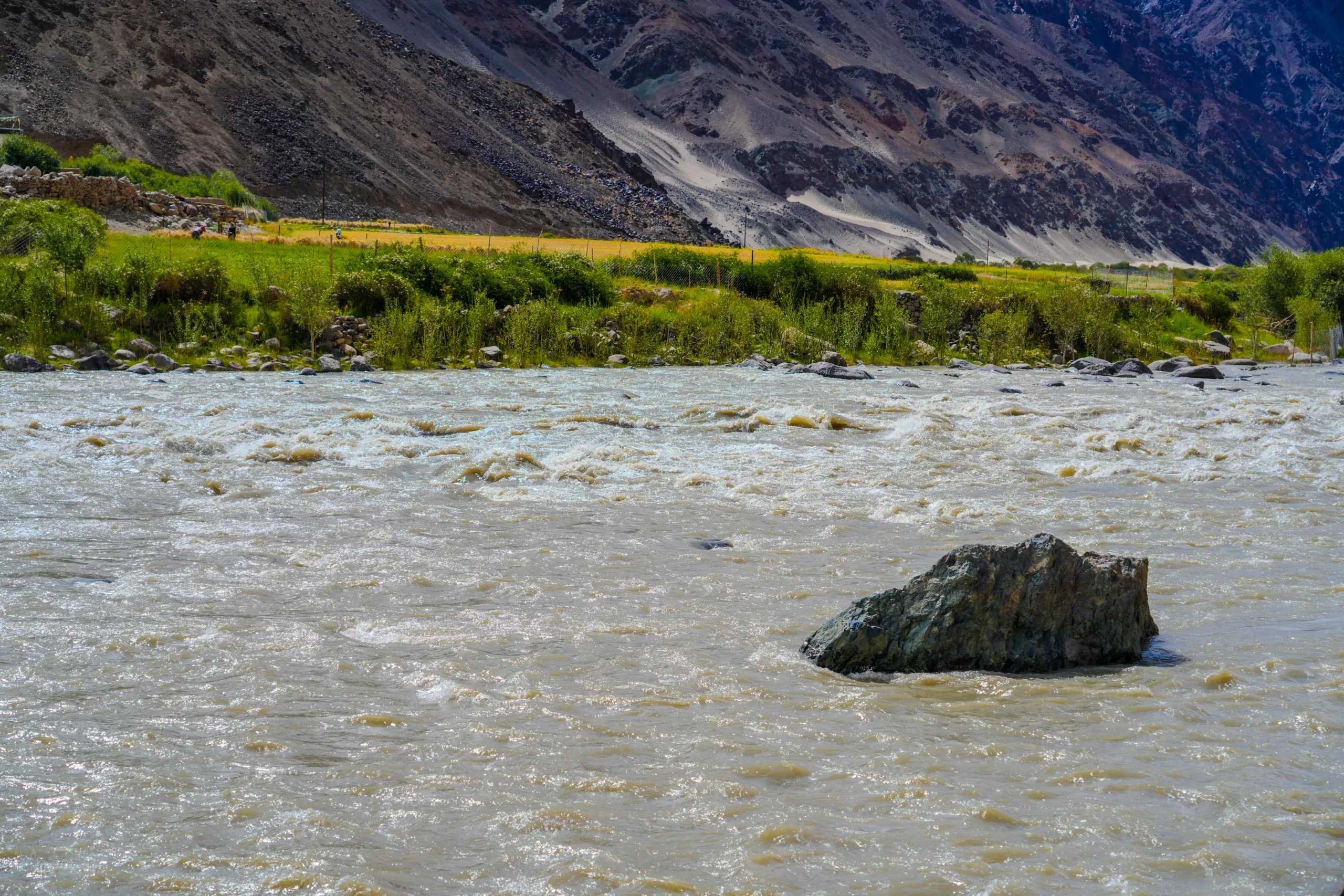
Fast-moving Indus river water cuts through the rocky terrain of Ladakh
Life, culture, and memory
What gives Leh Ladakh its lasting identity is not only the landscape but also the human presence within it. A village set against steep mountain slopes, prayer flags moving in the wind, and a monastery built into the hillside all show how deeply life here is connected to the land.
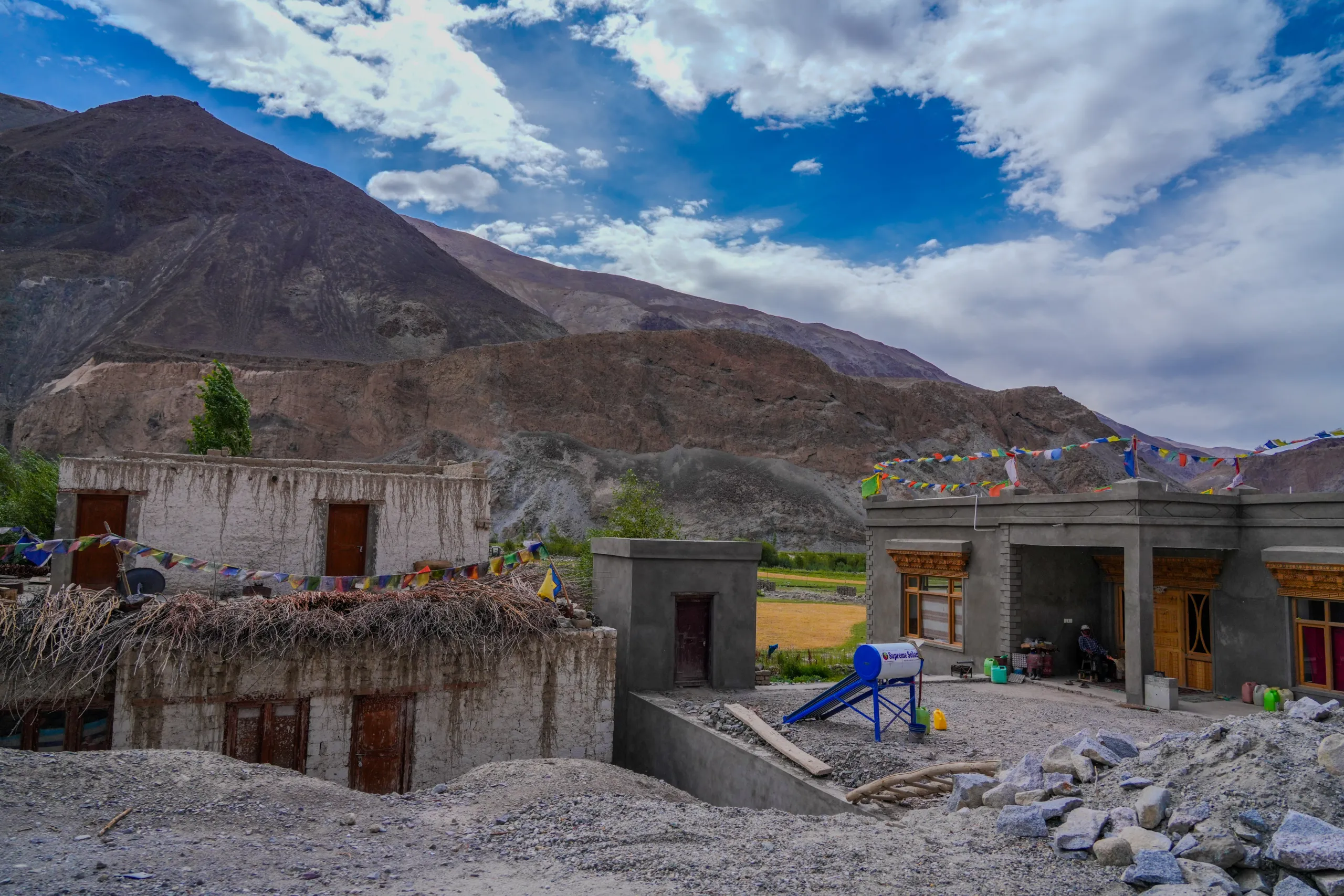
A traditional village sits quietly beneath the mountains in Leh Ladakh
These moments make the journey feel grounded. Instead of being only about vast views, the trip also becomes about how people have shaped a way of living in one of the most striking terrains in the Himalayas.
The monastery scene carries a special kind of calm. Resting above the valley, it adds spiritual character to the stark mountains and reminds travelers that silence in Ladakh often feels meaningful rather than empty.
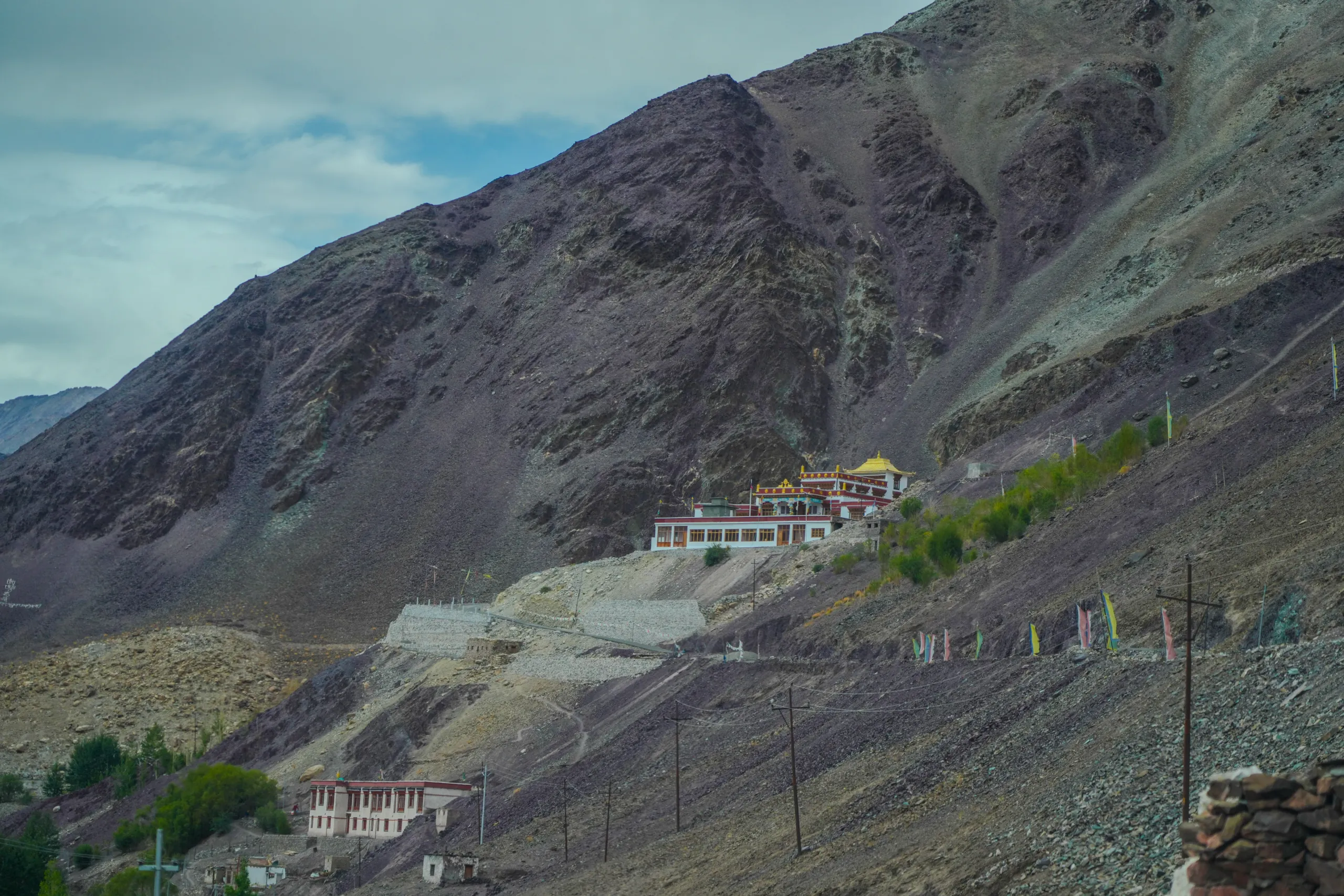
A monastery on the mountainside adds calm and character to the Ladakh landscape
The same sense of meaning appears in places like the Hall of Fame in Leh. It introduces memory, respect, and reflection into the travel experience, adding emotional weight to a route otherwise defined by open skies and mountain drama.
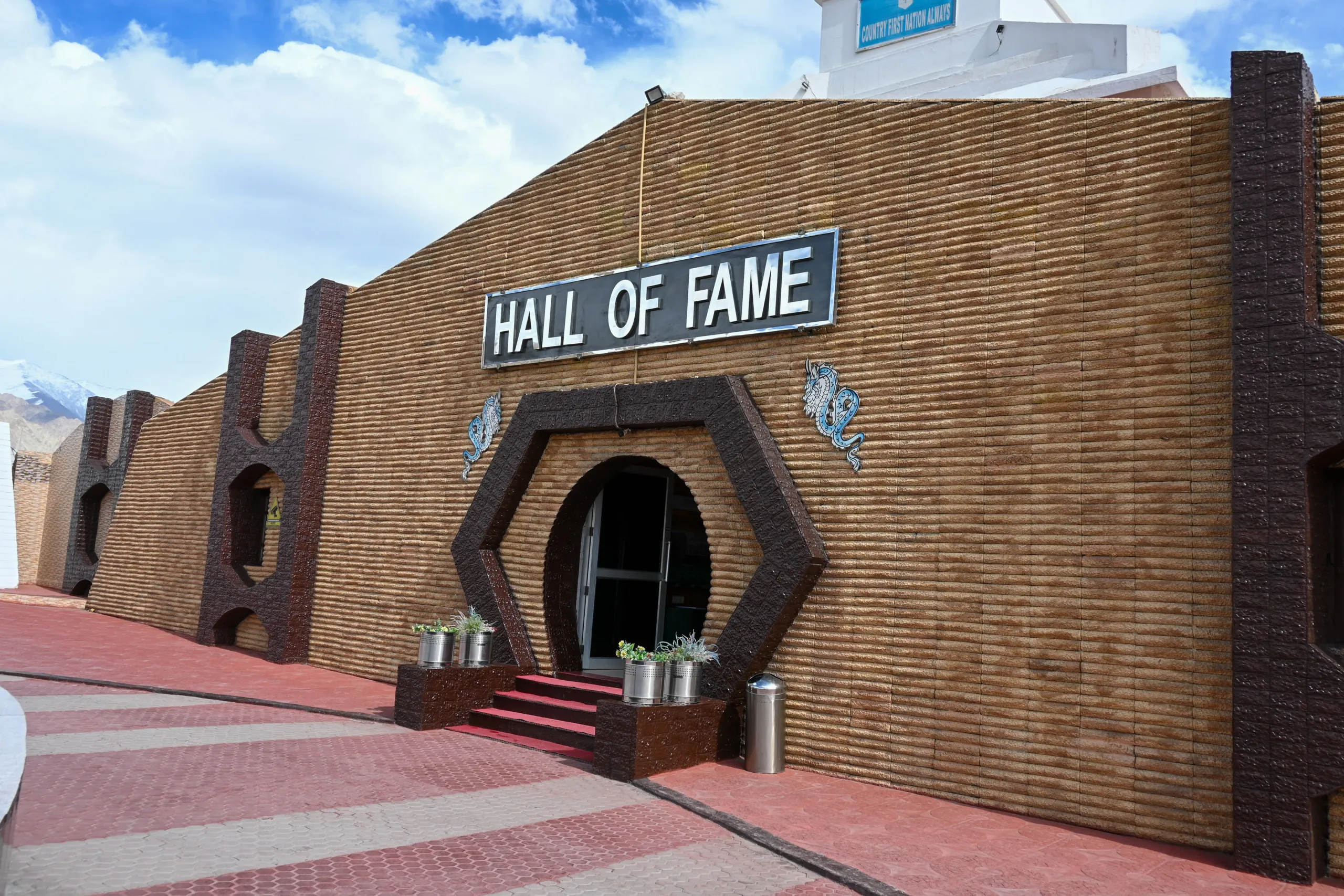
The Hall of Fame adds reflection and historical presence to the Leh journey
Where altitude reshapes everything
As the journey climbs higher, Leh Ladakh starts to feel even more elemental. The colors shift, the air appears sharper, and the land opens into snow-covered slopes, exposed ridges, and wide plateaus that seem to stretch beyond ordinary scale.
This is where the idea of the Himalayas becomes most tangible. You are no longer simply looking at mountains from a distance, because the passes, snowfields, and elevated routes place you fully inside that world.
Changla Pass captures this transition beautifully. Snow, prayer flags, and the stark brightness of the terrain turn the route into an experience that feels both demanding and awe-inspiring.
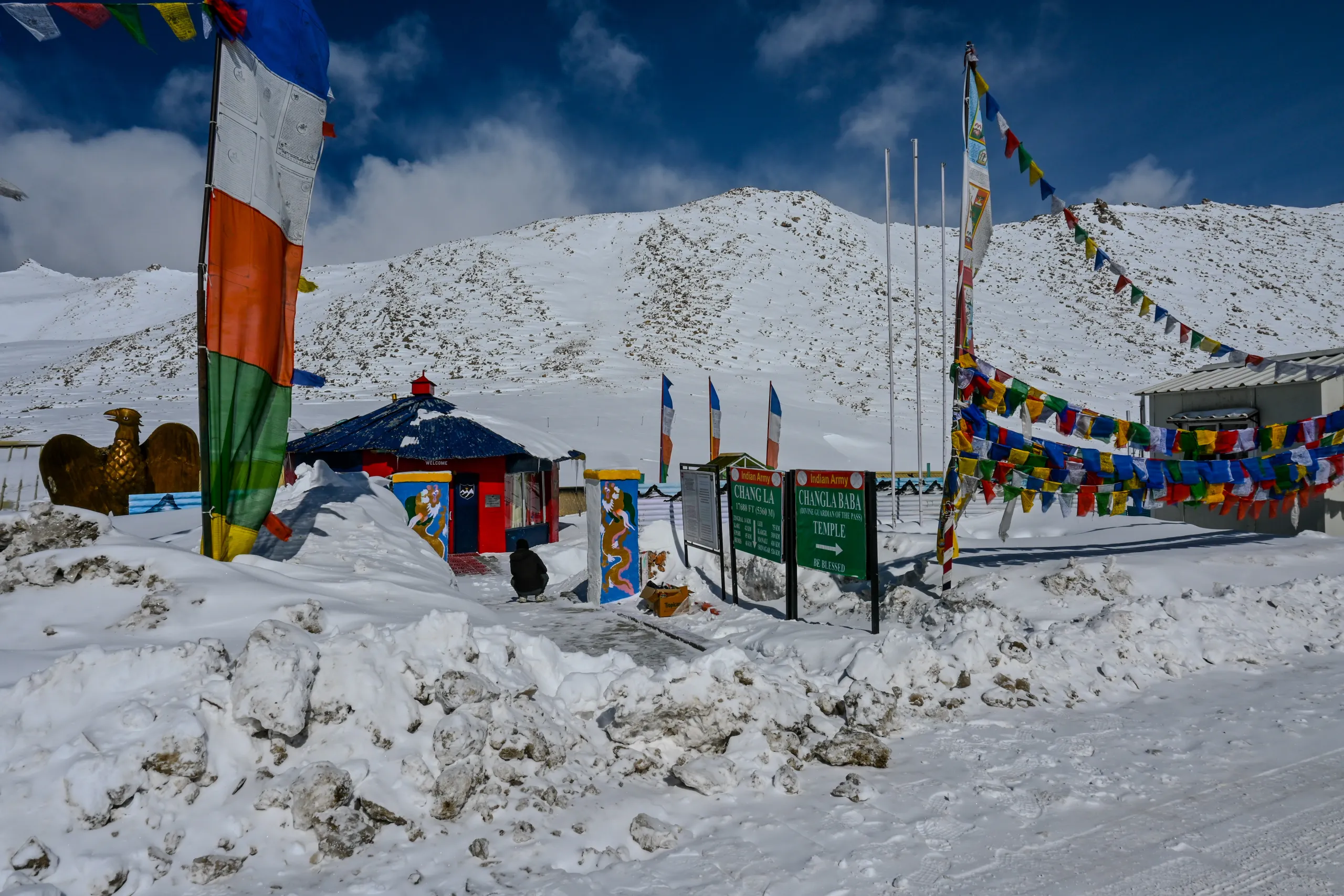
Snow and prayer flags mark the dramatic route through Changla Pass
The snow-covered ranges add another emotional layer to the journey. They make Leh Ladakh feel colder, more remote, and more dramatic, while also giving the landscape a clarity that is hard to forget.
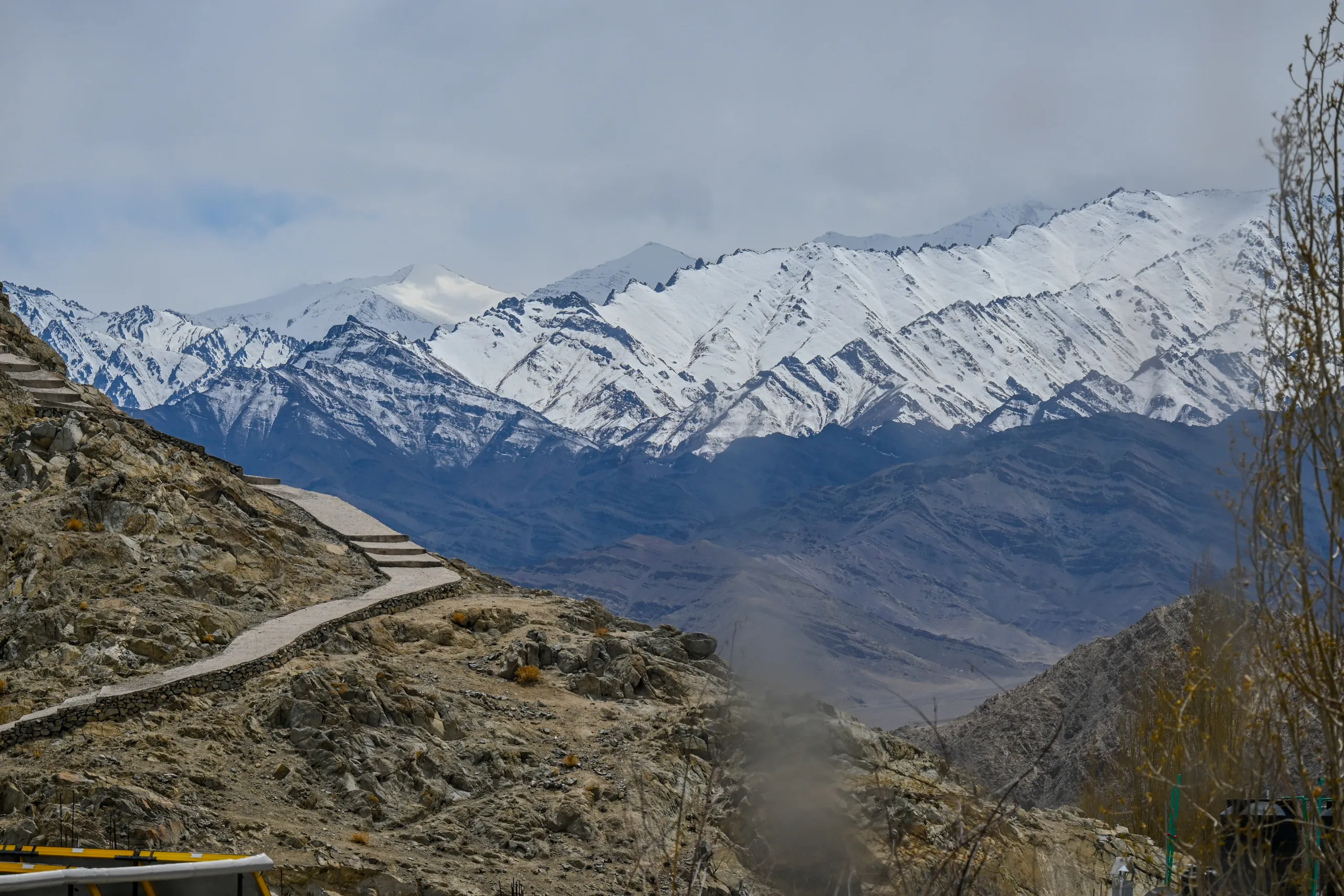
Snow-lined peaks bring a colder, sharper mood to the Leh landscape
Then the terrain opens again into broad plateaus and distant water, proving that Ladakh is never visually static. It keeps changing from valley to pass to open high-altitude plain, which is exactly why the journey feels so complete.
A vast plateau opens toward water and distant snowy peaks in Ladakh
What remains after the journey
What stays with most travelers is not just one road or one viewpoint. It is the way everything connects, from empty highways and river valleys to monasteries, villages, memorial spaces, high passes, and dramatic evening skies.
Leh Ladakh leaves behind a layered memory. You remember the silence of the roads, the force of the river, the presence of the mountains, and the feeling that every part of the region belongs to a much larger Himalayan story.
That is why Leh Ladakh feels less like a single destination and more like an unfolding experience. It is a place where the road, the land, and the atmosphere all work together to create a journey that feels expansive from beginning to end.
Frequently Asked Questions (FAQs)
Notice Title
All images used in this blog are copyrighted. Unauthorized use, reproduction, or redistribution of these images is strictly prohibited. Please contact the site owner for permission or licensing inquiries.